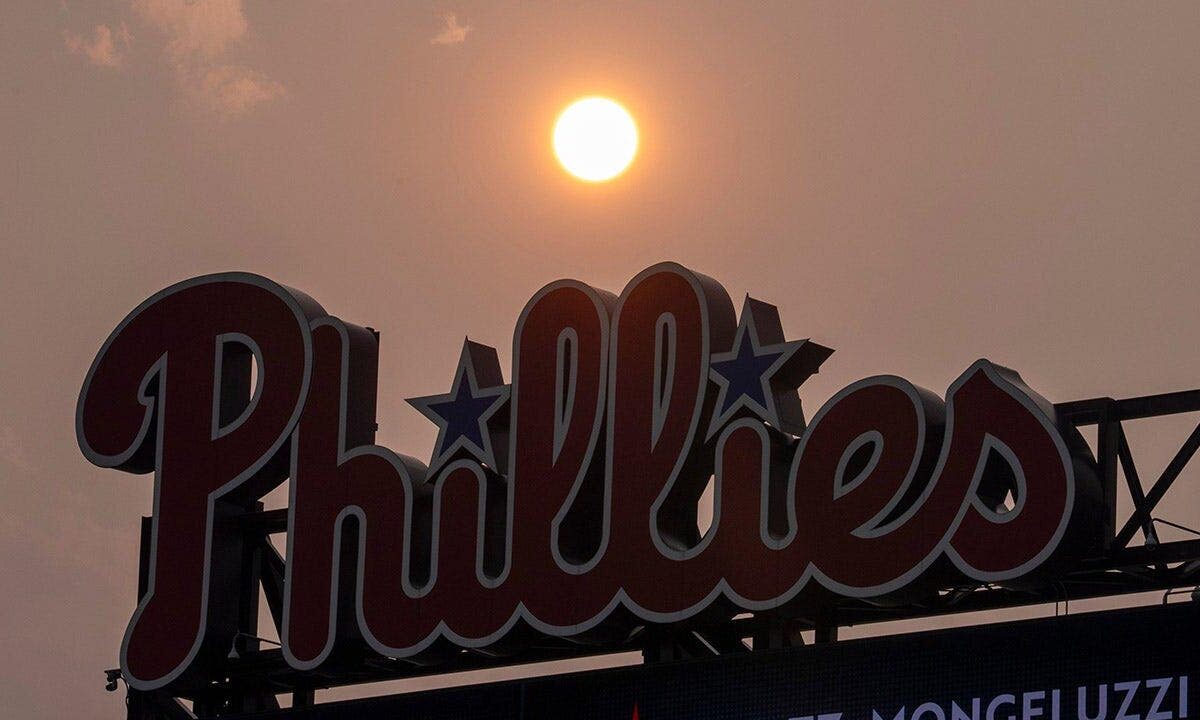
Unhealthy air quality settled over Philadelphia on Thursday as wildfire smoke drifted into the region and, according to Fox News reporting, local monitors registered an Air Quality Index reading of 196 during the Mets-Phillies game. Organizers moved the start time up one hour to limit player and staff exposure, and on-field officials repeatedly checked on competitors as the smoke reduced visibility.
Quick summary
Fox News reported that an AQI of 196 — classified as “unhealthy” — was recorded in Philadelphia during the afternoon. The game was moved up one hour from its originally scheduled start, umpires and team medical personnel monitored conditions throughout, and at least one team skipped outdoor batting practice because of the smoke.
How players were affected
Players described immediate irritation and vision issues as the smoke intensified. Mets infielder Brett Baty told Fox News, “I didn’t think it was bad until the last couple of innings. Eyes itching, burning a little bit.” Catcher Francisco Alvarez said, through an interpreter and as reported by Fox News, “At the end of the game, it was a little bit more difficult, especially catching. It became more difficult to see at the end.”
Those two direct quotes, recorded in postgame coverage, capture the on-field impact: tearing, itching and reduced ability to track the ball on deep fly balls. Team staff and trainers circulated during play, and players took extra moments to rinse eyes or step aside for brief checks when symptoms flared.
Game operations and safety steps
Umpire Dan Iassogna and on-site medical staff performed repeated welfare checks, according to Fox News. The league and teams adjusted operations: organizers announced an earlier start in the afternoon to shorten total exposure time, and at least one side declined outdoor batting practice ahead of the game to limit players’ time in the open air.
Those measures follow a standard pattern for managing sudden air-quality issues: monitor real-time conditions, limit nonessential outdoor activity, and keep medical personnel ready. Fox News’ account noted teams and umpires balancing competitive needs with player health concerns as the contest continued.
Regional air numbers and outlook
The elevated Philadelphia AQI reflected broader smoke drift from large Canadian wildfires reported across the region. Fox News cited monitors showing the city reached an AQI of 196 during the afternoon; other pockets across the Northeast and Midwest were reported to have seen even higher values as plumes shifted.
Public-health guidance for elevated AQI levels typically advises limiting strenuous outdoor activity and monitoring local air quality updates. Several reports covering the same smoke event said conditions were expected to change over the next few days as weather patterns shift, with relief likely in some areas once winds move the smoke away. Readers should check real-time local monitors for the most current readings.
Why it matters
An AQI in the “unhealthy” range can cause immediate symptoms for otherwise healthy adults — including eye and throat irritation, coughing and reduced exercise tolerance — and greater risks for people with respiratory or cardiovascular conditions. For athletes, those symptoms can affect breathing, concentration and the ability to judge balls in play, creating both health and competitive implications.
Major League Baseball, teams and on-field officials are charged with weighing those concerns against schedules and competitive fairness. Thursday’s decision to shift the kickoff time and to keep medical checks in place illustrated an operational approach that prioritized monitoring and short-term mitigation while allowing the game to proceed under supervision.
Source and credits
This update is based on reporting by Fox News, which documented the Philadelphia AQI reading, direct player comments and operational changes during the Mets-Phillies game. For the original coverage, see the Fox News report: Mets and Phillies stars show concerns about playing in unhealthy air quality.
Note: AQI classifications and public-health guidance referenced here reflect commonly used categories for air-quality measures; readers should consult local official monitors for current readings and follow public-health guidance in their area.