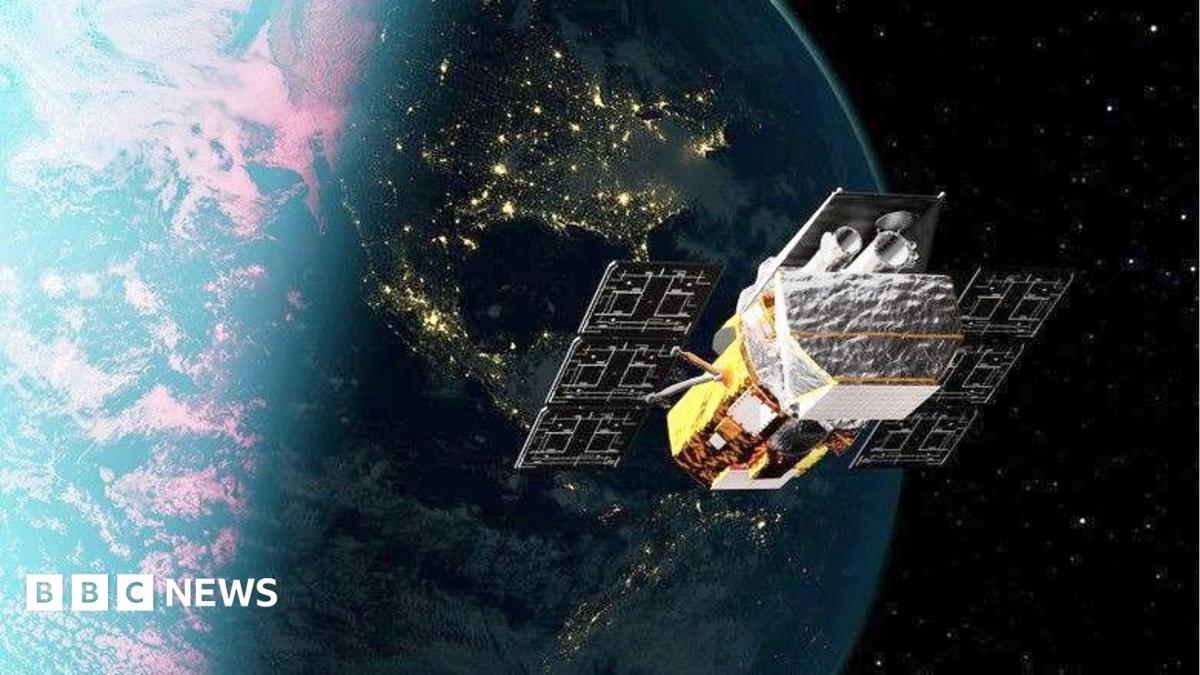
A Nasa-funded robot blasted off today on a time-critical mission to intercept a space telescope whose orbit is decaying, according to BBC News. The robot’s objective is to catch the falling telescope in mid-orbit and blast it back to safety before the craft is lost to atmospheric re-entry. Reporting and mission briefings so far come from the BBC; the final outcome remains unverified.
Launch update: what we know now
The Nasa-funded robot lifted off at the time reported by BBC, beginning an outbound trajectory toward the troubled telescope. Mission controllers described the launch as the first major step in a carefully timed rendezvous sequence designed to minimize propellant use and meet a narrow intercept window.
Public accounts to date do not provide a named identifier for the robot or full technical specifications of the telescope in open reporting. The available facts in this article are drawn from BBC News coverage and official briefings cited below; any later operational details will be reported when controllers release telemetry and status updates.
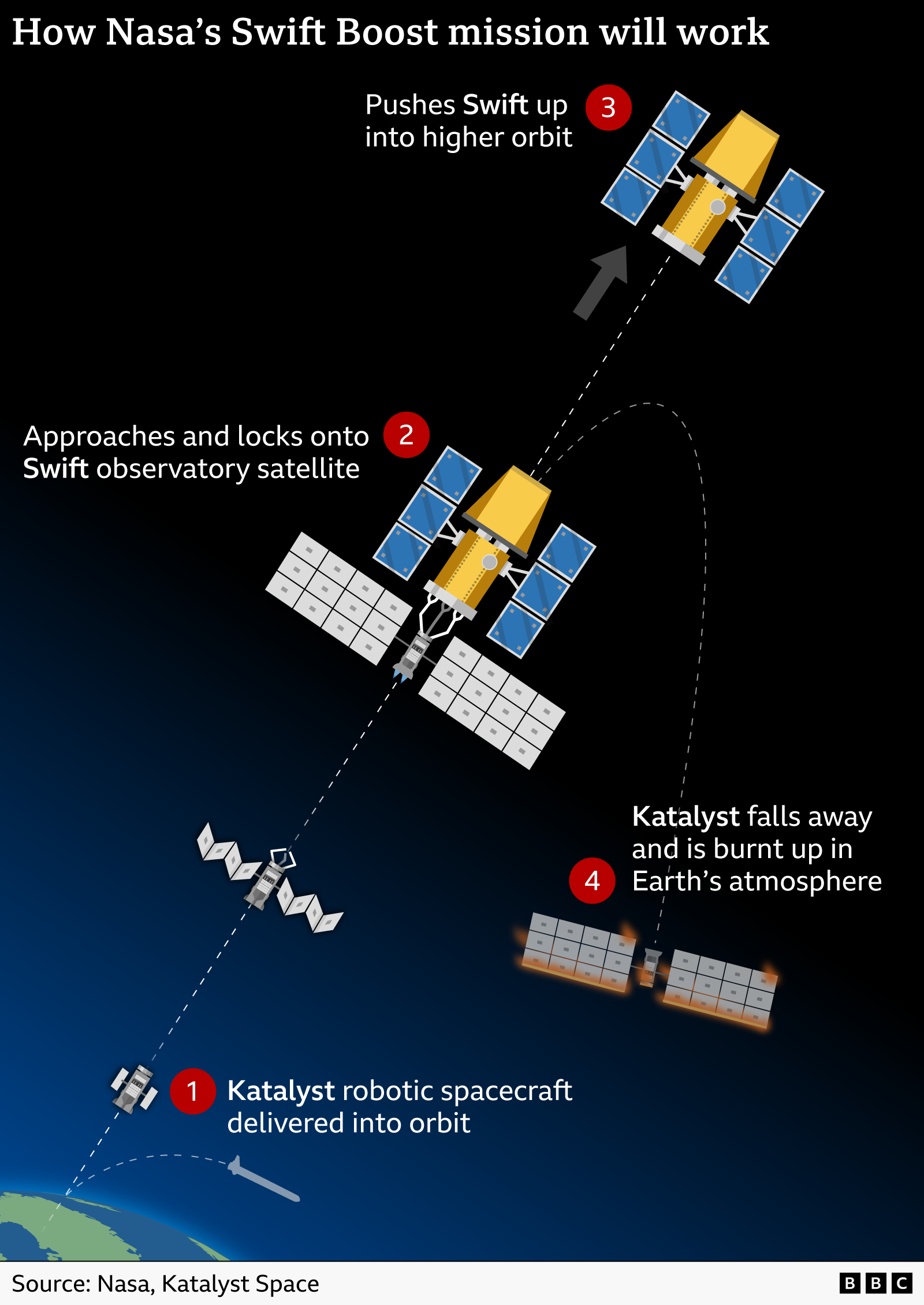
How the Nasa-funded robot will catch the falling telescope
The core mission plan is a proximity operations and capture sequence in mid-orbit. After launch, the robot will perform scheduled mid-course corrections to match phase and altitude with the decaying telescope, then enter a controlled approach to close to capture distance.
Capturing a free-flying object in orbit requires precise relative navigation. The plan calls for the robot to match the telescope’s orbital velocity and approach along a controlled vector where sensors and guidance can provide stable tracking. Once in close proximity, operators will execute a capture maneuver designed to secure the telescope without imparting destabilising forces.
The capture method and technical limits
Engineers expect the robot to use established docking or grappling techniques rather than high-impact contact. That can include a soft capture mechanism — a grappling arm, a capture ring, or a docking adapter — coupled with sensor-driven attitude control to stabilise any residual tumble before committing to a firmer connection.
Key technical constraints include limited on-board propellant, finite battery and thermal margins, and tight timing dictated by the telescope’s decay. These limits determine approach speed, how long proximity operations can continue, and the magnitude of any orbit-raising burn the robot can provide once the telescope is secured.
Planners must also account for the target’s condition: if the telescope is tumbling or has suffered partial system failure, capture windows will shrink and the complexity of stabilisation will rise. Operators will favour controlled, incremental steps — sensor checks, soft-capture attempts, and small corrective burns — to reduce the risk of making the situation worse.
Why this mission matters
Preventing the telescope from burning up on uncontrolled re-entry preserves scientific capability and avoids uncontrolled debris. A successful capture and re‑boost would maintain the telescope’s value for science and limit the spread of fragments that would add to the orbital debris environment.
Beyond this single asset, the operation is a test of on-orbit servicing techniques that could be applied to repairs, refuelling, or debris mitigation in future missions. Demonstrating a controlled capture under time pressure would be a practical milestone for operations that aim to keep expensive hardware in service and reduce long-term collision risk.
Technical uncertainties and operational risks
Several operational risks are explicit in mission briefings. Limited fuel budgets constrain both rendezvous and contingency options. A tumbling or partially disabled telescope raises the chance of failed capture attempts or the need for additional stabilisation work. There is also a real risk that uncontrolled components could separate during approach, increasing debris risk.
Another uncertainty is thermal and structural stress on the telescope during any manoeuvre. If parts of the craft are compromised, applying thrust or altering torque could cause unexpected break-up. Mission teams have emphasised a cautious, stepwise approach to reduce these risks, and have labelled any success as provisional until confirmed by controllers.
What comes next and what to watch for
In the near term, watchers should look for scheduled mid-course correction announcements, telemetry reports indicating stable approach, and notices of completed proximity operations. The crucial milestones are: successful matching of orbital phase, initiation of proximity operations, a soft-capture procedure, and any subsequent orbit-raising burn intended to halt decay.
Because the outcome is unverified at this time, official confirmations will be released in stages. BBC follow-ups are expected as mission control posts status updates. Any announced capture, re-boost or failure will be provisional until mission controllers provide confirmed telemetry or imagery.
Source attribution
This article is based on BBC News reporting of the launch and mission briefings. For the original report and ongoing updates, see: BBC News — Nasa launches mission to save falling space telescope. All operational facts in this article are those reported by the BBC; mission outcomes remain unverified until confirmed by controllers.