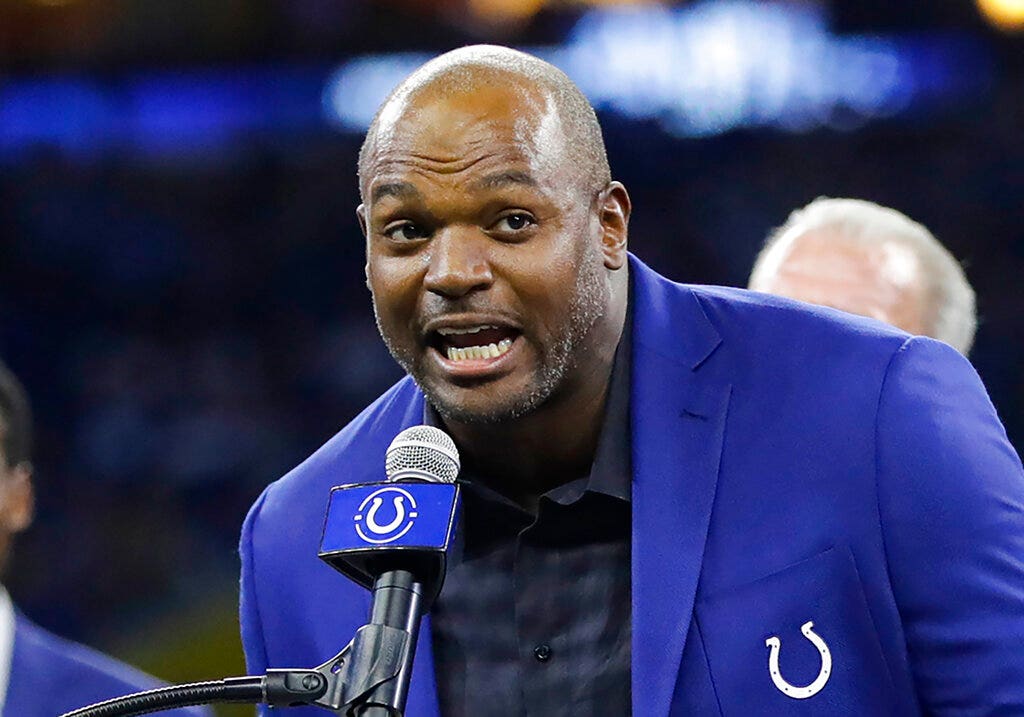
“I don’t like it,” Hall of Famer Dwight Freeney said, opening with a blunt assessment of the NFL’s shift to multiple streaming partners. “Just to be honest with you, I think it should be accessible to all fans, no matter what your economic bracket is.” The issue — NFL streaming access — landed at the center of recent conversations about the league’s 2026 media deals and how local viewers will be served.
Freeney, a Pro Football Hall of Fame Class of 2024 inductee who played 16 NFL seasons, acknowledged the business benefits of lucrative TV and streaming contracts but pressed for solutions that protect local viewers. “If you can afford to get the local channels, you should be able to watch your favorite team on your local networks,” he said, adding that games “shouldn’t be blacked out based on streaming and all of that.”
Freeney on NFL streaming access
Freeney framed the debate around fan accessibility, putting the main keyword up front in his remarks. He told reporters he subscribes to multiple streaming services and understands the economics: greater media rights values help players and the league. Still, he said, the modern mix of broadcast and streaming can shut out fans who lack the means or technical setup to follow their teams.
“Maybe there’s a combination of things… where you have the ability to stream, but it also is on your local networks,” Freeney said.
NFL streaming access
The core question is simple: as the league sells exclusive packages to streamers, how do everyday fans in a team’s home market keep access without paying for a raft of subscriptions? Freeney suggested a hybrid approach — preserving local reach while letting streaming partners innovate — rather than pushing viewers toward paid-only options.
Where 2026 games will air
The NFL’s 2026 schedule expands the range of places games will be shown. The league has said Prime Video will carry Thursday Night Football. Netflix is set to stream select games, including a Week 1 matchup, a Thanksgiving Eve game and a Christmas Day game. Peacock will stream an exclusive regular-season game in January. These deals reflect a shift toward stream-first windows that previously sat with linear broadcasters.
At the same time, the NFL asserts that in local markets it presents all regular-season and postseason games on free over-the-air television. That is the league’s public position on preserving local access; it appears in league statements about how rights will be delivered to home-market fans.
How this affects fans and cost
Advocates for viewers warn the patchwork of rights can create predictability and cost problems. A House Judiciary Committee interim staff report found that fans increasingly need a combination of over-the-air, cable and streaming services to watch a single team’s games and estimated that some fans may effectively pay more than $600 per season to follow one team (House Judiciary Committee interim staff report finding).
Sen. Mike Lee separately urged the Department of Justice and Federal Trade Commission to review the NFL’s distribution practices, citing his estimate that fans faced nearly $1,000 in combined cable, streaming and internet costs last season (Sen. Mike Lee’s regulatory request to DOJ and FTC). Those numbers were presented as part of requests for regulatory review and advocacy, not as judicial or regulatory determinations.
Freeney described the consumer side plainly: streaming gives flexibility to viewers who can afford it, letting them watch on tablets and phones. “If you can afford it, great,” he said. But he stressed that many fans do not have that ability and that even well-equipped viewers sometimes struggle to find games when rights are split.
Regulatory questions and responses
The regulatory spotlight has sharpened as distribution fragments. The House panel looked at whether current practices are consistent with the Sports Broadcasting Act and whether modern contracts undermine local access. Lawmakers and staff flagged concerns about whether the existing carve-outs and exemption in the law match today’s streaming marketplace.
Sen. Lee formally asked federal antitrust agencies to weigh in, specifically the Department of Justice and the Federal Trade Commission, requesting a review of distribution and potential anticompetitive impacts. Those are requests for regulator inquiry, not findings of wrongdoing.
The NFL maintains that its model preserves local over-the-air access and argues the overall deal structure benefits teams, players and fans by fueling investment in the sport. Those are league assertions as it responds to questions from lawmakers and the public while regulators consider whether a closer look is warranted.
Practical fixes and what comes next
Freeney and consumer advocates point toward hybrid approaches. Possible solutions publicly discussed include clearer local-carriage rules, simultaneous local broadcasts for certain streamed games, negotiated carriage that bundles necessary local rights into affordable packages, or limited licensing that ensures every home market has at least one free way to watch a team’s games.
Industry fixes could come through a combination of voluntary league adjustments, new carriage agreements between streamers and local broadcasters, and formal guidance or action by regulators. Any federal review — if the DOJ or FTC opens an inquiry — could take months and would focus on whether contracts or industry practices harm competition or consumer access.
For now, the practical reality for many fans is planning subscriptions or relying on local over-the-air options where they exist. Freeney urged the league to keep local access central as deals evolve: “I wish there was a way to figure that out.” His plea echoes broader calls from fan groups and some lawmakers for clarity and affordability as the NFL’s rights model changes.
Source attribution: Reporting in this story draws on a Fox News report on Freeney’s comments and the league’s 2026 rights deals. Additional public documents and statements include the House Judiciary Committee interim staff report (committee finding referenced) and Sen. Mike Lee’s letter requesting DOJ and FTC review (regulator request referenced). For the Fox News article, see: Fox News.
What comes next: expect follow-up hearings, possible regulator inquiries and continued negotiation between the league, streamers and local broadcasters to try to balance revenue and fan access.