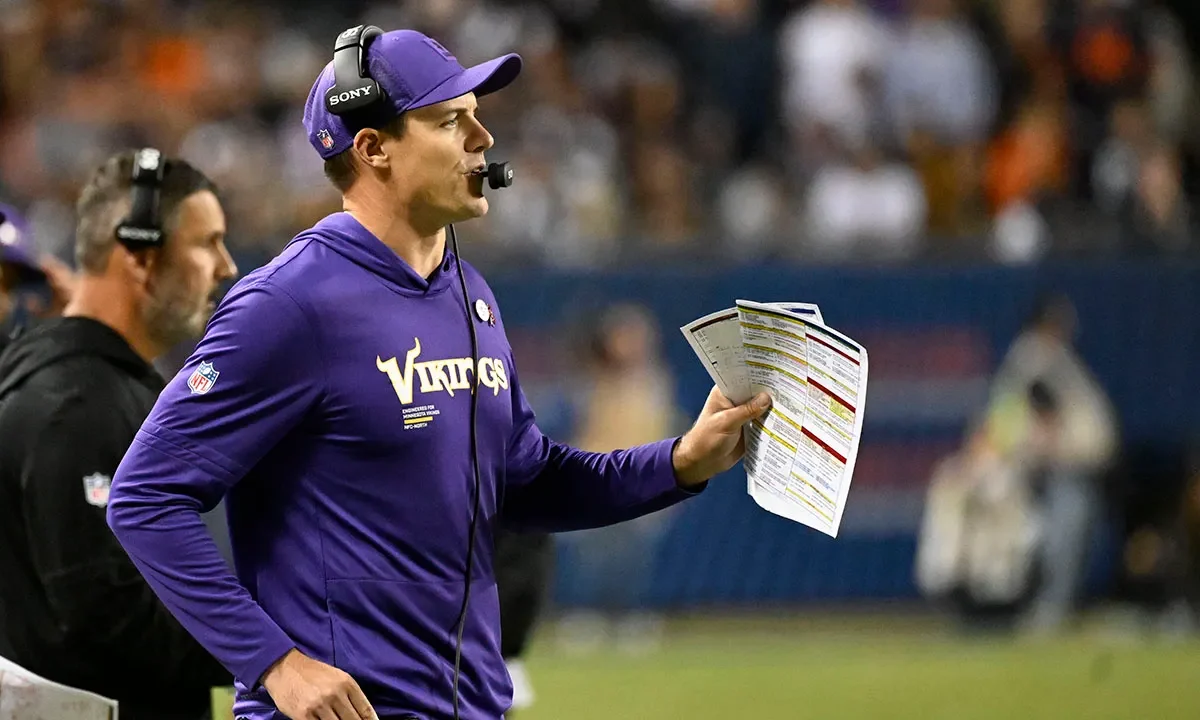
“I think it’s important that we continue to make it something that, you know, all fans can have a pathway to watching our games,” Vikings coach Kevin O’Connell said at a news conference tied to the American Century Championship.
O’Connell’s comments landed as the NFL finalizes a larger slate of games on streaming platforms, creating fresh debate over NFL streaming service affordability and how fans will access games in 2026 and beyond.
Kevin O’Connell comments
At Edgewood Tahoe, O’Connell framed the issue around access and growth. He urged the league and partners to preserve pathways for fans to watch games even as new streaming deals expand distribution.
O’Connell defended the NFL’s media-rights strategy as a way to reach new audiences while noting the continuing value of attending games in person at venues such as U.S. Bank Stadium and SoFi Stadium.
2026 media rights map
The league announced that the 2026 regular season will distribute national windows across traditional broadcasters and multiple streaming services (NFL schedule announcement, NFL.com). Key placements reported by the league and outlets include:
- Prime Video: carrying Thursday Night Football national windows.
- Netflix: scheduled to stream select marquee games including Week 1 and holiday matchups.
- Peacock: slated to carry at least one exclusive regular-season game in January.
- Local broadcast networks and over-the-air (OTA) stations: continuing to carry regional games in local markets, including most local regular-season and postseason broadcasts.
Those network and platform assignments were described publicly in the NFL’s schedule rollout and in subsequent media reports, which note both national streaming exclusives and local-market OTA allocations (NFL schedule announcement, NFL.com; Fox News coverage).
NFL streaming service affordability: fan costs and access
The core question is how many paid subscriptions and additional services a typical fan will need to follow a single team when exclusives appear across different platforms. That concern drives the debate over NFL streaming service affordability.
In June, the House Judiciary Committee released an interim staff report warning that fans increasingly may need a mix of OTA, cable and streaming accounts to see all of one team’s games (House Judiciary Committee interim staff report, June 2026). The committee’s interim estimate stated some fans could pay more than $600 per season to access a full team’s slate in current distribution scenarios.
Separately, Sen. Mike Lee wrote to the Department of Justice and the Federal Trade Commission asking them to review whether current distribution practices fit existing antitrust frameworks, including the Sports Broadcasting Act. In his letter, the senator cited an estimate that some households faced costs approaching $1,000 last season when combining cable, streaming and internet expenses (letter from Sen. Mike Lee to DOJ and FTC, June 2026).
Those figures are estimates and claims from oversight documents and political correspondence; they are not enforcement findings. For many fans, reliable local over-the-air broadcasts will still provide access to regional games, reducing the need for every subscription in many markets.
Why lawmakers and regulators are watching
Congressional committees have signaled interest in whether the expansion of exclusive streaming windows fragments the national audience or raises consumer costs. The House Judiciary Committee’s interim staff report specifically examines how the Sports Broadcasting Act interacts with modern streaming deals and distribution practices (House Judiciary Committee interim staff report, June 2026).
Federal agencies appear in the discussion largely as potential reviewers. Sen. Lee’s letter asked the DOJ and FTC to consider whether distribution agreements violate antitrust principles or otherwise harm consumers. The FCC has also been referenced in public debate for its role in broadcast accessibility and media policy, though no agency has announced enforcement action tied to the 2026 deals as of this writing.
These are investigative and oversight steps, not determinations of illegality. Any formal probes by DOJ or FTC would require document requests, staff analysis and, potentially, months of review before outcomes are known.
What comes next for viewers
Fans can take practical steps now: confirm which of a team’s games are national streaming exclusives, check local OTA listings for regional broadcasts, and compare short-term subscription options for specific windows versus year-round plans.
Teams, broadcasters and streaming services could respond to political and regulatory scrutiny with pricing changes, promotional bundles, expanded local simulcasts, or clearer guidance on blackout and local-market rules. If federal agencies open formal investigations, expect document requests and possible public hearings that could change how future deals are structured.
For the 2026 season, the finalized schedule and carrier agreements will determine how common exclusives are and how often fans must subscribe to multiple platforms to see the full slate.
Bottom line
Kevin O’Connell’s plea for broad access highlights the balance the NFL is trying to strike: generate new revenue and reach new viewers via multiple streaming partners, while keeping games affordable and accessible for long-time fans. Local over-the-air broadcasts remain an important safeguard for many viewers, but the degree to which they offset subscription costs will depend on how often marquee matchups land behind exclusive streaming windows.
Sources: Fox News coverage of O’Connell comments; NFL schedule announcement (NFL.com); House Judiciary Committee interim staff report (June 2026); Letter from Sen. Mike Lee to the DOJ and FTC (June 2026).