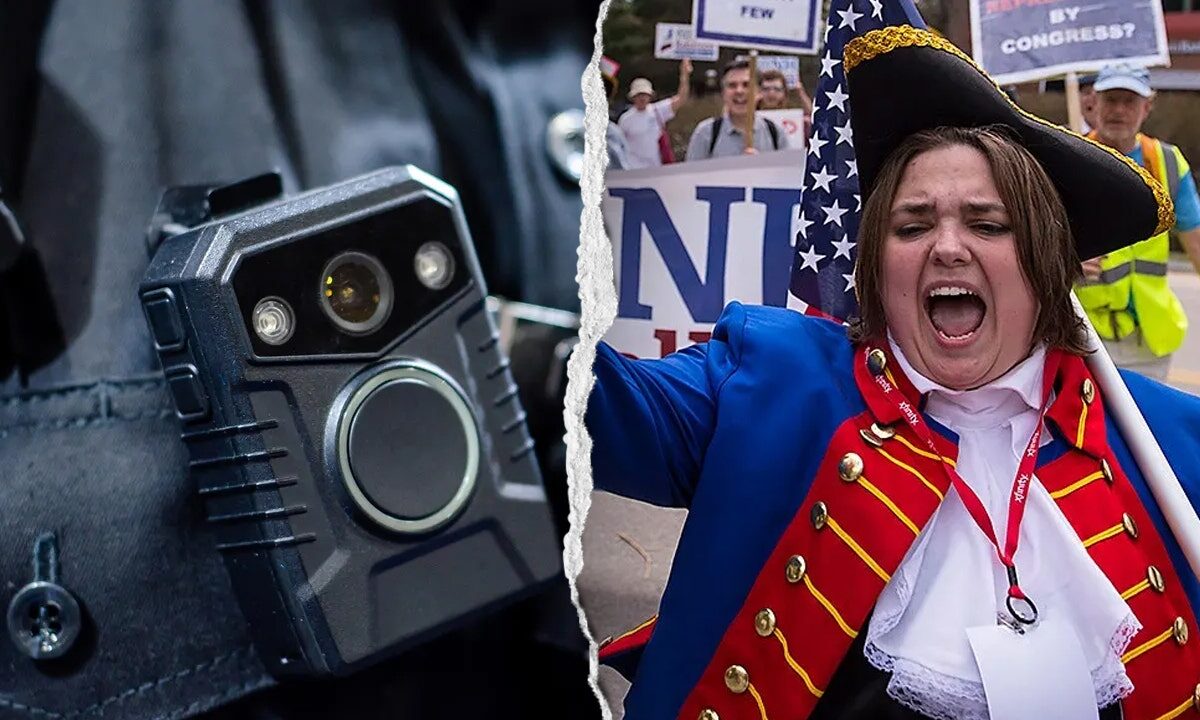
Body-worn cameras are at the center of a dispute over a New Hampshire lawmaker’s traffic stop after a Rockingham County deputy said the vehicle reached 107 mph. The question of whether deputies were recording has become central to how the facts of the stop will be resolved.
State Rep. Ellen Read is contesting citations from two traffic stops and has raised a constitutional defense tied to legislators’ travel. With no officer body-cam or dash-cam footage available to corroborate the deputy’s account, competing versions now rest on testimony and any civilian recordings.
Traffic stop and competing accounts
The deputy who stopped Read alleged she was driving 107 mph on a highway. News reports attribute that figure to the deputy’s account; Read has disputed it and told reporters she told the officer she was traveling about 85 mph and would accept a ticket for that speed.
Reporting from Fox News Digital states the Rockingham County Sheriff’s Office does not use body-worn cameras or dashboard cameras. Major Christopher Bashaw told reporters the agency lacks the funding to purchase that equipment.
Read has also disputed an office assertion that she recorded part of the stop on her cellphone. She said she did not and that a witness later testified in court about a phone call. Read has said she plans to invest in a dash cam to create a personal record in future encounters.
Why Rockingham County lacks body-worn cameras
Major Bashaw said the sheriff’s office would like to outfit deputies with body-worn cameras but does not have the local funding to buy devices, cover storage costs or maintain systems. The office also reported it does not deploy dashboard cameras in patrol vehicles.
Purchasing body-worn systems involves upfront device costs, back-end servers or cloud storage, and personnel time for redaction and records management. For many small or mid-sized counties, those recurring costs create a budgetary barrier even when state grant dollars are available.
Local leaders say decisions to purchase equipment also require votes by county commissioners or appropriation from municipal budgets. In Rockingham County, officials have said those local funding steps have not yet produced a funded program to equip deputies.
State grant fund and policy limits
New Hampshire lawmakers created a Body-Worn and Dashboard Camera Fund in 2021 to offer matching grants to local law enforcement agencies. The fund is intended to help with purchases, maintenance, replacement and data storage costs.
The program provides matching grants rather than fully funding equipment for agencies. That means a county must provide a portion of project costs or secure local budget approval to receive state support.
State law requires that agencies adopting cameras also adopt written recording policies detailing when officers must activate devices, how data is stored, and public-access rules. The statute ties funding and deployment to those policy steps but does not compel every agency to purchase cameras.
Reporting on the fund and the statutory framework can be found in state records and media coverage. For background on the program and grant structure, readers can consult New Hampshire legislative resources and local reporting on the issue.
How missing footage affects evidence and accountability
Without officer body-cam or dash-cam footage, courts and investigators rely on sworn testimony, witness statements and any civilian recordings. The absence of an objective, time-stamped recording can make factual disputes harder to resolve.
Legal observers caution that the constitutional question Read raises — protections for lawmakers traveling to and from legislative business — is limited and was not intended to provide blanket immunity from traffic enforcement. Law professor Lawrence Friedman told reporters the provision was meant to prevent undue interference with legislative duties, not to excuse dangerous driving.
The New Hampshire Supreme Court declined an immediate interlocutory review of Read’s constitutional claim and sent the matter back to trial court to develop the factual record. That means a trial court will first consider evidence about the stops unless new, dispositive recordings appear.
Next steps for the case and funding
The trial-court process will build the factual record: officers’ testimony, civilian witnesses and any private recordings will be examined. If Read or prosecutors introduce new evidence, such as a civilian dash-cam clip, the factual picture could change before appeals are considered.
Separately, Rockingham County can pursue concrete steps to secure body-worn systems. Officials could apply for matching grants from the Body-Worn and Dashboard Camera Fund, prioritize one-time capital in a budget cycle, or partner with neighboring jurisdictions to negotiate lower equipment and storage costs.
Counties should also plan for long-term costs: data retention, redaction software, and staff time for records requests. Clear policies on activation, privacy protections and public access will be required under state law before deployment and can help build public trust.
What comes next
For the Read matter, expect discovery and trial-court hearings to proceed before any final appellate decision. If the trial court rules on the constitutional question or facts, either side may then seek Supreme Court review.
For Rockingham County, deciding to apply for the state matching grant or allocating local funds would be the immediate steps toward equipping deputies. A county decision to pursue cameras must include budget planning for ongoing storage and policy adoption to meet statutory requirements.
Source attribution
Primary reporting on the traffic stop, the sheriff’s office statements and Read’s public comments: Fox News Digital. Original article: https://www.foxnews.com/us/democrat-lawmaker-107-mph-traffic-stop-brings-bodycam-battle-front-center
Background on the Body-Worn and Dashboard Camera Fund and the statutory framework for camera deployment: New Hampshire General Court resources and enacted law summaries at the official legislature site. For program details and grant structure, see the New Hampshire General Court: https://www.gencourt.state.nh.us/
Attribution: The Nonstop News compiled this analysis using the reporting above. The article presents the deputy’s 107 mph figure as an allegation attributed to law enforcement reporting and reflects Read’s public statements disputing that figure.