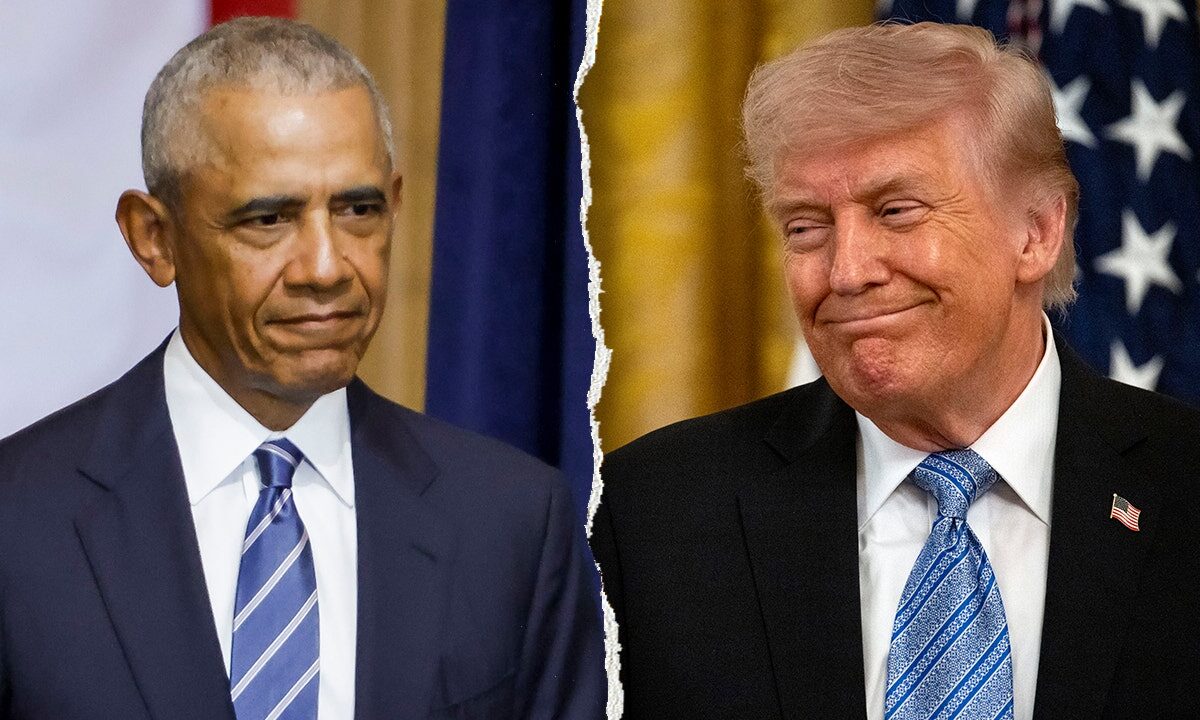
Barack Obama said on the All the Smoke podcast that he has “a suite” in President Donald Trump’s head, using the phrase to underline what he described as an unhealthy focus by the sitting president on his predecessor.
Speaking with hosts Matt Barnes and Stephen Jackson, Obama framed the attention as a sign that Trump is preoccupied with politics of personality rather than steady attention to governing.
Barack Obama on All the Smoke
On the episode, Obama described repeated public references to him from the White House and suggested the fixation revealed priorities he viewed as misplaced.
“I obviously have a room in his head, a suite in his head.”
Obama said his own approach after leaving office has been to focus on ongoing work rather than trading barbs. He argued that dwelling on predecessors is something leaders cannot afford if they want to stay focused on policy and governance.
He told the hosts he monitors public debate but chooses not to act like a regular commentator. That distinction, he said, reflects a judgment about responsibilities versus spectacle.
Obama also offered a personal assessment about how he believes Trump behaves in different settings, saying he has observed differences between the former president’s private and public tones. He presented that as a personal observation rather than a documented assertion.
Obama comments on the All the Smoke podcast; White House issued a response.
White House response
The White House pushed back through spokesperson Davis Ingle in a statement provided to Fox News Digital.
Ingle wrote, “Barack Hussein Obama will go down as one of the most dishonest divisive and destructive Presidents in history.” The line was offered as a direct rebuttal to Obama’s characterization of the current president’s attention.
Fox News Digital published the White House statement alongside its coverage of the podcast exchange, noting the swift official response to the former president’s comments.
What Obama meant and his view on focus
Obama’s central point on the podcast was procedural and practical: effective leadership requires prioritizing a short list of pressing problems.
He said that reacting to every provocation or past conflict distracts from governing. He framed his restraint as a deliberate choice grounded in the duties of office, not merely temperament.
In other recent interviews, including a profile in The New Yorker, Obama described a pattern in which he thinks daily about how to engage but often declines to mount a running public critique. He contrasted that approach with the role of commentators who operate on a different schedule and set of incentives.
That argument is rooted in a broader debate about the role of former presidents in public life. Obama presented his approach as focused on institutional responsibility rather than perpetual reaction.
Why it matters
This exchange illustrates how remarks from high-profile figures can quickly shape political headlines and provoke official responses.
When a former president publicly frames a sitting president’s priorities, it invites immediate rebuttal from the incumbent’s team and can intensify partisan coverage.
Those dynamics matter because they can redirect public attention away from policy details toward interpersonal conflict. News cycles that elevate personal feuds risk compressing the space for detailed discussion of governance.
For the White House, rapid and pointed rebuttals serve both to defend the president’s record and to signal that such critiques will not go unanswered. For the former president and his allies, public comments can be a way to shape long-term narratives about leadership and national priorities.
Source attribution and links
This article is based on reporting by Fox News Digital and the All the Smoke podcast episode cited by that coverage. For the full Fox News article, see the original story:
Listen to the All the Smoke episode here:
All the Smoke podcast episode (YouTube)
Source: Fox News Digital; All the Smoke podcast.