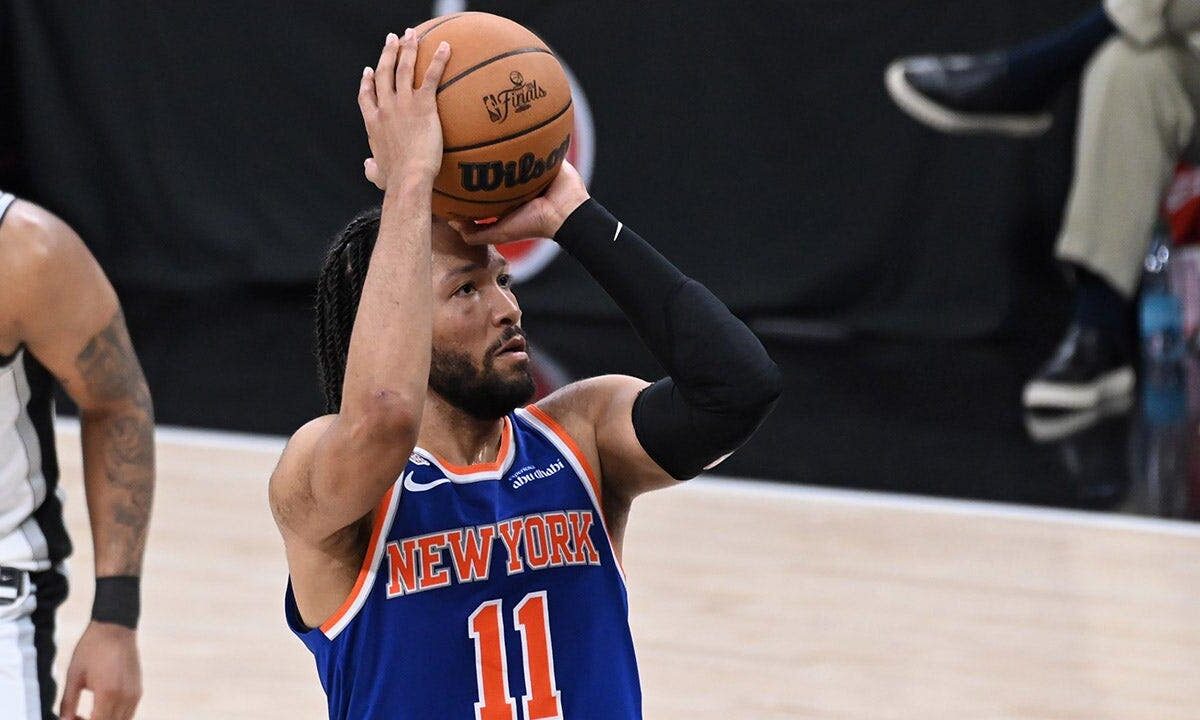
The NBA announced it will test the one free throw rule at this year’s Summer League, with events in Salt Lake City, Northern California and Las Vegas starting July 9. The trial replaces traditional multi-shot foul sequences with a single free-throw attempt meant to preserve the same point value while reducing stoppages and speeding the game.
League officials will use Summer League play as a controlled environment to observe how the change affects game flow, officiating consistency and late-game decision-making. The experiment is explicitly part of the Summer League rule trials and not currently slated for regular-season implementation.
What the NBA announced
The league confirmed the one free throw rule will be applied across Summer League schedules in Salt Lake City, Northern California and Las Vegas when play begins on July 9. The measure will be treated as an experiment within the Summer League format rather than a rule change for NBA regular-season games.
Officials, team staff and players involved in the three Summer League sites will gather feedback and data to evaluate whether the single-attempt approach meets the league’s goals for pace and competitive fairness.
How the one free throw rule works
Under the one free throw rule, any player awarded what would normally be one, two or three free throws instead receives a single free-throw attempt. If the shooter makes that single attempt, the basket counts for the same total number of points that the full sequence would have produced under standard rules.
For clarity: a situation that previously carried two free throws becomes one attempt worth two points; a three-shot sequence becomes a single attempt worth three points. The design keeps scoring equivalence while shortening the interruption caused by multiple free-throw attempts.
Standard free-throw procedures remain in force for the closing minutes of games: the rule will not be applied in the final two minutes of fourth quarters, and overtime periods will continue to use regular free-throw sequences. The G League has employed the one free throw rule since the 2019-20 season, giving the NBA a reference point for application and effects.
Summer League as a rule testbed
Summer League has long been a proving ground for rule and process experiments that later moved into broader professional play. The league previously tested measures such as the coach’s challenge, the 24-second shot clock reset to 14 seconds after offensive rebounds, and the one-shot award for a transition take foul in developmental and summer settings before higher-level consideration.
Those trials let the league collect real-game data on pace, officiating, player safety and competitive balance without immediately altering regular-season play. Summer League environments also let younger players adapt to potential changes and provide practical feedback from coaches and officials.
Potential impact and context
The stated goal of the one free throw rule is to shorten game stoppages and produce a faster, more continuous flow. Reducing multiple free-throw trips trims the number of dead-ball moments, shortens possession interruptions and can quicken transitions back to live play.
The rule fits into broader conversations about game length and structure. NBA Commissioner Adam Silver has advocated experimenting with shorter quarters as part of a package of changes to modernize the game experience; the G League already uses 10-minute quarters. Together, shorter quarters and free-throw experiments are intended to compress total game time while trying to retain the integrity of competition and player statistics.
Strategically, the single-attempt format changes the reward for drawing shooting fouls. Offensive players and coaches may weigh the risk-and-reward of contact differently, particularly in transition or late-clock situations. Defenses might alter how aggressively they contest shots in the paint knowing that a single make can carry the same value as multiple makes under the old system.
Officials will also be watched closely. Adjudicating when the one free throw applies, handling the transition between play and the single attempt, and enforcing the unchanged exceptions for late-game and overtime situations are all practical concerns that Summer League data will help address.
When and where to watch, and what to expect
Summer League play opens on July 9 across the three designated sites. Fans attending or viewing games in Salt Lake City, Northern California and Las Vegas should expect fewer multi-shot stoppages and quicker returns to live action after fouls once the rule is in force.
Coaches may change substitution patterns and end-of-possession tactics as they test how the single free throw alters late-clock scenarios. Players known for drawing contact in transition could see a different payoff for those plays, and analytics staff will be monitoring how foul-drawing tendencies and free-throw percentages influence outcomes under the trial.
Source and reporting
This report is based on coverage by Fox News; see the original story here: Fox News — NBA tests single free throw attempt at Summer League.
The Associated Press contributed to this report.
FAQ
What is the one free throw rule?
The one free throw rule replaces what would normally be one, two or three free-throw attempts with a single free throw that, if made, awards the same total number of points.
When will the rule be used at Summer League?
The rule will be used at Summer League events beginning July 9 in Salt Lake City, Northern California and Las Vegas.
Will the NBA adopt the rule for regular-season games?
That remains uncertain. The league will assess Summer League results, G League experience and feedback from officials, teams and players before considering any regular-season adoption.
The Associated Press contributed to this report.