On America’s 250th anniversary, Mike Pence argued that the next generation needs faith in God and the American ideal — a phrase he used early in his Fox News opinion column to frame a broader plea for teaching character, civic duty and the Founders’ principles to restore public confidence.
Pence situates his case within the bicentennial moment of America 250, saying that commemorations should also be teachable moments. He ties moral formation and constitutional fidelity together, writing that educating children in “why liberty matters” requires both historical context and an understanding of faith’s role in American civic life. The column repeatedly links civic confidence to the values traditionally passed down in families, schools and churches.
Faith in God and the American ideal at 250
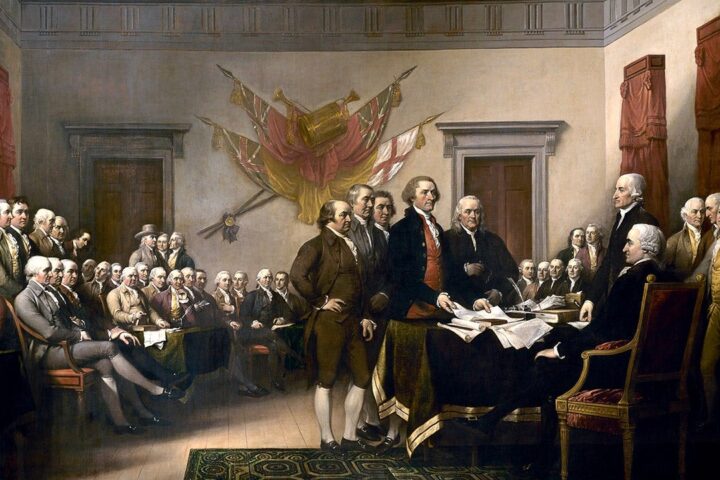
Pence opens his column with a Philadelphia frame: fifty-six delegates who pledged “their lives, their fortunes and their sacred honor” to found a nation. He stresses the Declaration’s claim that people are “created equal” and are “endowed by their Creator with certain unalienable Rights,” arguing those lines are not merely historical artifacts but the moral scaffolding for republican government.
For Pence, the anniversary is a call to ensure that future citizens understand the link between personal character and public liberty. He writes that renewed attention to faith and the Founders’ language will help explain why constitutional institutions — designed “to secure the blessings of liberty” — deserve citizens’ care and defense.
How the Founders framed liberty
The column digs into Founders’ rhetoric to make a civic point: the Declaration’s language intentionally moved American political thought away from monarchy and toward a claim that rights originate outside government. Pence highlights that shift to argue for teaching the philosophical premises behind constitutional checks and balances.
He cites the pledge at Philadelphia and the broader project of building institutions that outlast individuals. In his telling, the Constitution functions as a framework for securing liberty across generations, but that framework requires citizens grounded in character who appreciate why self-government depends on responsibility as well as rights.
Gallup pride, public confidence and civic duty
Pence grounds his urgency in contemporary data. He references a Gallup finding — reported in his Fox News column — that just 33% of Americans now say they are “extremely proud” to be American, a marked decline from earlier decades. (Gallup source: Gallup: Pride in the United States; column: Fox News opinion by Mike Pence.)
He interprets that drop in extreme pride as a symptom of weak civic formation and urges renewed focus on teaching civic duty. Pence names families, schools and local civic organizations as the principal venues for restoring a sense of shared purpose, arguing that civic education should pair constitutional literacy with character formation so citizens are prepared to “preserve, protect and defend the Constitution.”
Voices and key quotes
Pence anchors his column in several famous lines to underline continuity with American tradition. He quotes the Philadelphia delegates’ vow — “their lives, their fortunes and their sacred honor” — and the Declaration’s core assertion that all are “created equal” and possess rights “endowed by their Creator.”
He also invokes the once-common presidential phrasing that casts America as aspirationally exceptional, referencing President Abraham Lincoln’s characterization of the nation as “the last best hope of Earth” to frame the republic as an ongoing moral project rather than a settled achievement. Pence cites these lines to make an aspirational, historical case for renewed civic instruction rather than a solely partisan claim.
Brief counterpoint and context
Not everyone accepts mixing explicit religious instruction with civic education. Critics argue public schools should teach civic knowledge and constitutional history in a religiously neutral way to respect pluralism. Others worry that emphasizing a particular religious framing risks excluding citizens of diverse faiths or none. Pence’s column speaks for one approach — stressing faith’s role in civic life — but the public debate also includes secular proposals for stronger civic curricula focused on institutions and practice.
What comes next: teaching and preservation
Pence moves from diagnosis to prescriptions aimed at families, educators and civic groups. His suggested emphases include curricula that teach how government works, why rights entail responsibilities, and how local service builds habits of citizenship. He presses for storytelling about sacrifice and service so younger Americans grasp the costs that secured their freedoms.
- Increase civic literacy in schools with age-appropriate lessons on the Constitution and citizen responsibilities.
- Create community programs that pair historical context with local service projects to make civic lessons practical.
- Encourage family conversations about public duty, character and the stories behind national symbols and texts.
These practical steps underscore Pence’s central contention: preserving constitutional freedom requires informed, committed citizens. Whether one embraces his religious framing or prefers a secular civic approach, the column renews a familiar argument that institutional durability depends on active civic formation.
Source attribution: Opinion column by Mike Pence, Fox News: MIKE PENCE: The next generation needs faith in God and confidence in the American ideal. Gallup data on national pride: Gallup — Pride in the United States. Founders’ texts: Declaration and Constitution transcripts at the National Archives: Declaration of Independence, U.S. Constitution. Context on Lincoln: Abraham Lincoln (Britannica).