
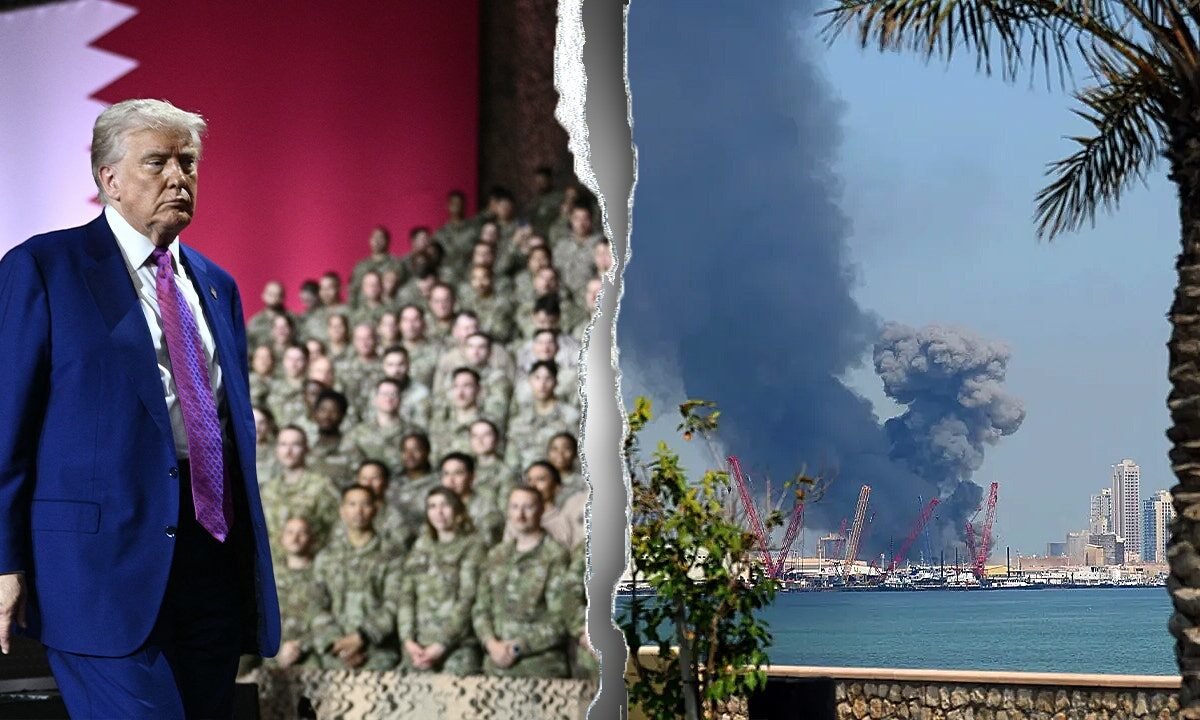
U.S. defense planners are rethinking the Pentagon Middle East base strategy after weeks of Iranian missile and drone strikes exposed vulnerabilities at major Gulf hubs. Officials say a dispersal of forces, rotating units and shifting command nodes westward are among the planning options under active consideration as part of a force posture review.
Pentagon Middle East base strategy: what officials are weighing
Senior planners are reportedly considering dispersal of forces across a broader network of facilities, and to move functions west or even relocate operations to Israel as contingency steps to reduce concentrated risk. Reporting and defense officials describe these as planning options — assessments to preserve capabilities while minimizing exposure, not declared changes in U.S. policy.
Options under review include rotating forces through more locations, scattering aircraft and logistics hubs, and shifting some command-and-control nodes away from exposed facilities. A Pentagon spokesperson told reporters, “We do not have any force posture changes to announce or anything to provide at this time.” The emphasis from officials is that this work remains contingency planning rather than immediate execution.
Recent attacks and damage
Operation Epic Fury — a series of Iranian missile and drone strikes — struck multiple U.S. installations across the Gulf, including Naval Support Activity Bahrain (home to the U.S. Fifth Fleet), Al Udeid Air Base in Qatar, Al Dhafra Air Base in the UAE and Ali Al Salem Air Base in Kuwait.
The Wall Street Journal reported extensive damage to command facilities and communications infrastructure at Naval Support Activity Bahrain (Wall Street Journal). Separately, Fox News Digital reported that, since Feb. 28, 13 U.S. service members were killed and about 400 wounded, figures attributed in that reporting to defense officials (Fox News Digital).
Military spokespeople emphasized that protecting people, not buildings, drove initial responses. As Central Command spokesperson Navy Capt. Tim Hawkins told Fox News Digital, the military “rightfully prioritized the protection of people over buildings, and our strategy of protecting people worked.”
How dispersal and alternate command-and-control would work
Dispersal aims to reduce the risk that a single strike could disable a critical capability. That can mean scattering aircraft, logistics hubs and command nodes so no one facility is indispensable. Retired Rear Adm. Mark Montgomery said the military already has started relying more on alternate command-and-control locations and rotating forces rather than concentrating them at a handful of nearby installations: “We’re not relying on them in the same way that we did before the war,” he said.
How dispersal would work in practice depends on secure and redundant communications, prepositioned logistics, and distributed maintenance and sustainment. Implementing alternate command-and-control raises tradeoffs: dispersed nodes require secure communications and redundant logistics across a wider geography; rotating forces complicate continuity, training and sustainment; and moving some capabilities westward can reduce immediate responsiveness to incidents in the eastern Gulf.
The U.S. Fifth Fleet and CENTCOM would remain central to regional operations, but officials are reviewing how the headquarters and their supporting communications and command-and-control links are distributed. Dispersal can “buy time” against incoming threats, but it does not remove the need for access to basing to carry out missions from counterterrorism to maritime security.
By the numbers
– U.S. troop presence across the Middle East: about 40,000, as reported in briefings and media coverage.
– Al Udeid Air Base personnel: roughly 10,000 U.S. service members on the installation, per reporting.
– Reported casualties since Feb. 28: 13 killed and about 400 wounded (figures reported by media outlets citing defense sources).
Why it matters
Adjustments to the Pentagon Middle East base strategy affect deterrence, troop safety and the United States’ ability to respond quickly across the region. Concentrated basing provides rapid reach and simplifies logistics and command, but it also creates clustered targets in an era of precision strike and swarming drone threats. A force posture review aims to balance those tradeoffs while preserving operational reach.
Analysts and former commanders caution there is no perfect posture: some countries and facilities will be evaluated “independently based on our relationships with those countries,” and longer-range threats can complicate even more dispersed footprints. Any decision to move functions west or relocate operations to Israel would be treated as a planning option and would require diplomatic, logistical and political coordination.
What comes next
Officials say there are no posture changes to announce now. The Pentagon and Joint Staff describe the work as continuous assessment: “As a planning organization, we continually assess the security environment and make adjustments to best support operations and protect our troops,” a Pentagon spokesperson told reporters.
Near-term steps will likely include further damage assessments, contingency planning for alternate command-and-control, exercises to test rotation models and diplomatic consultations with host nations. Any significant shift would require logistics planning, host-nation agreements and, depending on scale and cost, possible congressional consultations. Retired Rear Adm. Mark Montgomery and other planners emphasize incremental testing of concepts before large-scale moves.
Frequently asked questions
What happened with Pentagon Middle East base strategy?
Planners accelerated contingency work after repeated Iranian missile and drone strikes showed several large Gulf bases sit within range. Reporting says officials are weighing dispersal of forces, rotating forces, and options to move functions west or relocate operations to Israel.
Why does Pentagon Middle East base strategy matter?
Base posture determines how quickly U.S. forces can respond, how well they deter adversaries, and how vulnerable they are to attacks. Changes could shift regional deterrence and affect operations such as maritime security and counterterrorism.
What happens next?
Officials say there are currently no announced changes. Expect further assessments, planning, and diplomatic talks. Any major posture adjustments would unfold over months and require logistical and political coordination.
Reporting cited in this analysis includes coverage by Fox News Digital and a Wall Street Journal story on damage assessments. Source: Fox News Digital: How Iran attacks are forcing the Pentagon to rethink its decades-old Middle East base strategy. Additional reporting on damage at Naval Support Activity Bahrain: Wall Street Journal.


