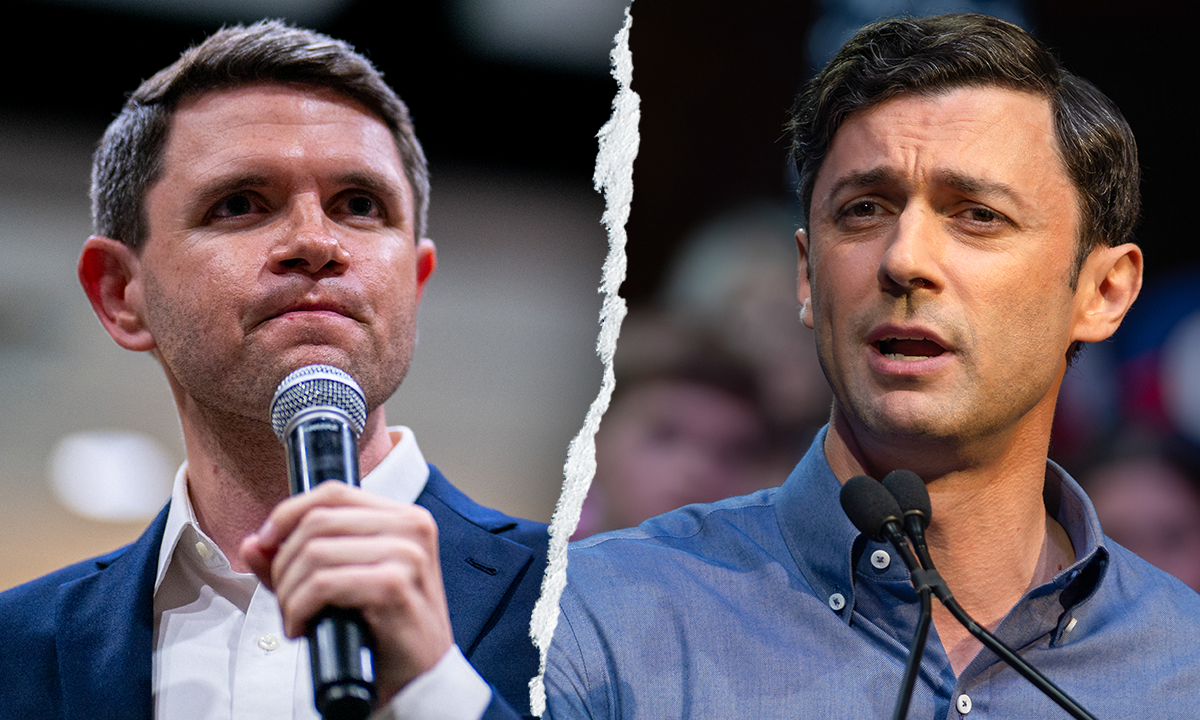
Reid Hoffman donations are at the center of a political controversy after reporting shows the billionaire investor gave millions to Lone Star Rising and smaller amounts to national Democrats. The disclosures have intensified scrutiny of candidates who attacked an “Epstein class” while accepting money tied to Hoffman, and have driven fresh questions about money and influence in competitive races.
Reid Hoffman donations and where the money went
Public records and reporting indicate Hoffman donated $11.5 million to Lone Star Rising, the pro-James Talarico super PAC, with roughly $10 million arriving in a single June transfer that dominated the group’s second-quarter receipts (Texas Tribune). Separately, campaign finance filings show Hoffman made the maximum allowable individual contributions of $7,000 to Jon Ossoff’s campaign and $7,000 to Sen. Cory Booker’s re-election effort for the current cycle.
- $11.5 million: Hoffman to Lone Star Rising (Texas Tribune)
- $10 million: single June transfer to Lone Star Rising
- $7,000: individual contribution to Jon Ossoff; $7,000 to Cory Booker (campaign filings)
- July 19, 2013: documented MIT meeting involving Hoffman and Jeffrey Epstein (MIT records)
Timing and documents: what filings and records show
FEC filings and public reporting provide the timeline that drove the recent backlash. The Texas Tribune published the $11.5 million figure and noted the concentrated June transfer that accounted for the bulk of Lone Star Rising’s quarter. Campaign finance reports confirm the individual donations to Ossoff and Booker, reflecting standard, legal contribution limits.
Separate records cited in investigative reporting include academic and institutional documents. MIT records place a meeting on July 19, 2013, involving Hoffman and Jeffrey Epstein during Hoffman’s time on the Media Lab advisory council (MIT records). The Wall Street Journal and other outlets have reported additional contemporaneous accounts, including an overnight stay on Little Saint James that Hoffman has acknowledged in past statements; Hoffman has not been charged with any crimes related to Epstein.
How candidates responded to the backlash
Campaigns have emphasized legal distinctions between direct donations and independent expenditures while seeking to blunt the political damage. Talarico’s aligned super PAC, Lone Star Rising, has accepted the outside funding and run pro-Talarico ads; the campaign noted the group’s spending does not stem from campaign coordination, a point JT Ennis, a Talarico spokesperson, reiterated to Fox News Digital: “our campaign has no control over contributions to any super PAC.”
Jon Ossoff’s team stressed that small individual contributions and criticism of billionaires are not mutually exclusive, while underscoring that Hoffman has not been charged with wrongdoing. Candidates have pointed to the legal firewalls that separate campaigns and super PACs, but opponents say the optics undercut messages about limiting billionaire influence.
Why the Epstein ties matter to voters
For many voters, the concern is less about criminal liability and more about judgment and influence. Reporting that ties a major donor to Epstein-era interactions — including a noted MIT meeting and an acknowledged overnight visit to Little Saint James — has prompted questions about whether candidates are consistent when criticizing wealthy backers while accepting money linked to them (Wall Street Journal; MIT records).
Critics argue this highlights a systemic issue: wealthy donors can bankroll outside groups that shape races even as candidates decry big-money influence. Supporters counter that donations to independent expenditure groups and lawful, capped individual donations are standard practice in modern campaigns. The dispute is likely to factor into voter perceptions and turnout in tight contests in Texas and Georgia.
What comes next for the races and donations
Immediate next steps will be political: oppositions will press the optics in ads and debates, and campaigns may refine messaging or disclose additional details ahead of filing deadlines. Lone Star Rising has already deployed funds in pro-Talarico advertising, and how that spending translates to voter support will determine near-term consequences.
On the legal and policy side, the episode may revive calls for tighter disclosure and reform of super PAC rules. Federal law prohibits coordination between campaigns and super PACs, limiting direct remedies such as returning funds tied to independent groups; candidates can, however, return direct contributions when appropriate. Observers expect renewed attention to contribution limits and transparency as part of the broader money-in-politics conversation.
“The public deserves clarity about who’s financing these messages,” one outside watchdog analyst told reporters, emphasizing that transparency — not just legal compliance — shapes voter trust.
Source attribution: This analysis is based on primary reporting by Fox News Digital and cites reporting and public records from the Texas Tribune, Wall Street Journal coverage, and MIT records. Primary reporting: Fox News Digital. See related reporting at the Texas Tribune, MIT records (institutional report), and Wall Street Journal coverage.