
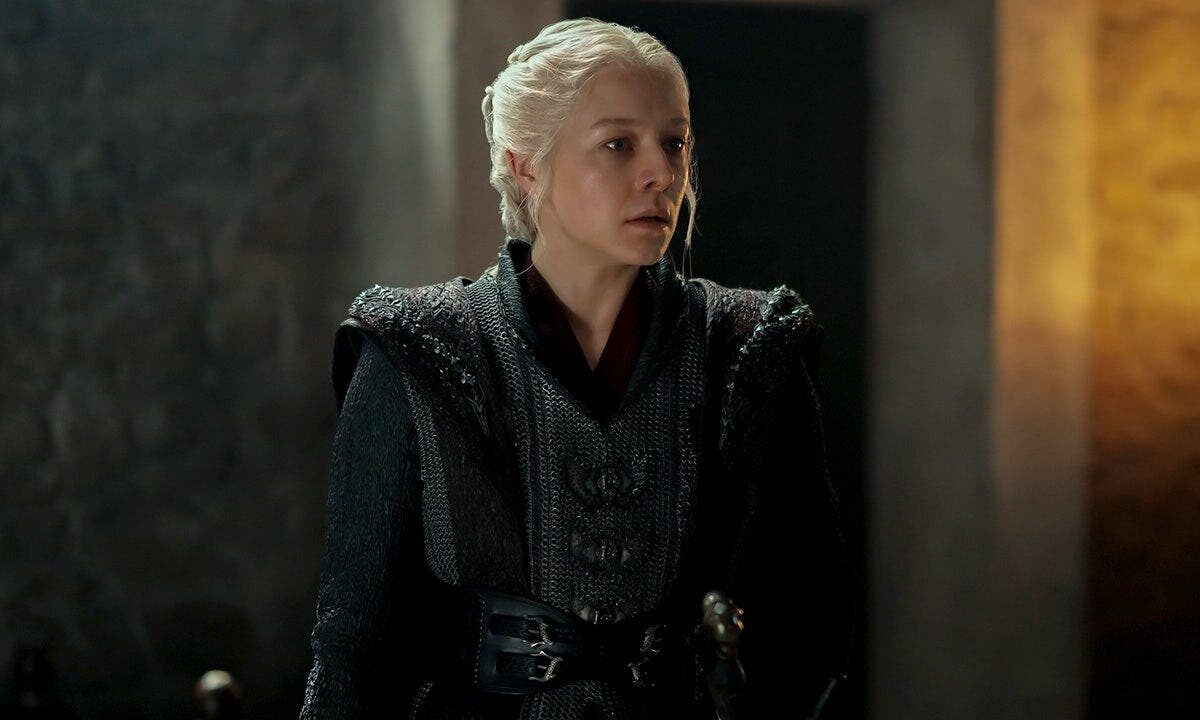
WARNING: SPOILERS BELOW. CONSIDER YOURSELF WARNED. In episode two of House of the Dragon season three, Rhaenyra Targaryen returns to Kings Landing and moves quickly to claim the Iron Throne. The installment compresses a major reversal of power into a handful of tense scenes and closes on a grisly death that has set fans and forums ablaze.
Rhaenyra Targaryen returns to Kings Landing
The episode begins with Rhaenyra’s arrival at the capital, arriving not as a besieging force but as a decisive presence. Rather than a prolonged siege, the Targaryen claim unfolds with speed: a measured show of force, targeted confrontations and careful political moves that render many of the city’s defenses and rival calculations moot. The writing and staging emphasize how quickly the balance of power can tip when key players are removed or intimidated.
Cinematography compresses what might have been a lengthy campaign into a series of sharp, intimate beats. Close-ups and brief exchanges replace large-scale battle sequences; the camera lingers on faces and choices more than on wide battlefield carnage. This choice heightens the sense that the takeover is as much about wills and presence as it is about armies.
The Iron Throne scene is pivotal: Rhaenyra approaches power with a mixture of command and weary certainty. The sequence does not depict a drawn-out fight for the physical throne but instead stages the moment as the culmination of political pressure and fear. That makes the claim feel inevitable yet cold, underscoring the moral cost of victory.
The episode’s final stretch introduces a grisly death that many viewers found shocking. The production does not linger on gore for spectacle’s sake, but the suddenness and brutality of the event underscore how ruthlessness can follow in the wake of swift political gains. That tonal turn—from taut strategy to a brutal endpoint—gave the episode emotional weight and provided the most-discussed moment online.
Fan reaction on Reddit
Reddit filled almost immediately after the episode aired, with multiple threads dissecting both craft and consequence. Fans praised the episode’s pacing and the way it concentrated big shifts into a short runtime; at the same time, many users expressed disgust and sorrow at the episode’s darker moments. Several high-visibility threads used blunt language—some commenters labeled certain choices or scenes “VILE”—to capture their shock and moral revulsion.
Commenters split along predictable lines: some lauded the episode as peak television for its daring storytelling and emotional intensity, while others questioned whether the show crossed a line in how it presented the death. Top comments highlighted specific lines of dialogue and brief visual moments from the throne scene that resonated: the economy of a glance, the silence in a council chamber, or the expression on a character’s face as power shifted.
Outside the loudest threads, a number of fans engaged in sober analysis—thread after thread mapped likely ripple effects in the court, noted which houses were exposed by the swift takeover, and speculated about long-term consequences for surviving claimants. That mixture of visceral reaction and strategic speculation reflects how invested the show’s audience remains in both character arcs and political fallout.
Context for season three and the series
House of the Dragon is now in its third season on HBO. Season three premiered on June 21st and has moved quickly into a concentrated arc that prioritizes the immediate costs and consequences of power grabs. This episode positions Rhaenyra as a central arbiter inside the capital and forces other players into reactive postures.
The season continues to echo themes long associated with the wider Game of Thrones universe—legacy, legitimacy and the personal cost of rulership—but it often chooses tighter, more contained scenes to carry those themes. Where Game of Thrones sometimes opted for sweeping battles, House of the Dragon in this season frequently turns to intimate confrontations that leave viewers unsettled precisely because they dramatize the human toll of political decisions.
For viewers tracking continuity and worldbuilding, the episode raises questions about alliances and survival. Houses that thought themselves secure must now decide whether to bend, bargain or resist. The series has repeatedly shown that short-term gains can create long-term vulnerabilities; this episode illustrates that pattern in stark terms.
What comes next
Episode two closes with multiple threads unresolved. Expect the next episodes to focus on the fallout inside the Red Keep and on which nobles will choose to negotiate versus oppose Rhaenyra’s claim. Look for scenes that explore consolidation of power—marriage, appointments, pardons and purges are all common tools for securing authority in Westeros—and watch how characters who once seemed peripheral reposition themselves.
House of the Dragon season three continues to air on HBO. New episodes will unfold the political consequences of this week’s events, and viewers should pay attention to subtle signals—who is rewarded, who is silenced, and which houses begin to coalesce in opposition. The show’s choice to emphasize quick, consequential scenes suggests the next installments will continue to trade large set-piece battles for high-stakes personal and political reckonings.
If you follow discussions on Reddit and other forums, expect a mix of emotional reaction and detailed plot theory. Fans will continue to debate whether the show’s tonal pivot in episode two was earned by character choices or driven by shock value; both lines of conversation are likely to shape expectations for the rest of the season.
Source: Fox News Outkick reporting on the episode. Original coverage: https://www.foxnews.com/outkick-culture/rhaenyras-return-kings-landing-house-dragon-season-three-fans-calling-peak-television.


