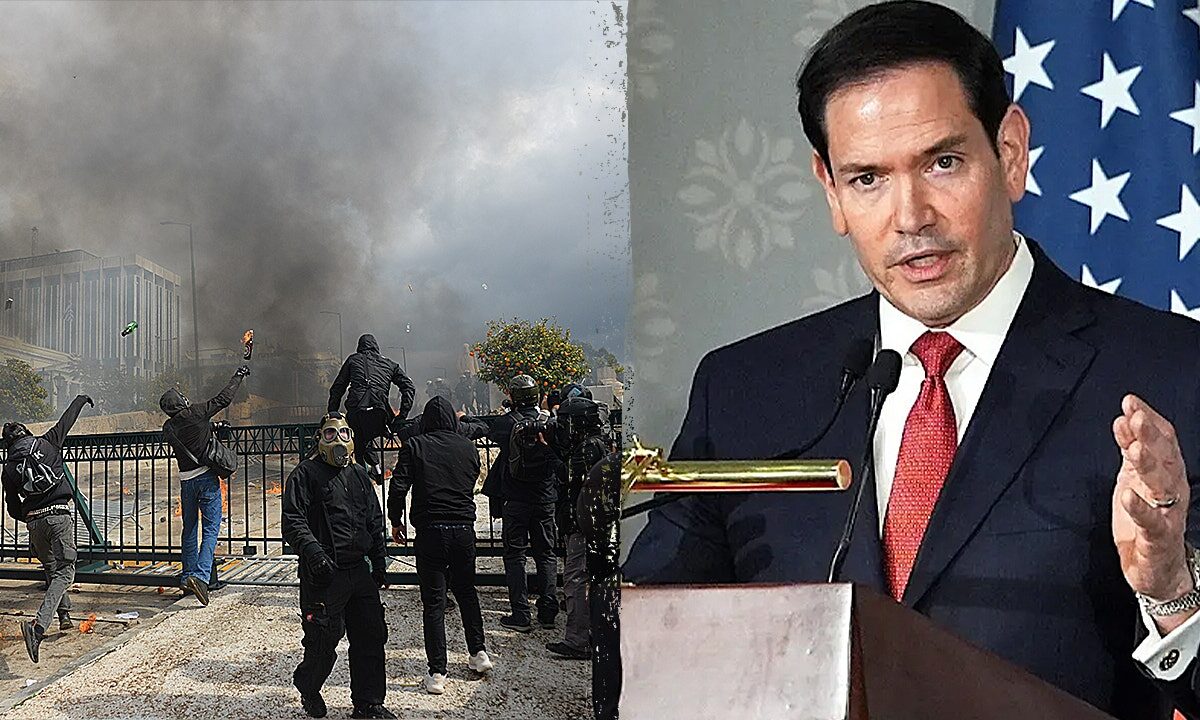
A U.S.-hosted ministerial convened by Sen. Marco Rubio brought roughly 65 countries together to coordinate a multinational response to violent far-left extremism, officials said. The meeting aimed to expand intelligence sharing, improve cross-border law enforcement cooperation and tighten financial controls against groups the U.S. has designated.
- Designated organizations: Antifa Ost; Informal Anarchist Federation/International Revolutionary Front (FAI/FRI); Armed Proletarian Justice; Revolutionary Class Self-Defense.
- Recent attacks cited by officials: a July 1 firebombing in Thessaloniki that killed the mother of parliamentary candidate Afroditi Nestora; a January arson at a Berlin power transmission facility that cut electricity to tens of thousands.
What the ministerial will do
The ministerial, hosted under U.S. auspices and led publicly by Sen. Marco Rubio, focused on three practical pillars: expanding intelligence exchanges, improving cross-border law enforcement coordination, and disrupting the financial networks that enable transnational violent cells. Delegations from about 65 countries attended sessions on threat trends, terrorist financing and infrastructure protection.
Officials described the meeting as the product of months of diplomatic outreach to persuade partners that a pattern of transnational violent incidents requires coordinated action. Sessions included technical briefings on forensic indicators, operatives’ travel and logistics, and mechanisms for rapid information sharing after attacks.
“This has been a blind spot for a lot of our partners; they have not seen these trends in decades.” — senior State Department official, on the record
U.S. view of violent far-left extremism
The U.S. government and its partners used the phrase “violent far-left extremism” to describe what they say are small, ideologically driven networks that have carried out arson, bombings and other attacks across borders. In November, U.S. officials announced designations of four groups and unveiled steps intended to disrupt their financing and transnational movement.
Officials emphasized the stated goal is to target violent criminal conduct, not political beliefs. They argued that certain groups have shared tactics and exploited cross-border routes to radicalize and coordinate attacks, and that disrupting finance and logistics can reduce the risk to civilians and critical infrastructure.
“We haven’t waded into trying to disambiguate people’s beliefs and ideologies; our focus is criminal violence.” — senior State Department official, on the record
Recent attacks cited by officials
Officials at the ministerial cited two attacks as part of the context for urgent international cooperation. Greek authorities said a coordinated July 1 firebombing in Thessaloniki targeted homes linked to members of the governing New Democracy party; the attack killed the mother of a parliamentary candidate, Afroditi Nestora, and investigations are ongoing with several arrests reported by Hellenic authorities.
Separately, German authorities have investigated a January arson at a power transmission facility near Berlin that interrupted electricity to tens of thousands. German prosecutors later said the case was being handled at the federal level amid inquiries into possible links to an organized extremist group; investigators have described their work as active.
Pushback and legal risks
Analysts and some foreign officials questioned whether far-left actors cohere into a single international terrorist threat comparable to other transnational movements. Critics cautioned that broad labels can risk drawing peaceful activists into security sweeps or be misapplied by governments seeking to stifle dissent.
U.S. participants pushed back on that framing at the ministerial, saying the effort is narrowly tailored to violent criminal activity and seeks legal safeguards to protect civil liberties. Experts at the meeting highlighted the importance of evidence-based thresholds for law enforcement action and independent judicial oversight.
Legal advisers and civil-rights observers at side sessions urged clear definitions and transparency so that counterterrorism measures do not infringe on lawful political expression. Several delegations said they will seek legal reviews at home before adopting new information-sharing or prosecution tools.
Next steps for international cooperation
Officials outlined concrete follow-ups: a framework for sharing threat indicators and forensic data; regularized intelligence exchanges among willing partners; coordinated law enforcement operations; and stepped-up efforts to trace and freeze cross-border financing. Treasury and law-enforcement officials were slated to lead sessions on financial controls and mutual legal assistance.
U.S. officials said working groups will meet in the coming months to operationalize the ministerial outcomes and to develop rapid-notification channels for emerging threats. Several partner countries reportedly expressed interest in multilateral exercises on critical-infrastructure protection and joint investigative teams.
Reporting on the meeting drew on administration statements and on-the-record remarks made at the ministerial. Officials stressed investigations into the cited attacks remain active and that international cooperation is intended to support, not supplant, domestic prosecutions.
Source attribution
- Fox News: reporting on the ministerial and quotes from officials (original reporting).
- U.S. government readouts and statements from officials who participated in the ministerial.
- Public statements and press releases from Greek law-enforcement authorities regarding the Thessaloniki firebombing.
- Public statements from German prosecutors and federal authorities regarding the January arson near Berlin.
Two quoted officials were identified at the ministerial as senior State Department officials speaking on the record. Reporting drew on those on-the-record remarks as well as official readouts and public statements by Greek and German authorities.