
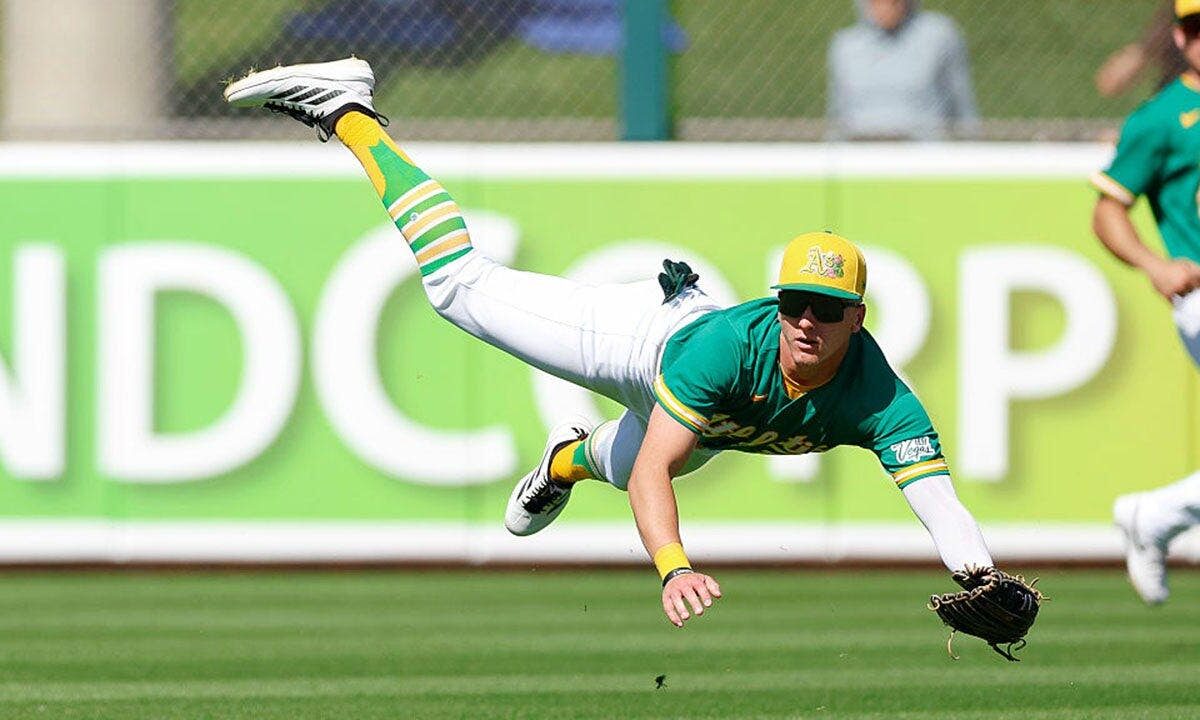
Ryan Lasko spinal surgery was performed this week after the Oakland Athletics outfield prospect suffered a neck injury in a hard outfield collision. The procedure, described by team and medical officials as spinal decompression and stabilization, followed imaging that showed a fracture at the C6-C7 vertebrae and left Lasko without feeling in his legs.
The 24-year-old, listed as the A’s No. 18 prospect, remains hospitalized under close neurologic observation as doctors and the team monitor his condition and recovery. The following summarizes what is known about the injury, the operation, the team reaction and what may come next for the player and the organization.
What happened on the field
The injury occurred at a Double-A Midland game when Lasko, playing the outfield, collided with right fielder Devin Taylor while both went for a ball in the gap. Video of the play showed a heavy impact as Lasko’s neck contacted Taylor’s chest and shoulder area.
After the collision, Lasko was down on the turf for about 10 minutes while trainers and teammates attended to him. He was subsequently taken off the field on a cart and transported to a nearby hospital the same day for further evaluation and imaging.
Ryan Lasko spinal surgery and treatment
Lasko underwent spinal decompression and stabilization surgery at Texas Health Presbyterian Hospital Plano to address the reported fracture at the C6-C7 vertebrae. The operation was aimed at relieving pressure on the spinal cord and stabilizing the injured portion of the cervical spine.
Team officials said Dr. Jonathan Poggi led the surgical team. Medical updates indicate Lasko currently does not have feeling in his legs. Dr. Jonathan Poggi is reported to have said, “We hope he will regain feeling,” while emphasizing the need for ongoing monitoring and follow-up care.
Clinicians involved in such cases commonly perform early post-operative neurologic checks, pain management and imaging to assess decompression and hardware placement when stabilization is required. For Lasko, those routine but critical steps will determine immediate next steps in rehabilitation planning.
Prognosis and team reaction
Doctors on Lasko’s care team described the outlook as uncertain and emphasized that recovery from spinal cord-related injuries can be variable. Medical staff said there is hope for regained sensation, but improvements can occur gradually and are often measured over weeks to months.
Manager Mark Kotsay addressed the club and media following the surgery, asked for support and prayers for Lasko and his family, and acknowledged the long road ahead. Kotsay said, “It is obviously going to take time,” and asked the organization and fans to keep the player and his family in their thoughts.
The club has stressed that no firm timeline exists for recovery or a return to baseball activity and that they will follow the advice of Lasko’s medical team as his rehabilitation progresses.
What comes next for Lasko
Immediate next steps after surgery typically include inpatient observation, repeated neurologic exams and early consultations with physical and occupational therapy teams to establish a baseline for motor and sensory function. Pain control and prevention of post-operative complications are also priorities.
Over the subsequent weeks, clinicians will reassess with imaging and neurologic testing to determine whether additional interventions or changes to the rehabilitation plan are needed. If sensation or movement begins to recover, therapy will be tailored to maximize functional gains and independence.
It is important to note that recovery timelines for spinal cord involvement vary widely. Some patients show early improvement within weeks, while others require months or longer to regain function, and in some cases residual deficits persist. Medical professionals generally avoid definitive predictions until measurable progress is observed in follow-up exams.
Background on Lasko and impact for the A’s
Ryan Lasko was a second-round pick by the Oakland Athletics in the 2023 MLB Draft out of Rutgers University and is ranked by the organization as its No. 18 prospect. He had participated in big-league camp this spring and was building his professional career at Double-A Midland prior to the injury.
The injury represents a significant and immediate challenge for Lasko and the A’s prospect pipeline. Beyond the human concern for the player and his family, the club will need to coordinate medical care and development timelines as they assess his long-term availability and role in the organization.
In the short term, roster and assignment plans for Midland and surrounding levels may be adjusted to cover playing time and roster needs while the team supports Lasko’s recovery. The long-term impact will depend entirely on his neurologic progress and medical guidance over the coming months.
FAQ
What surgery did Ryan Lasko have?
He underwent spinal decompression and stabilization surgery to address a reported fracture at the C6-C7 vertebrae. The aim of such procedures is to relieve pressure on the spinal cord and stabilize the cervical spine to prevent further injury.
What is the current prognosis for feeling in his legs?
Medical staff report that Lasko currently does not have feeling in his legs. Dr. Jonathan Poggi said, “We hope he will regain feeling,” but clinicians also state that recovery timelines are uncertain and may take substantial time to evaluate.
How will this affect Lasko and the A’s prospect pipeline?
In the immediate term, Lasko will focus on recovery and rehabilitation rather than baseball activities. The club will monitor his progress and adjust development plans based on medical recommendations. The long-term effect on the A’s pipeline will hinge on how much neurologic function Lasko regains and the pace of his rehabilitation.
Source and attribution
This report is based on original reporting by Fox News: https://www.foxnews.com/outkick-sports/as-prospect-undergoes-spinal-surgery-horrifying-collision-leaves-him-without-feeling-legs. Medical statements reflect the treating team’s public comments and are presented with acknowledged uncertainty; prognoses for spinal cord-related injuries are typically made cautiously and updated as clinical progress is observed.


