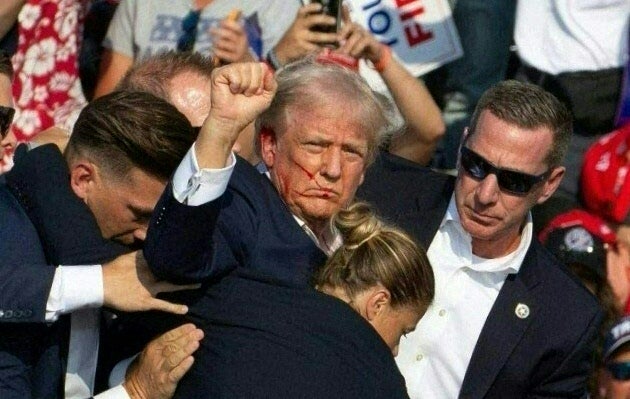
The Department of Homeland Security Office of Inspector General (OIG) concluded that the U.S. Secret Service missed multiple opportunities to detect and disrupt the July 13, 2024, shooting at a campaign rally in Butler, Pennsylvania. The 64-page watchdog report finds missed radio transmissions, a counter-drone failure and unblocked sightlines that together created conditions the attacker exploited.
The OIG says Thomas Matthew Crooks fired eight shots at the event. The attack grazed Donald Trump in the ear, killed attendee Corey Comperatore and critically injured two other spectators. The report attributes a string of operational and communication breakdowns to the agency’s shortcomings.
What the OIG found
The OIG’s 64-page report details a series of failures across planning, communications and counter-drone operations by the Secret Service and partners.
- The report documents that Secret Service elements missed 102 radio transmissions related to an increasingly urgent search for a suspicious individual, including alerts that the suspect was on a roof with a long gun.
- The attacker, identified as Thomas Matthew Crooks, fired eight shots during the rally.
- Donald Trump was grazed in the ear; attendee Corey Comperatore, 50, was killed and two others were critically injured.
- The OIG concluded the agency’s limited intelligence sharing, inconsistent processes and poor collaboration with campaign staff and local law enforcement set the conditions for missed opportunities to prevent the attack.
Secret Service communications and command issues
The report highlights chronic communications problems that impaired situational awareness on the ground.
Agents and supporting personnel operated out of separate command locations roughly 257 yards apart, and radio connectivity between those positions was intermittent and highly limited.
Investigators say the operational picture was fragmented: the communications room received only a handful of calls and texts even as others were attempting to escalate concerns. The OIG also quoted a former agent describing “too many command posts,” which the watchdog said contributed to confusion and missed transmissions.
Because the Secret Service did not receive or act on critical transmissions, protectee details were not alerted to delay the speech or remove the protectee from the podium before shots were fired.
Counter-drone and line-of-sight gaps
The OIG found that technical failures and planning gaps allowed reconnaissance and an unobstructed shooting position.
Crooks flew a drone undetected for almost nine minutes before the rally. The drone covered 471 yards from the stage at an altitude reported by the watchdog as 102 feet. At the time, the on-site counter-drone system was not operational because of an equipment malfunction and—according to the report—an under-trained operator.
Separately, agents had identified the American Glass Research International (AGR) complex during advance walkthroughs as a line-of-sight vulnerability, but measures to block that view were not implemented effectively. Campaign staff declined an initial proposal to use onsite trucks to obstruct the sightline because of concerns about press photographs. An alternate truck placement was proposed but never verified as moved.
The result, the OIG said, was an unobstructed view of the podium from about 155 yards atop the AGR roof.
Missed warnings and protective failures
Investigators found that the Secret Service failed to communicate key intelligence to the protective detail at the appropriate time.
The OIG says agents did not warn the protectee’s detail that Crooks had used a range finder, had a long gun and had climbed onto the AGR roof. The agency’s failures to aggregate and transmit threat information meant protectees and field agents lacked a complete threat picture.
The report also describes a failure to use available resources: trucks that could have blocked the line of sight were not used after campaign staff rejected their initial placement, and no follow-up verification ensured an alternative plan was executed.
OIG recommendations and next steps
The watchdog offered several concrete reforms intended to reduce the risk of similar failures at future events. Key recommendations include:
- Mandatory threat communication protocols to ensure timely sharing of critical information among Secret Service components, campaign staff and local law enforcement.
- Enhanced counter-drone training and equipment maintenance to ensure detection systems work and are operated by qualified personnel.
- A formal process to document identification and mitigation of line-of-sight vulnerabilities during event advance planning.
- Clearer command post consolidation and verified execution of mitigation actions so that proposed fixes (for example, blocking sightlines) are actually implemented.
Why it matters
The OIG’s findings matter because they link specific, fixable failures—communications, equipment readiness and planning decisions—to deadly real-world outcomes.
For agencies charged with protecting public officials, the report frames both technical and organizational vulnerabilities that, if unaddressed, could be exploited again. The recommendations aim to improve both the technology and the human processes that govern event security.
Frequently asked questions
What did the DHS OIG conclude about the Secret Service response?
The OIG concluded the Secret Service missed multiple opportunities to detect and disrupt the attack due to limited intelligence sharing, poor communication, fragmented command posts and failures in advance planning. The watchdog detailed these findings in a 64-page report.
How did the drone and line-of-sight issues contribute to the attack?
Investigators say Crooks flew a drone undetected for almost nine minutes before the rally and used it to observe the stage area. A counter-drone system on site malfunctioned, and identified line-of-sight vulnerabilities—most notably at the AGR complex—were not blocked, leaving an unobstructed view from about 155 yards.
What reforms did the OIG recommend to prevent similar failures?
The OIG recommended mandatory threat communication, enhanced counter-drone training, formal documentation and mitigation of line-of-sight vulnerabilities, and improved command post coordination and verification of mitigation actions.
Source attribution: Reporting above is based on the Fox News summary of the DHS Office of Inspector General findings: Fox News, and the DHS OIG’s full 64-page report available via the Department of Homeland Security Office of Inspector General: DHS OIG.