The Supreme Court transgender athletes ruling, issued in a 6-3 decision, returned authority over transgender participation in school sports to individual states rather than setting a single federal standard. The short opinion means state legislatures, education agencies and local athletic bodies will play the central role in shaping eligibility rules for student-athletes.
Within hours of the decision, many House Democrats reframed public remarks to focus on immediate voter concerns — especially the economy and congressional dysfunction — rather than pressing for a federal legislative response.
What the Supreme Court transgender athletes ruling said
The court’s 6-3 majority did not create a nationwide ban or a unified eligibility test. Instead, the ruling affirmed that states have the authority to enact and enforce laws that define who may compete on school teams aligned by gender. Legal commentators say that leaves room for a broad spectrum of state-level approaches, from statutory bans to rules that preserve inclusive participation.
The decision itself did not automatically change every school policy; rather, it removes a federal uniform limitation and allows states to proceed with legislation, regulatory guidance or delegated rulemaking. That will likely produce varying policies across state lines and within local school systems.
How House Democrats responded
When pressed on the ruling, many members of the House Democratic caucus steered public attention to other priorities. Rep. Jim McGovern, D-Mass., told reporters, “I think we spend far too much time obsessing over that,” adding that “people should be focused on the dysfunction here in Washington.” His comments typified a broader approach by some Democrats to avoid deep engagement on the issue at the federal level.
Rep. Sydney Kamlager-Dove, D-Calif., emphasized economic concerns, saying lawmakers should concentrate on lowering costs for families and addressing pressing budgetary issues. “I think the focus should be on this economy and getting us out of this war of choice and bringing down gas prices so that folks do not have to make real decisions about if they’re going to put food on their table or gas in their tank,” she said.
Other Democrats echoed those themes while expressing concern for students affected by the decision. Rep. Sarah Elfreth, D-Md., called the outcome “unfortunate for a lot of folks across this country,” reflecting a recognition that the ruling could have direct consequences for transgender youth and their families.
Local control: schools, associations and parents
With the court shifting final authority to states, school athletic associations, local school boards and parents become key decision-makers. Rep. Seth Magaziner, D-R.I., argued for local rulemaking, saying, “Let the school athletic associations, let parents, let people at the local level decide which sports and which age groups should be co-ed or what the rules should be.”
In practice, that means state laws may set broad guardrails while leaving the technical eligibility criteria — such as verification procedures, age divisions and competition formats — to athletic associations and school districts. Those organizations typically handle operations, safety protocols and the mechanics of season scheduling, and they can adopt or revise bylaws to align with new state rules.
For families and coaches, the immediate impact will be how quickly states and local bodies move to implement or change policies. Some districts may convene special committees, hold public hearings, or seek guidance from state education agencies in the coming weeks.
Why the ruling matters for student-athletes and states
The ruling matters because it makes geographic location a determining factor in whether transgender students can compete on teams aligned with their gender identity. Student-athletes and families could face different eligibility rules depending on their state or school district, affecting access to athletic opportunities, team composition and the ways schools verify eligibility.
Policy variation could also ripple into interscholastic competitions that cross state lines, college recruiting, and youth sports organizations. Athletic associations that run multi-state events may need to reconcile differing state rules or adopt event-specific policies to manage competition fairness and logistics.
Advocates on both sides of the debate have signaled they will continue to press their positions at the state and local levels. Supporters of restrictions point to the ruling as validation for state policymaking, while critics warn the outcome could create uneven protections and practical challenges for transgender students nationwide.
What comes next
States now have several likely paths: new legislation to restrict or define eligibility, regulatory guidance from education agencies, and delegated rulemaking to athletic associations and school districts. Legislatures that previously debated restrictions may rush to codify policies; others may issue guidance that keeps operational authority with local bodies.
Legal challenges are still possible and may focus on how particular state laws are applied, whether certain rules conflict with federal statutes, or whether they raise constitutional concerns. Local school boards and athletic associations are expected to hold meetings, gather input from parents, coaches and students, and consider rule changes in the months ahead.
For now, families, educators and state officials will be monitoring legislative calendars and administrative actions as they decide how to implement or respond to the court’s ruling.
FAQ
What happened with Supreme Court transgender athletes ruling?
The Supreme Court issued a 6-3 decision that declined to impose a single federal standard and instead affirmed that states can set rules governing transgender students’ participation in school sports. The ruling leaves policy choices to state legislatures, education agencies and local athletic bodies.
Why does Supreme Court transgender athletes ruling matter?
It matters because it shifts the site of decision-making to states and local institutions, which can produce a patchwork of policies. That affects access to athletic opportunities, eligibility procedures and how schools manage competitions.
What happens next?
States may pass laws, issue guidance, or let local athletic associations set rules. Expect public meetings, possible new legislation, and potential legal challenges focused on how specific policies are implemented.
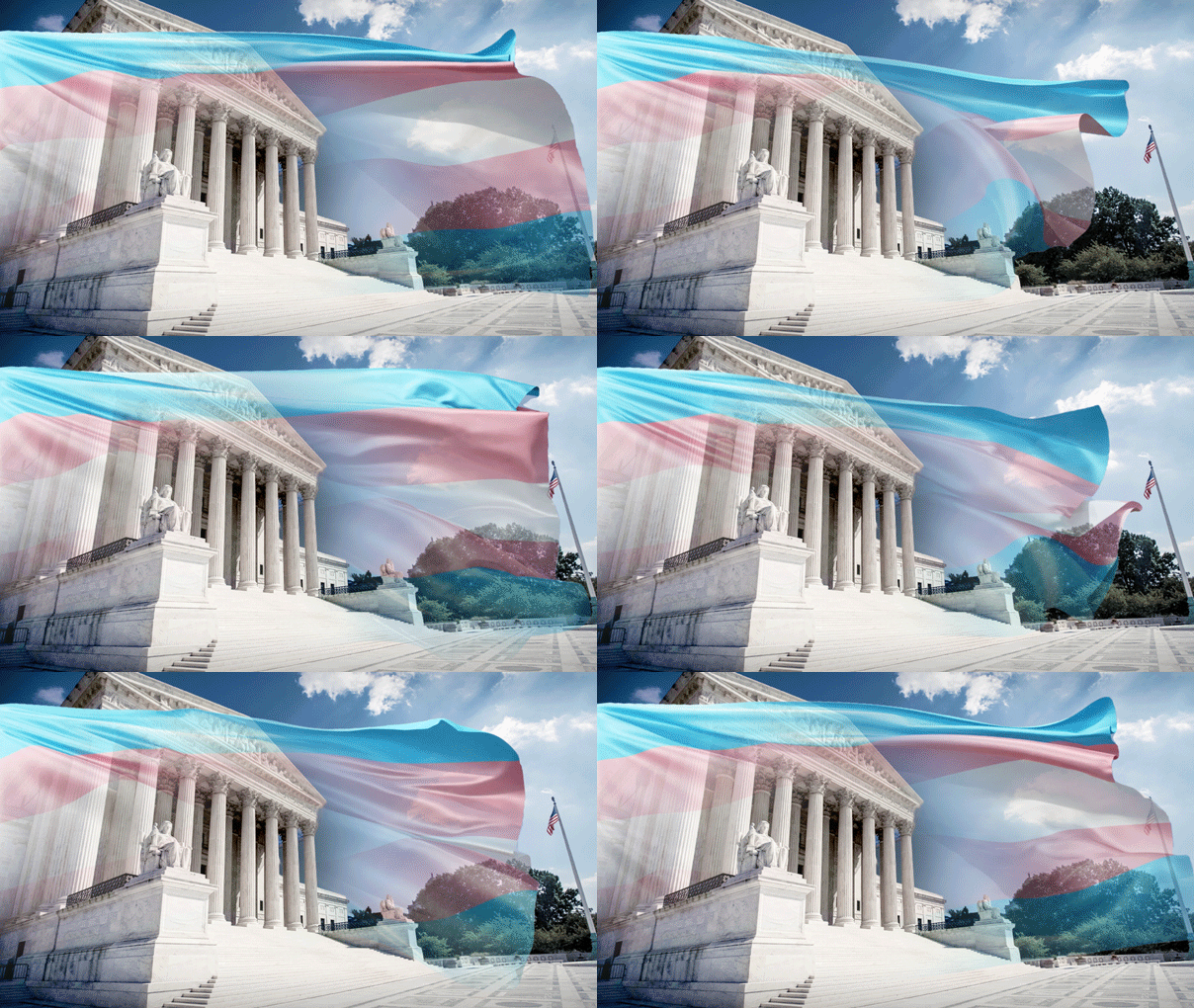
An image of the U.S. Supreme Court in Washington, D.C., is associated with coverage of the decision and its aftermath.