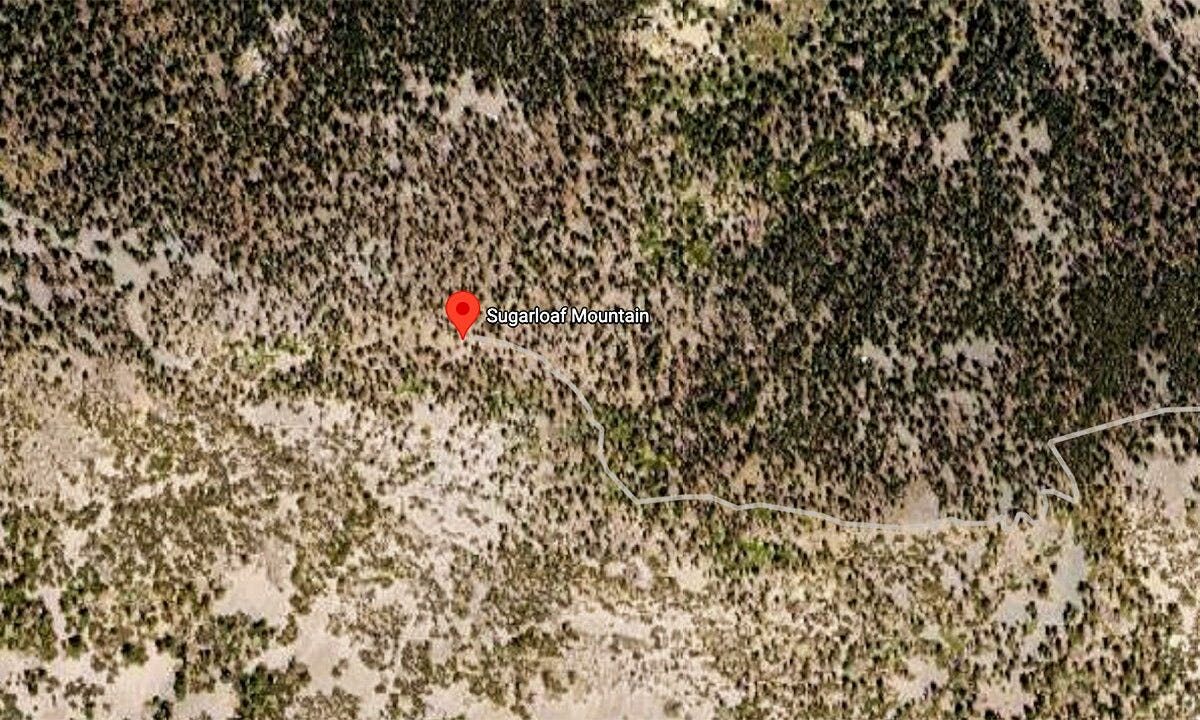
Riverside County investigators announced in May 2026 that skeletal remains recovered near Sugar Loaf Mountain in 1981 have been identified as Thelma Gaston. The identification, confirmed through forensic genetic genealogy and dental records, was completed after modern sequencing work by Othram and a coordinated review by the Riverside County Sheriff’s Coroner’s Bureau and cold case investigators.
Quick summary
Thelma Gaston was formally identified in May 2026 after DNA extracted from remains found near Sugar Loaf Mountain on Nov. 28, 1981, was profiled and matched through investigative genetic genealogy. The Riverside Cold Case Homicide Team, the Coroner’s Bureau and private lab Othram collaborated on the case, using advanced sequencing to produce a usable genetic profile that investigators compared with historical records and dental files.
What investigators found in 1981
On Nov. 28, 1981, people gathering firewood discovered skeletal remains protruding from a shallow grave near Sugar Loaf Mountain in Riverside County, not far from Highway 74. Sheriff’s investigators recovered the remains the following day. At the time, the condition of the remains and limitations of forensic methods then available prevented a positive identification.
Investigative efforts through the 1980s and later decades were unable to determine the victim’s name, and the remains remained listed as an unidentified homicide victim for decades while records and evidence were preserved.
How the case was reopened and evidence retested
Renewed attention to the case began after the Riverside County Sheriff’s Coroner’s Bureau secured federal funding through the Missing and Unidentified Human Remains Grant. That grant supported a systematic review of long-unsolved unidentified cases and paid for advanced testing that was not available when the remains were first recovered.
In November 2024 investigators exhumed the remains to collect additional bone and dental samples suitable for modern DNA extraction. The exhumation and sample handling followed contemporary protocols intended to preserve whatever genetic material remained after decades of exposure and storage.
How Thelma Gaston was identified
Samples from the exhumed remains were sent to Othram, where scientists used Forensic-Grade Genome Sequencing technology to develop a high-resolution DNA profile. That genome-level data was then applied in forensic genetic genealogy searches to identify potential relatives and build family trees that could point to a name.
Investigators combined the genetic leads with historical and dental records to reach a confirmation. Dental comparisons and corroborating records led the Riverside County Sheriff’s Coroner’s Bureau to confirm in May 2026 that the remains belonged to Thelma Gaston.
The identification process relied on multiple steps: careful re-sampling, next-generation sequencing to overcome degraded DNA, database searches via forensic genetic genealogy techniques, and traditional record checks including dental charting. Officials emphasized that the genetic match alone was one part of the confirmation, with dental records providing additional verification.
The alleged motive and legal outcome
Archival reporting and past court filings indicate Gaston, who was reported missing in June 1981, disappeared that summer. Prosecutors later alleged that Lawrence Remsen killed Gaston to gain control of her estate; that allegation was part of the prosecution that led to Remsen’s conviction on murder charges and a life sentence. Those assertions about motive originate from prosecutors’ filings and historical reporting and should be read as allegations established during the earlier trial.
Authorities described Remsen as at times a companion of Gaston. The Los Angeles County District Attorney’s Office prosecuted the case; public records indicate Remsen is serving a life term at the California Institution for Men in Chino and that parole was denied in July 2025.
Why this identification matters
The case illustrates how targeted grant funding and modern forensic genetic genealogy can resolve identifications that earlier technology could not. The Missing and Unidentified Human Remains Grant enabled exhumation and retesting that directly led to a viable DNA profile. For families and investigators, returning a name to an unidentified person is a crucial step toward closure and more complete case records.
Officials and involved laboratories noted the identification as part of a broader trend in which next-generation sequencing and genetic genealogy are increasingly used to close cold cases, though each case depends on the quality of preserved material and available records.
What comes next
With identity confirmed, the coroner’s office can complete official death documentation and notify surviving relatives. Investigators said the identification allows them to close identification tasks in the case file and to better contextualize earlier investigative and prosecutorial work connected to Gaston’s death.
Prosecutors’ statements about motive and estate matters remain grounded in prior court filings and reporting; investigators and officials continue to present those details as allegations or findings from the earlier trial rather than newly established facts related to the identification work.
Background and timeline
- June 28, 1981: Archival reports indicate Thelma Gaston was reported missing.
- Nov. 28–29, 1981: Skeletal remains found near Sugar Loaf Mountain were recovered by sheriff’s investigators.
- 1980s–2000s: Investigations and forensic analysis at the time did not produce an identification.
- Nov. 2024: Remains exhumed after grant funding was secured to retest evidence using modern methods.
- 2024–2026: DNA samples processed and sequenced; forensic genetic genealogy and dental records were used to confirm identity.
- May 2026: Riverside County announces the identification of Thelma Gaston.
Frequently asked questions
What happened with Thelma Gaston?
Skeletal remains discovered in a shallow grave near Sugar Loaf Mountain in November 1981 remained unidentified until DNA sequencing and forensic genetic genealogy linked the remains to Thelma Gaston. Dental record comparison helped confirm the identification, which was announced in May 2026.
Why does Thelma Gaston matter?
Identifying Gaston restores a name and a closed identity to a victim who had been unknown for more than four decades. The outcome highlights how modern forensic tools and targeted funding can resolve cold cases and provide answers to families and communities.
What happens next?
Officials will finalize death documentation and notify relatives. The identification also helps complete investigative records and permits more precise historical accounting of the prosecution linked to Gaston’s death.
Source: Fox News — Woman found in shallow grave ID’d after 44 years as millionaire tied to estate murder plot