President Donald Trump has directed federal agencies to waive prior nondisclosure agreements so former government employees and contractors can provide UAP information to cleared investigators at the All-domain Anomaly Resolution Office (AARO) or the White House taskforce, PURSUE, officials said.
Officials stressed the waiver is designed to open a secure channel for witnesses to meet with cleared investigators; it is not a blanket declassification of records. Any classified material discussed will still be subject to the government’s formal declassification review before public release.
What Trump directed on NDAs and UAP information
The directive instructs departments and agencies to abrogate or set aside nondisclosure agreements for former employees and contractors who believe they possess relevant UAP information and who agree to meet with designated government representatives. The goal is to remove legal and career fears that have discouraged some people from speaking up.
One administration official told reporters the move was meant to “allow former government employees or contractors that have relevant information about the disclosure of UAP to come forward” — noting that the official used the historical phrase “Department of War” in describing agencies involved; the statement referred to the modern Department of Defense and the broader intelligence community.
How the AARO and PURSUE process will work
Under the process outlined by officials, witnesses who believe they hold material will meet with representatives who hold appropriate security clearances at AARO or PURSUE. During those secured discussions, applicable nondisclosure agreements can be waived so witnesses may speak without risking administrative or legal penalties.
Information collected in those meetings will be routed into the standard declassification review pipeline. That review will determine whether any portion of the material can be released publicly and on what timeline. Officials said materials that can be made public will follow normal classification and release procedures.
For additional background on AARO, see the Department of Defense site: Defense.gov. For information on the White House taskforce framework, see WhiteHouse.gov.
New records and imagery in the latest tranche
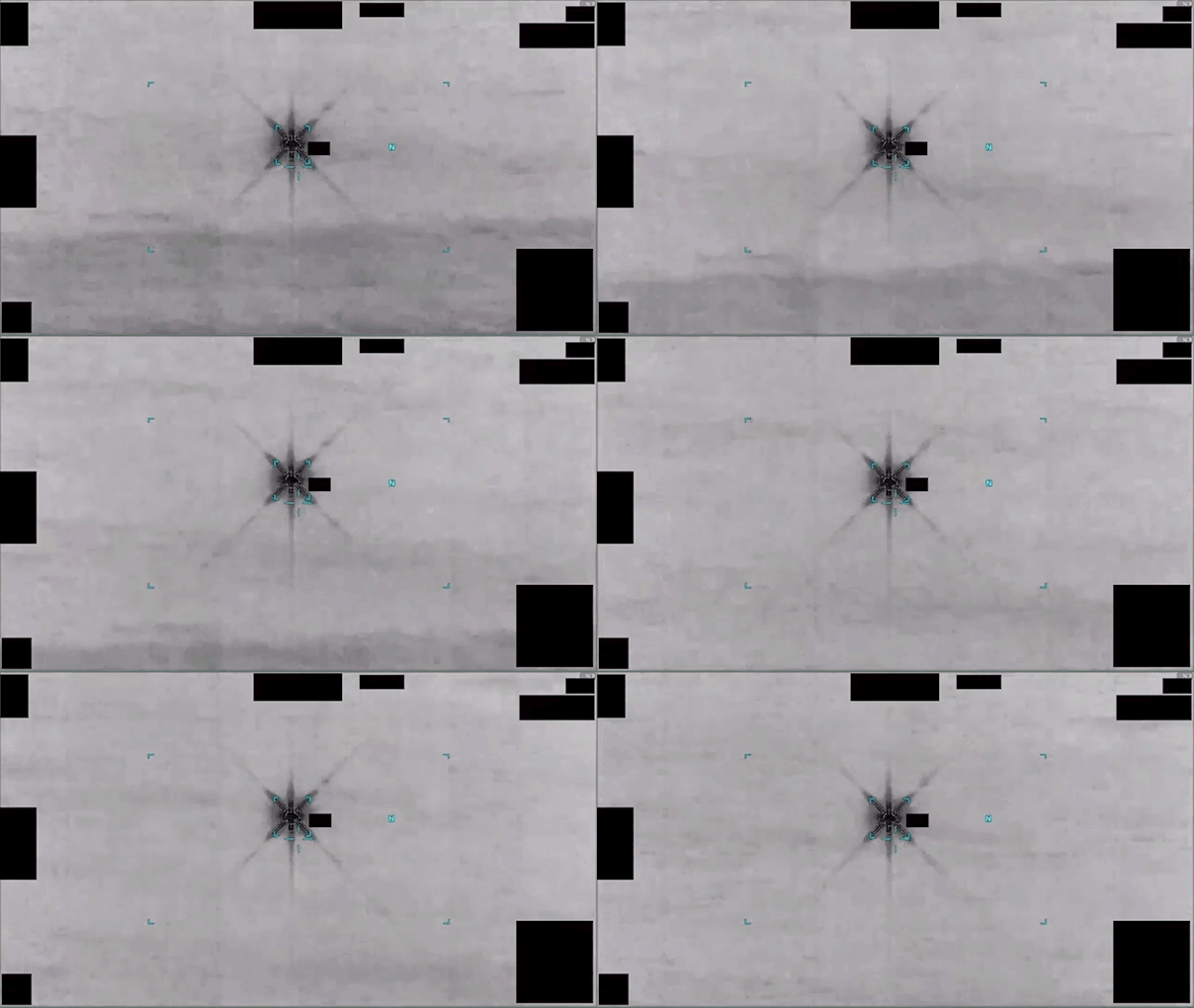
The directive arrives as the administration prepares another tranche of UAP-related files. Officials said recent releases expanded details on a 2015 incident near the Pantex nuclear weapons facility in Texas and included newly declassified infrared footage of a six-pointed star-shaped object tracked by a U.S. military sensor over the Yellow Sea on Jan. 1, 2025.
Officials told reporters the next set of files will be made available “very soon,” but they reiterated that waiving NDAs does not automatically convert classified materials into public records. Anything provided through AARO or PURSUE must still pass through established classification and declassification gates.
Responses, disputes and named claims
The waiver policy follows years of congressional inquiries, whistleblower claims and media reporting about unexplained sightings. Former Air Force intelligence officer David Grusch has alleged concealed programs and spending; the Pentagon has disputed the central claims, and AARO has said its investigations found no verified evidence of extraterrestrial technology.
Some lawmakers and former officials have urged stronger protections for potential witnesses. Sen. Marco Rubio has said multiple people with firsthand knowledge approached committees but were hesitant to speak publicly because of potential repercussions. Rep. Eric Burlison urged authorities to “open the door and let them speak” in calling for protections and possible immunity for those who come forward.
Administration spokespeople characterized the waiver as a response to that reluctance. “People who believe that they have information have expressed reluctance in coming forward. We are eliminating that source of reluctance,” one official said.
Why this matters for witnesses and oversight
Advocates for disclosure say removing NDA barriers could coax previously silent witnesses to share operational details, imagery or internal reports that were withheld for fear of penalties. If credible new information emerges, it could inform congressional oversight and shape future public releases.
But cautious observers note waiving NDAs is only a first step. The administration acknowledged it does not yet know whether potential witnesses possess significant new evidence. The policy’s value will depend on what those individuals provide and how that information holds up to verification and classification review.
What comes next
Officials say designated AARO and PURSUE representatives are prepared to meet with witnesses under the waiver. Meetings will be conducted by cleared personnel and any material judged suitable for public release will be processed through standard declassification procedures before inclusion in file tranches.
Timelines remain imprecise: officials told reporters the next tranche of records could appear “very soon,” but they warned that the pace of releases depends on classification concerns and interagency review. Congress may seek briefings as material is produced to determine whether additional oversight or statutory protections for witnesses are needed.
Frequently asked questions
Does waiving NDAs declassify UAP records?
No. Waiving an NDA allows a person to speak to cleared investigators without breaching a prior agreement. Any classified content they provide must still go through a formal declassification review before public release.
Who can meet with AARO or PURSUE under the waiver?
The waiver covers former government employees and contractors who believe they hold relevant UAP information and who agree to meet with designated AARO or PURSUE representatives with appropriate clearances.
Will information provided be made public and when?
Officials say relevant information “will ultimately be made public” if declassification procedures allow, but timing depends on those review processes and classification considerations.
Source: Fox News, “Long-hidden UFO information at center of Trump push to free former officials”. The administration says the waiver is intended to encourage cooperation while preserving established declassification safeguards.