The US 250th birthday opened with striking visuals and closed with weather-driven disruption. According to BBC News, fireworks, military flyovers and large public gatherings formed the core of national commemorations while bouts of extreme weather forced organisers to alter timings and safety plans.
Across Washington DC and other event sites, organisers balanced ceremonial observance with mass entertainment. The scenes on display — from timed pyrotechnics to aerial formations — drew large crowds and live broadcast attention, even as officials navigated unanticipated logistical challenges.
US 250th birthday: what happened
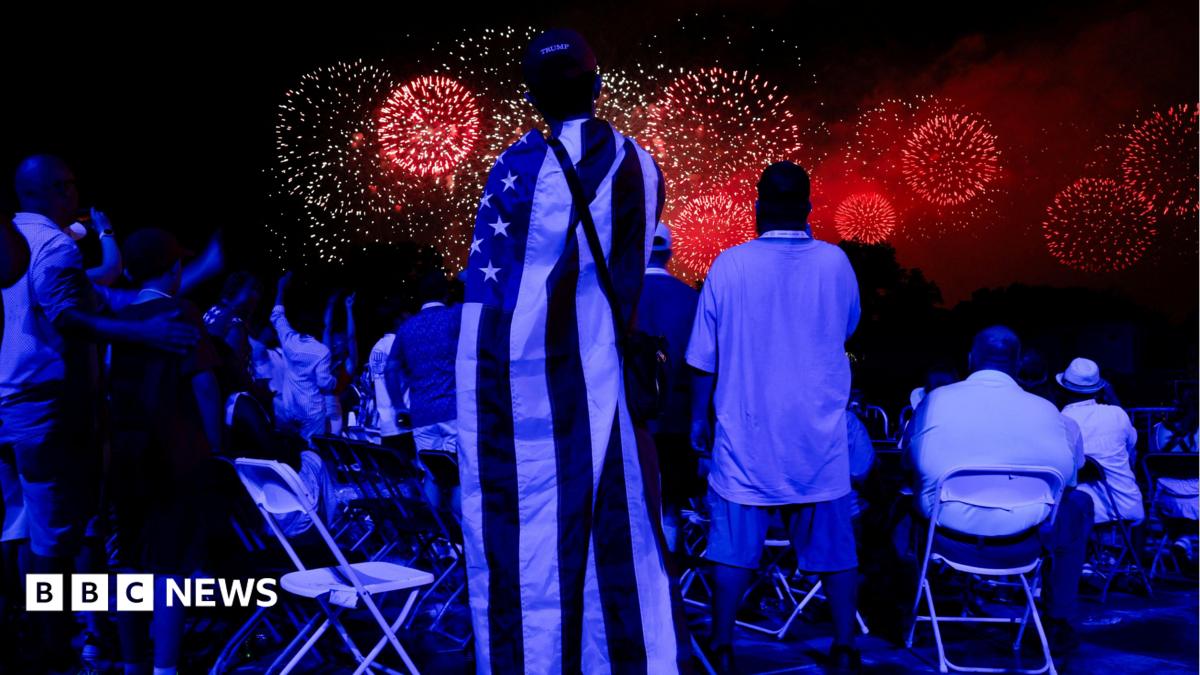
BBC News captured nationwide images of fireworks lighting the evening skies and precision flyovers above symbolic landmarks. The anniversary programme mixed solemn memorial moments with celebratory pageantry intended to mark a rare milestone in American history.

In Washington DC, scheduled military and civilian displays formed the backbone of the celebration. Organisers coordinated pyrotechnics, aerial demonstrations and public ceremonies designed to honour the past while staging a visually compelling national event.
Public broadcasters and on-the-ground reporters documented both the theatrical elements and the operational scale behind them. BBC News reported that much of the spectacle was visible in person for attendees and via national live coverage for those watching remotely.
Trump’s Washington DC speech and themes
President Trump delivered remarks in Washington DC that BBC News described as paying tribute to war veterans while also touching on policy priorities and political themes. Coverage emphasised that the speech blended commemoration with elements of a wider political agenda.
Speakers at the event framed parts of the address as an attempt to link national remembrance with contemporary public-policy debates. According to BBC reporting, the president’s comments included formal acknowledgements of military service and references to national priorities that have featured in his administration’s rhetoric.
Those present and analysts watching the broadcast noted the dual purpose of the appearance: to recognise veterans and to speak to an electorate on issues the speaker considers central. BBC News coverage highlighted how the ceremonial tone alternated with passages that underscored current political aims.
How extreme weather affected the celebrations
Extreme weather shaped much of the day’s practical outcome. BBC News reported that high winds, localized storms and deteriorating conditions prompted organisers to revise timetables and, in some cases, scale back portions of the outdoor programme for safety reasons.
Where officials judged conditions hazardous, contingency measures were enacted. Event staff and local authorities issued public-safety notices, moved some activities to less exposed locations, and advised attendees to follow instructions from emergency services and event marshals.
Visual coverage showed rain-swept crowds and clouded skies juxtaposed against the intended spectacle of fireworks and flyovers. BBC reporting noted that such conditions complicated aerial displays in particular, given the safety constraints for aircraft and pyrotechnic teams.
The weather also had ripple effects on transport and access. Attendees reported delays and adjustments to arrival and departure plans, while organisers and public-safety teams kept resources on standby to manage any weather-related incidents.
Public reaction and safety notes
Reaction from the public ranged from enthusiastic applause to pragmatic concern. Many attendees told journalists they were moved by the commemorative elements, especially tributes to veterans, while others expressed frustration at how rain and wind reduced visibility or shortened parts of the programme.
Authorities reiterated basic safety guidance for large gatherings: stay near official exits, heed crew and emergency-service instructions, and avoid standing in exposed areas during severe weather. BBC News indicated that demonstrators and families generally complied with requests from organisers, and emergency services remained prepared throughout.
Organisers and city officials said they would review contingency planning in the event’s aftermath. BBC coverage suggested the experience will inform how future large-scale national commemorations account for extreme-weather scenarios.
Why this anniversary matters
A 250th anniversary is an infrequent civic milestone that prompts national reflection. Public ceremonies serve multiple functions: they commemorate shared history, provide ritual recognition of service, and create moments for leaders to address the public.
BBC reporting underscored that such high-profile events often illuminate broader debates about national identity and the role of political messaging in ceremonial spaces. The blend of spectacle and solemnity at the anniversary highlighted how public memory and contemporary politics can intersect.
For many, the day reinforced ties to national institutions and to those who have served. For others, the occasion generated discussion about how commemorations should balance grandeur, historical reflection and the potential for political framing.
Source and next steps
This article draws on reporting by BBC News. Where specific details of the day’s programme, the president’s remarks and the weather response are cited, they are attributed to BBC coverage of the events.
Follow-up reporting is likely to focus on official after-action summaries, statements from event organisers, and further commentary on how future commemorations will prepare for extreme-weather contingencies and manage the mix of ceremonial and political priorities.
Source: BBC News