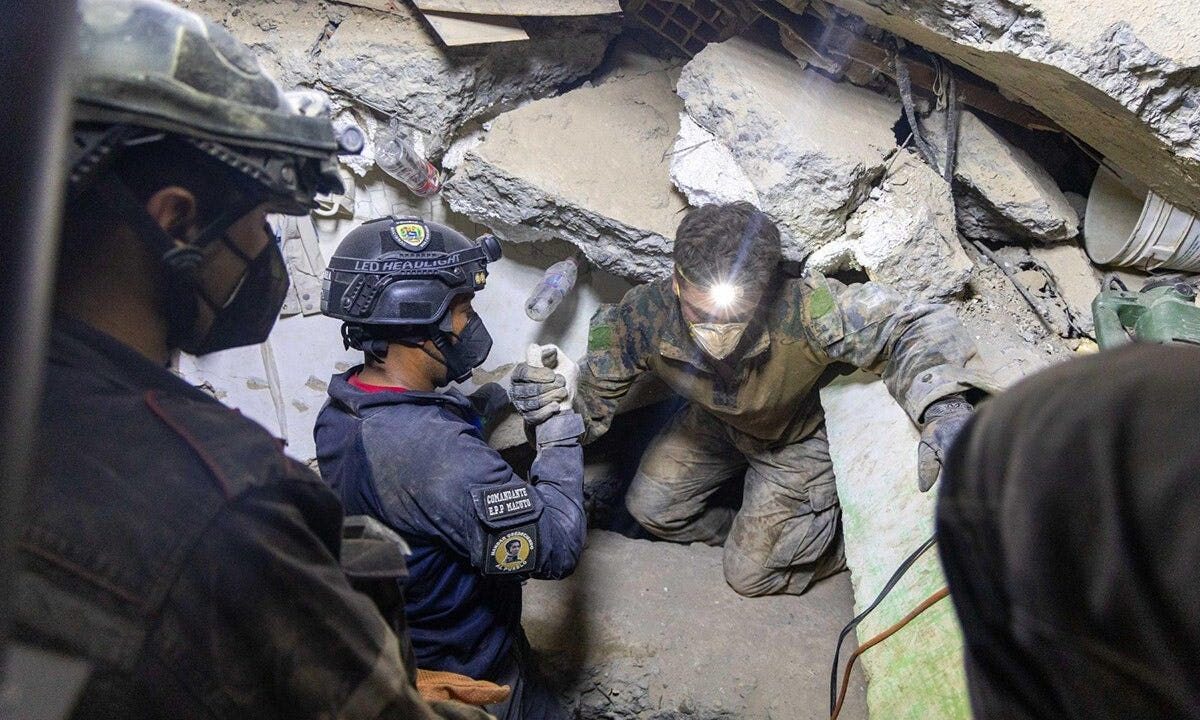
The U.S. military Venezuela earthquake relief mission is underway, U.S. Southern Command (SOUTHCOM) said, as U.S. forces arrive to support search-and-rescue and emergency assistance after the June 24, 2026 earthquakes that struck parts of Venezuela.
SOUTHCOM said in its public statement that “U.S. military capabilities continue arriving in Venezuela today to support ongoing U.S. earthquake relief efforts requested by the Venezuelan government and led by the U.S. State Department.” The command said arriving units include U.S. Marines and other assets focused on lifesaving searches, medical support and logistics.
U.S. military Venezuela earthquake relief actions
SOUTHCOM described the initial phase of operations as focused on search-and-rescue, triage and delivering urgent equipment and supplies. The command said teams are coordinating with Venezuelan authorities and international partners while operating under State Department civilian leadership for the broader U.S. response.
In public posts, SOUTHCOM emphasized that Marines and other U.S. teams were conducting extractions, assisting first responders and providing medical care at makeshift triage points. SOUTHCOM also posted photographs on X showing personnel moving through rubble-strewn streets, supporting the rescue of trapped civilians and assisting injured residents.
U.S. military Venezuela earthquake relief — death toll and Venezuelan report
Venezuelan National Assembly President Jorge Rodríguez announced a death toll of 1,450 from the June 24 quakes. That figure was released by Venezuelan authorities and has not been independently verified by international monitors or independent news organizations at the time of this report. The scale of destruction cited by officials has prompted the international offers of assistance and the U.S. military response described by SOUTHCOM.
Local officials in Caracas and affected regional authorities have been issuing periodic updates on casualties and damage as rescue teams continue operations. Independent confirmation of casualty totals typically follows once international humanitarian agencies gain routine access and conduct assessments.
How the U.S. military Venezuela earthquake relief operation is supplied
SOUTHCOM stated the operation is “completely self-sustaining, with personnel on the ground requiring zero local resources.” According to the command, U.S. assets are bringing their own logistics chains, medical supplies and transport so that local infrastructure and emergency services are not further taxed by the arriving response.
The assertion of full self-sufficiency comes from SOUTHCOM’s communications and has not been independently verified. In major disasters, self-sustaining forces can reduce immediate pressure on local responders, but the practical footprint of any foreign relief effort depends on airfield access, fuel, accommodation and security arrangements that are often clarified as operations progress.
Search and rescue on the ground — U.S. military Venezuela earthquake relief efforts
SOUTHCOM reports that U.S. Marines are operating alongside international first responders, working day and night in collapsed and damaged neighborhoods to find survivors. Photographs and brief posts shared by the command on social media show crews carrying injured civilians, using cutting equipment and marking buildings after searches.
Local volunteers, Venezuelan emergency units and international rescuers are also reported to be active in the hardest-hit zones. Search-and-rescue work typically shifts between concentrated extraction efforts in the immediate 48–72 hours and broader recovery and medical support as time passes; SOUTHCOM said its teams were prioritizing areas identified by Venezuelan authorities as most in need.
What comes next for U.S. military Venezuela earthquake relief
The U.S. State Department is leading diplomatic and civilian coordination of the U.S. response while SOUTHCOM provides military capabilities in support. SOUTHCOM said additional capabilities were continuing to arrive and that the operation would adapt as needs are assessed.
In coming days, officials expect an operational shift from urgent search-and-rescue to sustained humanitarian assistance: expanded medical care, temporary shelter, water and sanitation, and logistics to distribute relief supplies. SOUTHCOM and U.S. civilian agencies will likely collaborate with Venezuelan officials and international humanitarian organizations to identify gaps and prioritize where U.S. support should be focused.
Verification of casualty figures, infrastructure damage and the long-term needs of affected communities will remain priorities for outside agencies and news organizations. Independent assessments by humanitarian groups and multilateral organizations typically provide more detailed estimates over time and help guide coordinated relief efforts.
Unverified claims and reporting limits
This report is based on SOUTHCOM statements and casualty figures released by Venezuelan officials. The reported death toll of 1,450 and the claim that the operation is “completely self-sustaining” are assertions from those sources and have not been independently corroborated in this article. Independent verification in the immediate aftermath of large disasters can be limited; casualty counts and logistical details often evolve as access improves and assessments are completed.
Readers should expect updates from U.S. agencies, Venezuelan authorities and international organizations as more information becomes available and as on-the-ground assessments clarify the scope of humanitarian needs.
Source attribution
This story draws on a statement from U.S. Southern Command (SOUTHCOM) and casualty figures provided by Venezuelan National Assembly President Jorge Rodríguez. Original coverage referencing these statements: Fox News. SOUTHCOM also posted photographs and brief updates on X (formerly Twitter); those social posts were cited in the referenced reporting.
Sourcing note: Where possible, this article identifies the official origin of casualty figures and operational claims. Figures and operational descriptions issued by national authorities or military commands are noted as coming from those sources; independent corroboration is pending and will be noted in follow-up reporting.