
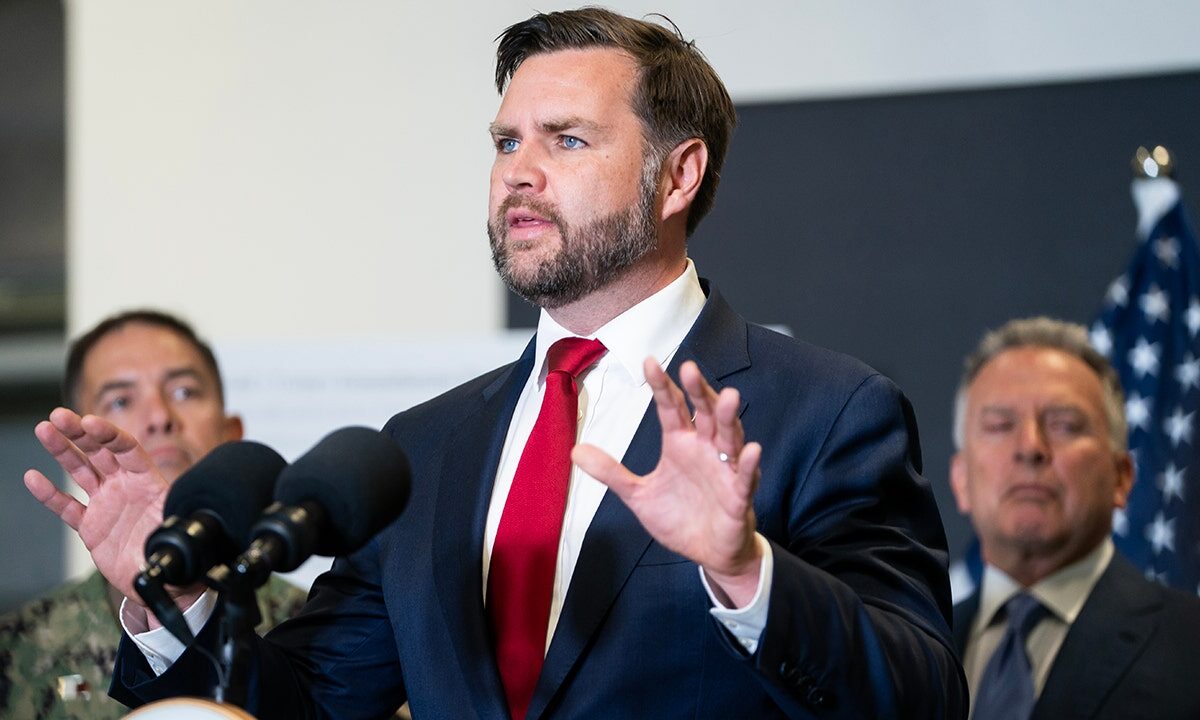
Vice President JD Vance said Tuesday that the United States holds “all the cards in the negotiation” as envoys arrived in Doha amid high-stakes U.S.-Iran negotiations. Vance framed the talks as a potential “win-win” that could prevent Iran from obtaining a nuclear weapon while opening the door to economic reintegration if Tehran makes concessions.
Vance’s remarks were delivered in a broadcast interview and reiterated the administration’s stated priority of preventing a nuclear-armed Iran. He described the U.S. posture as one that combines diplomatic opportunity with credible pressure, and characterized a favorable settlement as one that could both remove nuclear ambitions and reduce Tehran’s support to proxy groups.
What Vance said
In the interview, Vance said the United States “has all the cards in the negotiation” and argued the administration has accomplished what he called its “core mission”: ensuring Iran does not obtain a nuclear weapon. He presented an outcome in which Iran would be “permanently transformed,” describing potential normalization with global markets if Tehran were to make the required concessions.
Vance also discussed fallback options if diplomacy fails. He stated his view that, absent Iranian concessions, the United States would retain options that could severely degrade Iran’s nuclear and conventional capabilities. Those statements were presented as his assessment and policy framing rather than independently verified developments.
Vance framed his remarks as part of an overall negotiating posture aimed at preserving leverage: projecting the credible possibility of both economic incentives and coercive responses to shape Tehran’s calculations.
U.S.-Iran negotiations: Status in Doha
The arrival of U.S. envoy Steve Witkoff and Jared Kushner in Qatar this week has been reported as part of shuttle diplomacy to explore whether a diplomatic pathway exists. Multiple mediators and third-party actors have been publicly linked to facilitation efforts, but public statements from Qatari officials have downplayed the prospect of immediate direct meetings.
A spokesman for the Qatari Foreign Ministry told reporters there were “no direct meetings scheduled between the two parties in the coming days,” a remark cited in Reuters reporting on the Doha activity. The White House press secretary has said Iran requested talks, a separate public claim from administration officials that frames how the U.S. is presenting the outreach.
Available reporting indicates that envoys are engaging in discussions with intermediaries and that schedules remain fluid. The presence of U.S. envoys in Doha signals active diplomacy, but the precise level and timing of any U.S.-Iran direct engagement is not established in the sources cited here.
Possible outcomes and U.S. leverage
Vance positioned U.S. leverage as a mix of diplomatic inducements and coercive capabilities. Diplomatically, he suggested the United States could extract commitments that roll back nuclear ambitions and limit support for proxy forces; economically, he indicated that successful concessions could open a path to reintegration with international markets.
On coercion, Vance’s comments described severe military and other options as credible fallbacks. It is important to note these are characterizations of U.S. policy posture from the vice president’s interview, not independently confirmed operational steps reported by the news outlets cited.
Experts outside this reporting typically assess leverage in terms of sanctions pressure, coalition-building among international partners, intelligence and deterrence, and the credibility of military options. Those factors influence how much negotiating space Tehran might perceive and what tradeoffs it would consider acceptable.
Risks, verification and caveats
Key assertions about destroying Iran’s nuclear and conventional capabilities are claims made by Vice President Vance and have not been independently verified in the Reuters and Fox News reporting on which this account is based. Statements about regime transformation and long-term economic reintegration likewise depend on complex verification mechanisms, inspections, and sustained international cooperation.
Readers should treat robust claims about military outcomes and definitive diplomatic breakthroughs as contingent. Public messaging from negotiators can be both substantive and strategic: officials may use strong language to signal resolve or to shape bargaining dynamics. Independent verification from multiple reporting outlets and official documents would be required to confirm operational actions or concrete concessions.
Background
U.S.-Iran negotiations have historically involved a mix of direct and third-party-mediated talks, sanctions leverage, and inspection frameworks to verify compliance. While this report does not add new operational details beyond the cited sources, understanding that negotiations generally require verification protocols and third-party monitoring helps explain why statements about permanent transformation and reintegration are contingent on sustained, enforceable agreements.
What comes next
Immediate signals to watch include any changes to public schedules from mediators in Doha, formal statements from Tehran responding to mediation, and additional comments from White House officials or other governments involved in facilitation. Reuters’ reporting indicated no high-level U.S.-Iran meeting was planned in the immediate term; that posture could change rapidly if parties agree to shift from shuttle diplomacy to direct engagement.
If direct talks are announced, rapid follow-on steps to monitor will include the level of officials attending, any preliminary confidence-building measures, and how sanctions or incentives are described. Absent direct engagement, watch for incremental, verifiable commitments or changes in sanctions enforcement as indicators of progress or stalemate.
Source attribution: This account is based on Vice President JD Vance’s interview with Fox News and Reuters reporting on envoy movements and statements from Qatari officials. For original coverage, see the Fox News report: VP Vance says the US is in a great position with Iran, and Reuters reporting on the Doha meetings: Reuters.
Reporting note: Statements about military options and the permanent transformation of Iran are claims made by administration officials in the Fox News interview and are not independently verified by the Reuters coverage cited above. Readers should treat those claims as assertions subject to verification.


