
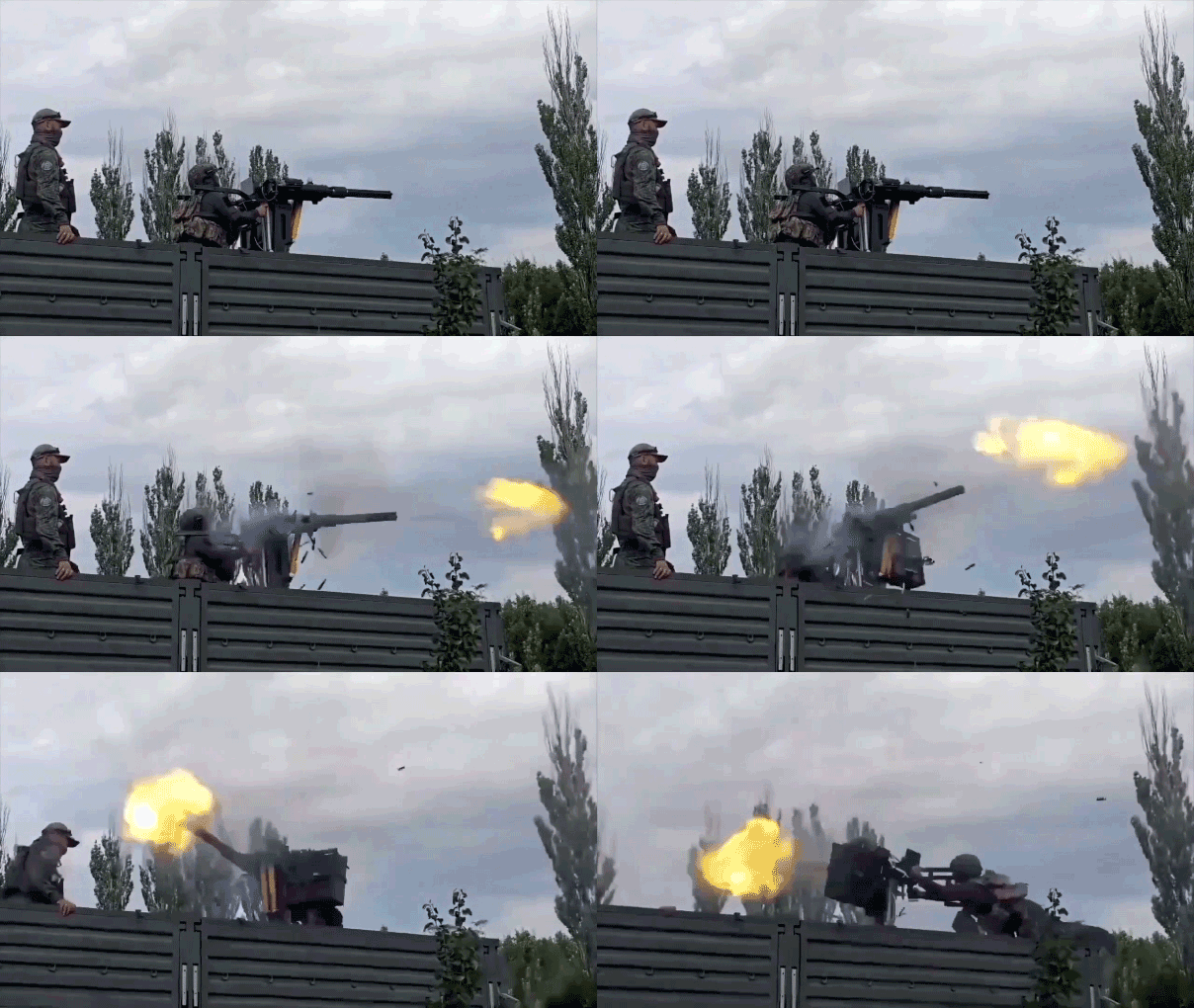
A video supplied to Fox News by the East2West news agency shows a YakB-12.7 rotary machine gun mounted on an improvised ground platform spinning violently and hurling a service member several yards away. The footage — widely circulated online after Fox News published it — captures the barrel assembly whipping around its mounting as nearby personnel take cover.
What the video shows
The short clip, provided to Fox News by East2West, depicts a four-barrel YakB-12.7 rotary machine gun fixed to a makeshift tripod or frame at ground level. At one point while the crew appears to be preparing or testing the mount, the gun’s barrel assembly begins to rotate uncontrollably around its axis.
The spinning assembly drags a nearby soldier toward the mounting before tossing him several yards away; another servicemember is seen ducking clear as the weapon swings past. East2West reported no injuries. Fox News Digital noted it had not independently verified the date, location or full circumstances shown in the footage.
Fox News’ coverage of the clip cited the unusual sight of a weapon designed for airborne use being mounted at ground level; Reuters reporting on the same day provided context on other regional military developments cited by officials.
Why the YakB-12.7 was repurposed
The YakB-12.7 rotary machine gun was developed as an airborne weapon for the Soviet-era Mil Mi-24 Hind attack helicopter. Its design emphasizes a very high rate of fire and sustained output to support strafing and provide defensive fire from aircraft platforms.
In recent years, reporting and imagery from the field show units adapting legacy aerial guns and other older systems for improvised ground roles when dedicated counter-drone or short-range air-defense systems are not available. Such repurposing is typically driven by necessity: the proliferating use of small drones for reconnaissance and strikes has prompted frontline units to experiment with a wide range of intercept options.
Repurposing an aircraft gun for static ground use creates technical and safety challenges. Helicopter mounts rely on vehicle mass, stabilization and mounting hardware to control recoil and centrifugal forces. An improvised tripod lacks those built-in mitigations, increasing the risk of mechanical failure or loss of control — a risk the footage appears to illustrate.
Context image: related equipment and troop movements — candidate image and credit per image plan
How this fits the drone war
The clip arrives amid an intensifying drone war in the region, where both sides employ drones for surveillance, artillery spotting and strike missions. That tactical environment has spurred expedient solutions ranging from electronic jamming to makeshift kinetic interceptors, including high-rate-of-fire guns repurposed for ground defense.
Officials and media reporting cited by Fox News and Reuters say some Russian units have actively tried to bolster low-altitude coverage to detect and engage unmanned aerial systems. The improvised YakB mount is consistent with a broader pattern of tactical improvisation driven by operational urgency and resource constraints.
Context image: regional map and recent strike sites — candidate image and credit per image plan
Verification and caveats
Key details in the clip remain unverified. Fox News Digital explicitly stated it had not independently confirmed the footage’s date, location or the identities of those pictured; East2West reported no injuries but did not provide corroborating official records. Readers should treat location and timing as unconfirmed until verified by additional sources or official statements.
Separately, Reuters reported related regional developments and quoted Russian Foreign Ministry remarks on broader diplomatic and military issues the same day. Other claims circulating in tandem with the clip — including reports of strikes or specific casualties elsewhere — are attributed in media dispatches to local officials and require independent confirmation.
Expert reaction
Military analysts reviewing similar improvisations say mounting aircraft armament on ad hoc ground frames is inherently hazardous without proper stabilization, recoil mitigation and testing. The YakB’s design for airborne installation and its rotational elements create centrifugal and recoil forces that can overwhelm makeshift supports.
Analysts emphasize that viral video alone rarely gives a full technical picture: frame rate, mount design, maintenance history and whether the gun was live-fired or undergoing a mechanical check all matter to a proper assessment. They urge cross-checking with unit reports, media corroboration and, where possible, examination by weapons specialists before drawing firm conclusions about intent or causes.
What to watch next
Monitor official statements from Russian and Ukrainian authorities for clarifications about the incident, any reported injuries, or equipment losses. Additional footage, unit-level reports or official incident logs could emerge to establish date, location and the circumstances of the mount’s failure.
Observers will also watch reporting on related strikes in Crimea and the Odesa region referenced by Reuters and local officials; follow-up coverage may tie the improvisation shown in the clip to broader changes in tactics as forces adapt to persistent drone threats.
Source attribution: Video supplied to Fox News by East2West; reporting also referenced Reuters. Original Fox News story and video: https://www.foxnews.com/world/watch-russian-soldier-thrown-through-air-soviet-era-helicopter-gun-spins-out-control. Note: date and location of the footage have not been independently verified by Fox News Digital or Reuters.


