
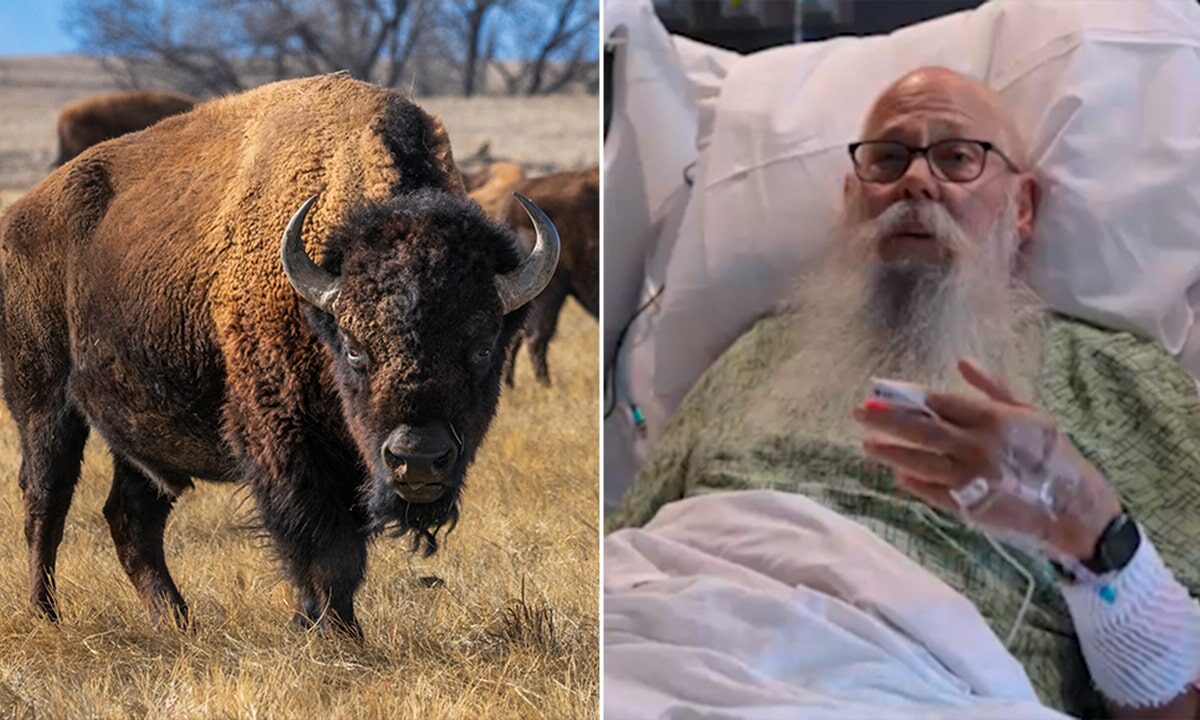

A Yellowstone bison attack at Bridge Bay Campground near Yellowstone Lake on July 10 left grandfather Carl Isom-McDaniel seriously injured after a bull charged him while he was with his grandson. The incident, which eyewitnesses described as sudden and violent, sent campers scrambling and drew immediate on-site aid.
Isom-McDaniel, who is from Kendall, Washington, suffered a femur broken in four places and underwent surgery. Medical staff at Bozeman Health in Southwest Montana have been treating him as he recovers from orthopedic surgery and the trauma of the attack.
What happened at Bridge Bay Campground — Yellowstone bison attack
According to multiple eyewitnesses interviewed in post-incident reporting, the event unfolded in the evening on July 10 in the Bridge Bay Campground amphitheater area near Yellowstone Lake. Eyewitness accounts say a bull bison charged a group of campers and then returned to the campground, where it struck Isom-McDaniel and his grandson. These eyewitness reports, as published by Fox News, have not been independently verified by Yellowstone National Park officials.
Photographer Mike McLeod, who was in the area, told reporters he first saw the bull charge a group of teenagers and later approach the campground area. McLeod said the animal moved with surprising speed and that people nearby reacted quickly to try to scatter and haze the bison away. Park officials are investigating the full sequence of events.
Eyewitness account and on-site response
McLeod described the attack as abrupt. “They move faster than you could ever imagine,” he told reporters, adding that when he saw the man thrown or launched into the air he stopped filming and ran to help. McLeod and others said they yelled and waved their arms to distract the animal until it retreated.
Other campsite witnesses reported that the bull had charged younger campers shortly before targeting the grandfather and his grandson; those reports remain unverified by park authorities. One bystander told Fox News that the crowd shouted warnings for people to get back as they sought safety. Several campers said they intervened by creating noise and putting distance between the animal and those it had targeted.
Witnesses also described Isom-McDaniel’s immediate concern for his grandson, recounting that the injured man’s first question after the attack was, “How is my grandson?” These personal accounts provide context for what happened on site but should be understood as eyewitness testimony rather than official findings.
Injury, treatment and recovery
Hospital officials and reporting state that Isom-McDaniel’s femur was broken in multiple places. He underwent surgery to repair the fracture at Bozeman Health and has been receiving post-operative care and support during recovery. Fox News’ coverage noted that he did not lose consciousness during the event; the hospital has described his injuries as severe but has reported he is being treated and monitored.
No official public release from Yellowstone National Park at the time of reporting offered a detailed medical update beyond confirming the man was transported for treatment. Park investigators typically coordinate with medical providers and witnesses when reviewing incidents that result in injury.
Bison behavior and park context
Bison are large, powerful wild animals that can behave unpredictably. Witnesses in this incident said the bull had been wallowing in dirt near the campground and appeared to have charged others earlier. Park officials stress that wildlife can appear calm and then charge without obvious provocation; in this case, reporting indicates neither Isom-McDaniel nor his grandson intentionally provoked the animal, though investigations are ongoing.
Yellowstone routinely advises visitors that animals are wild and should be given space. Bison can weigh more than a ton and can move very quickly over short distances. Encounters in popular park areas occasionally result in injury when people get too close or fail to heed posted warnings.
Safety takeaways for campers in Yellowstone
Visitors should always give wildlife plenty of space and follow park guidance. Keep a safe distance from bison and other large animals, move slowly away to a secure location if an animal approaches, and avoid turning your back or running when close to wildlife. Yellowstone and the National Park Service advise against approaching, feeding, or agitating wild animals.
Keep children close and under control, use binoculars or a telephoto lens for viewing rather than approaching, and remain aware of posted notices in campgrounds and trailheads. If an animal looks agitated or changes behavior, leave the area calmly and report the sighting to park staff so rangers can respond. Never attempt to haze or physically move an animal on your own; hazing can be dangerous and is best left to trained park personnel.
What comes next
Yellowstone park staff and wildlife managers typically review incidents involving human injury to determine appropriate safety measures, which can include increased signage, temporary closures, or wildlife monitoring. Officials in this case are expected to examine eyewitness accounts, video evidence and the animal’s behavior before recommending any specific management actions.
Any official findings or decisions about the bison involved will be communicated by park authorities. Readers should follow updates from Yellowstone National Park and local health providers for confirmed information. Note: many eyewitness details published in media reports have not been independently verified by park officials.
Frequently asked questions
What should you do if you encounter a bison near a campground?
Give the animal space, move away slowly and calmly, keep children close, and seek a safe location such as a vehicle or an established structure. Do not approach or provoke the animal; notify park staff as soon as it is safe to do so.
How severe were Carl Isom-McDaniel’s injuries and where was he treated?
Isom-McDaniel suffered a femur broken in multiple places, underwent surgery, and has been recovering at Bozeman Health in Southwest Montana.
Are bison attacks common in Yellowstone National Park?
Bison encounters occur regularly because the animals roam areas frequented by visitors. Most interactions do not result in injury, but attacks can and do occur and may be serious. Visitors should maintain distance and follow park safety guidance to reduce risk.
Source: Reporting and eyewitness interviews published by Fox News – Latest Headlines. Eyewitness accounts cited above are from that reporting and have not been independently verified by Yellowstone National Park.


