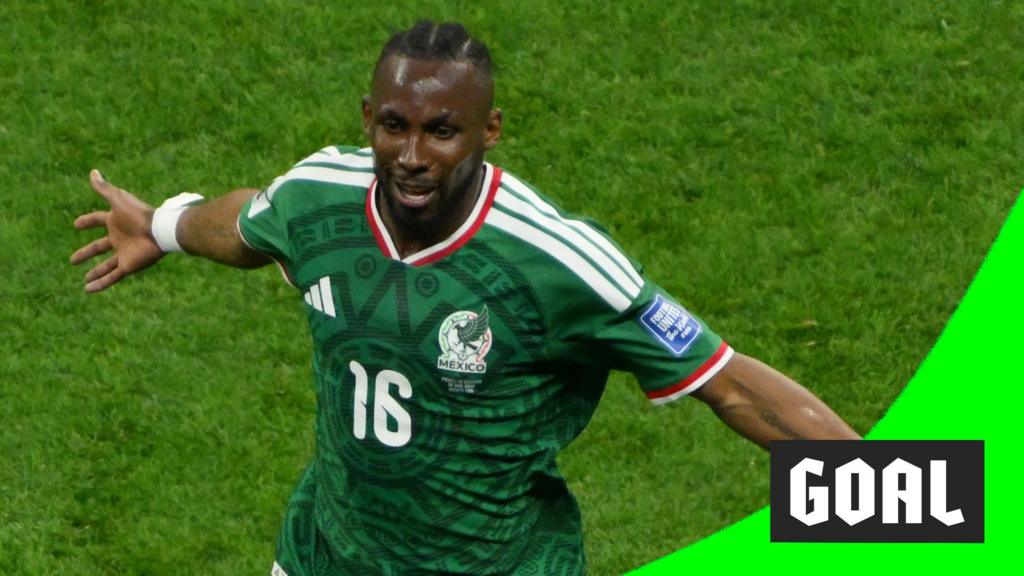
Julian Quinones timed his run to perfection and rifled a fierce shot into the net to give Mexico the lead against Ecuador in their World Cup round of 32 tie at The Azteca. The finish changed the immediate feel of the knockout game and drew a huge reaction from the home crowd.
Quick play: the goal — Julian Quinones
The sequence began with compact possession in Mexico’s midfield that quickly shifted the point of attack toward the flank.
A driven delivery into the box arrived just ahead of the defenders and Quinones met it with a sharp, first-time strike. The shot was struck with power and accuracy, leaving the goalkeeper little chance and sending The Azteca into celebration.
The clean execution — a timed run, a well-weighted pass and a fierce finish — underlined the efficiency of the move. It was not a long build-up but a decisive moment of transition that produced the opening.
How the move developed
Mexico’s actions before the goal were about swift ball movement and shifting defensive attention. By moving the ball laterally and varying passing tempo, they pulled Ecuador’s block out of shape and created a channel between full-back and centre-back.
Quinones read that shift. His run exploited the space created by the wide play and a delayed defensive reaction, arriving in the gap just as the service came in.
The pass that found him came from a wider position and carried enough pace to require an immediate finish. That timing reduced the goalkeeper’s ability to set and react, amplifying the effect of Quinones’ strike.
The setting at The Azteca matters. The stadium’s atmosphere often pushes home players to be proactive on the break, and Mexico looked comfortable committing numbers forward when the ball turned over.
Technically, the goal combined simple elements done well: a premeditated run, accurate crossing/pass delivery and a clean contact on goal. It was the kind of finish that rewards both intelligent movement and clinical execution.
What this means in the round of 32
In a knockout setting, taking the lead alters both teams’ immediate plans. Mexico can now manage the tempo, press selectively and choose moments to counter, while Ecuador face the task of finding an equaliser without leaving themselves exposed.
For Ecuador, the concession highlights the cost of being slightly misaligned in their defensive transitions. They may need to compact more quickly after losing possession or adjust how they track runners between lines.
For Mexico, the challenge becomes balancing attacking intent with defensive security. A lead invites pressure, and how the side protects the space behind its midfield will be decisive for the remainder of the tie.
From a tactical viewpoint, the goal increases the likelihood of phase changes: Ecuador may push higher and risk space on the break; Mexico may probe for a second to force Ecuador further out of shape. In knockout football, those shifts can lead to rapid swings.
What comes next
Key things to watch after the goal: Mexico’s deployment of full-backs to stretch play, Ecuador’s choice of whether to press higher or sit deeper, and how often Quinones finds pockets between the lines.
Substitutions could be decisive. A fresh attacking player can alter tempo, while a defensive introduction can help a team protect a lead. Expect managers to react quickly if momentum changes.
Also watch set-piece organisation. When a match opens up, dead-ball situations become more valuable as avenues to create high-quality chances without extensive build-up.
We will update this piece with further developments, tactical tweaks and any official comments that emerge after the match. For now, Quinones’ intervention gives Mexico the advantage in a tense round of 32 encounter.
Source
Original video and coverage: BBC Sport (video embed above credit: BBC Sport).