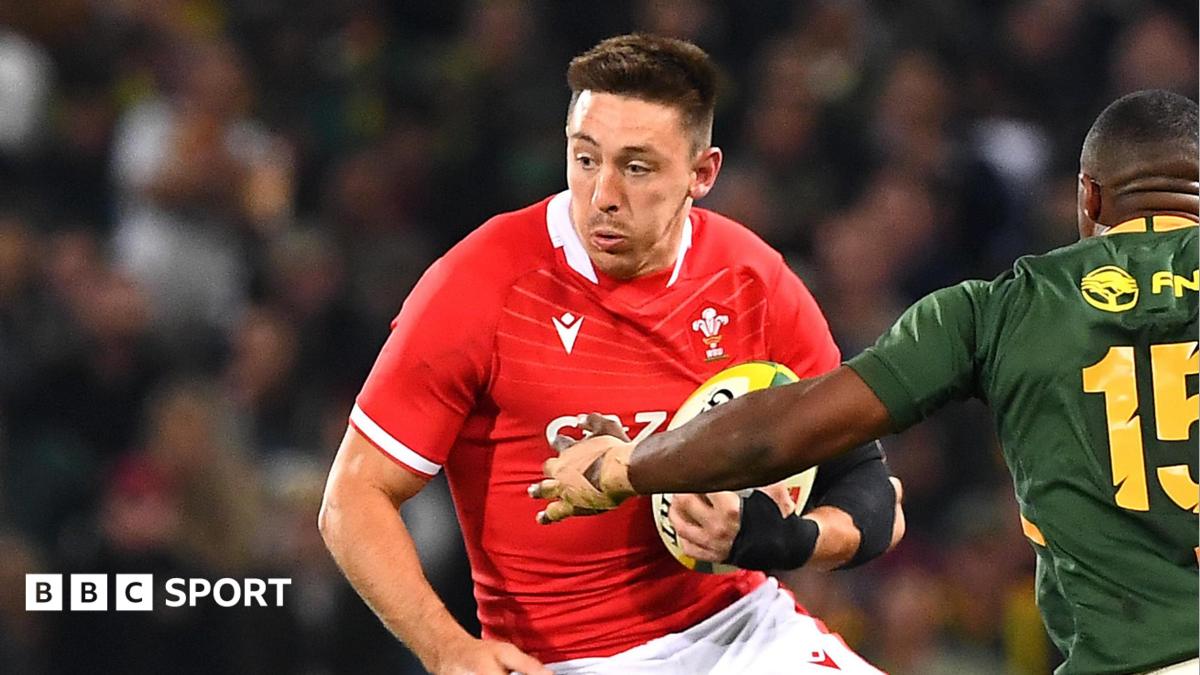
“This is the toughest test” — Josh Adams believes Wales v South Africa will be the clearest measure yet of the progress made under Steve Tandy. Adams used the phrase as he outlined how the upcoming Nations Championship fixture will test the structures, physical preparation and decision-making the coaching team has been building. With the match looming, the wing’s comment puts the encounter at the centre of conversations about selection, momentum and Wales’ short-term trajectory.
Wales v South Africa: Adams on the challenge
Adams’ assessment is unambiguous: he sees the match as the ultimate barometer for progress under Steve Tandy. Speaking in the build-up, Adams said the quality and style of South Africa will expose any weaknesses and reward the work Wales have done on cohesion and contact. The comment places emphasis on both individual performances and collective systems in what he described as a “toughest test” for the squad.
That framing does two things: it highlights confidence in improvements to date while acknowledging the scale of the task. For players and selectors, the fixture is therefore both an opportunity and a checkpoint—one that could confirm that training-ground gains are translating into competitiveness at test-match level.

Why Adams believes this is the toughest test
Adams links his view to visible progress under Tandy: more reliable set-piece routines, clearer defensive patterns and a focus on physical conditioning. Those changes are intended to give Wales a platform to compete against the very best sides, but South Africa represent a different order of physical and tactical challenge.
Within the Nations Championship format, there is little room for error. Teams face a run of high-quality opponents in quick succession, and Adams’ language reflects the pressure of needing to convert preparations into consistent on-field performances. If Wales can stand up in contact, secure their breakdown work and execute their kicking strategy, he argues they will have shown meaningful advancement under Tandy’s methods.
How South Africa shapes the fixture
South Africa’s reputation for physicality and structured, set-piece-led rugby means they pose specific tests: dominant contact, efficient scrummaging and clinical use of turnovers. Against them, opposition teams are required to be disciplined at the breakdown, accurate in their lineout work and resilient under repeated pressure.
For Wales, that will demand a full-team response. Coaches will want to see forwards win parity or advantage in the tight phases while backs remain composed when called on to manage territory and tempo. Tactical clarity — when to kick, when to run, and how to manage the scoreboard — will be as important as raw physical resilience.
What to watch and what comes next
Key watch points include Wales’ contact and collision management, their lineout and scrum stability, and how the bench influences the second half. Momentum-shifting moments — turnovers, successful mauls or a sequence of penalties conceded — are likely to determine the game’s course. Individual performances in those phases will be scrutinised by selectors and discussed in post-match analysis.
Selectors are expected to use this fixture as a reference for short-term decisions. A strong collective display could cement places and buy time for continued development under Tandy; a poor showing is likely to prompt immediate review of personnel and tactics. The outcome will therefore have ramifications beyond a single result, influencing selection conversations for the remainder of the Nations Championship.
Supporters should also watch how Wales manage the game’s emotional and physical swings. The ability to absorb pressure, correct patterns quickly and execute planned phases under duress will be the clearest signal that the team’s training-ground work is taking hold in match conditions.
Following the match, coaching staff will prioritise recovery and analysis focused on set-piece percentages, penalty count and turnover margins — the metrics that often decide tight test matches. Those figures will guide immediate training emphasis and any tactical tweaks ahead of the next fixture in the Nations Championship.
Source and attribution
This report is based on coverage by BBC Sport. Read the original piece here: BBC Sport – The hardest test – Wales need reaction in South Africa.
Attribution: reporting and quotes cited from BBC Sport. Analysis here is drawn from the same coverage and from standard match-preparation principles applied by international coaching staffs.