The Paleogene (Gulf of America) is a deep offshore geological interval now central to new U.S. deepwater activity. Located more than 100 miles offshore, the play is reported to contain tens of billions of barrels of oil in very high-pressure reservoirs (source: Fox News; figure reported as an estimate and not independently verified).
This explainer summarizes what the Paleogene (Gulf of America) is, the high-pressure drilling technology and vessels used, the major projects and operators, federal regulation and containment readiness, and outstanding verification and near-term outlooks.
What is the Paleogene (Gulf of America)?
The Paleogene describes deep sandstone and shale reservoirs more than 100 miles offshore in the Gulf of America. Industry reporting describes the resource as holding “tens of billions” of barrels of oil, a number reported here as an estimate drawn from published reporting and not independently confirmed (source: Fox News).
The broader Gulf of America region is reported to supply roughly 15% of U.S. oil production; this regional share is presented here as the cited figure from reporting and should be treated as an estimate pending independent production-data reconciliation with federal datasets (source: Fox News; independent verification recommended via BSEE and EIA records).
High-pressure tech that made it reachable
Operators and suppliers say reaching Paleogene reservoirs required equipment rated well above conventional deepwater specifications, with reservoir pressures described in reporting at up to roughly 20,000 pounds per square inch (psi) (source: Fox News). That pressure regime has driven bespoke engineering for blowout preventers (BOPs), subsea trees, manifolds and completion systems.
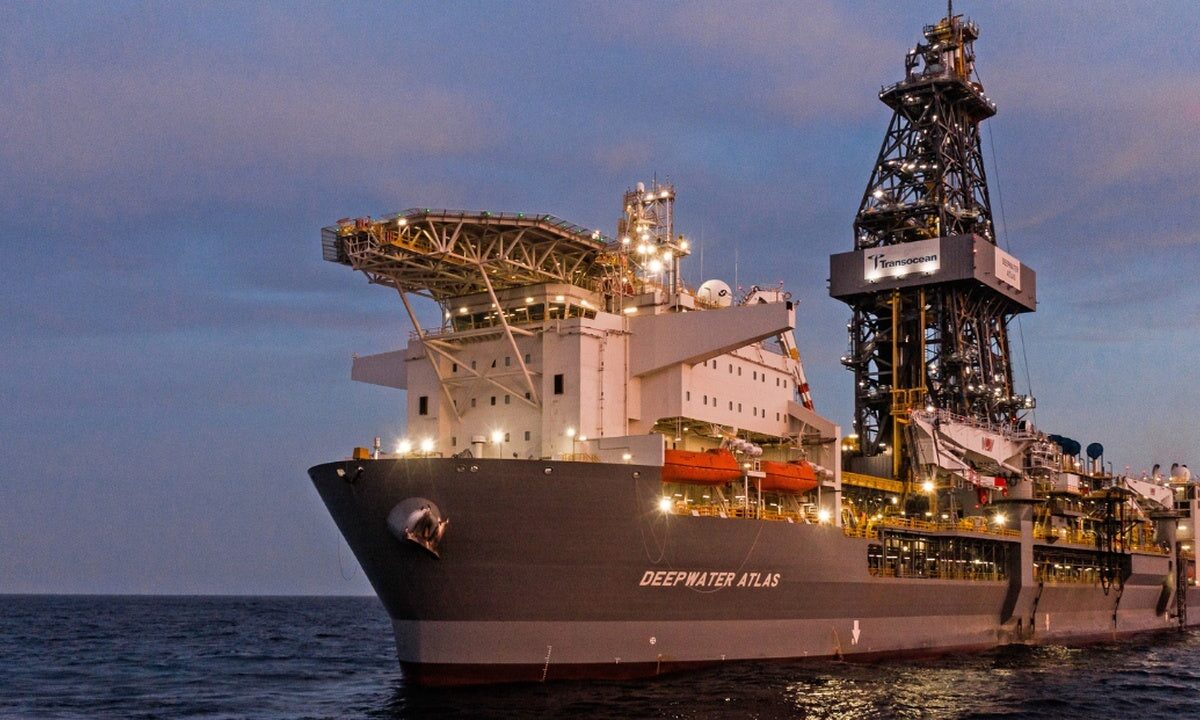
Reporting names Transocean drillships such as the Deepwater Titan and Deepwater Atlas as purpose-built units operating in the play, and cites subsea suppliers (e.g., Trendsetter Engineering) for designing manifolds and systems intended for this pressure class (source: Fox News).
Industry statements emphasize repeated factory testing, third-party certification, and staged integration testing before offshore use; those claims are drawn from operator and supplier commentary and should be verified against certification and test records.
Major projects and operators in the Paleogene play
Project reporting commonly highlights several early developments. Chevron’s Anchor project is reported to have come online in 2024 after a multibillion-dollar development program (source: Fox News; anchor status and spending figures are from industry reporting and operator statements).
Beacon Offshore’s Shenandoah is cited as producing oil and gas, and BP’s Kaskida development is reported to have obtained federal approval and be moving toward first production under a multibillion-dollar plan (sources: Fox News; project status should be cross-checked against operator releases and BSEE filings).
These projects are described as using purpose-built drillships, reinforced subsea completions and high-pressure manifolds. The operational claims are based on industry and reporting; independent confirmation of equipment serial testing and in-field performance is not provided here.
Regulation, containment and industry readiness
Federal rules require operators to demonstrate access to appropriate containment resources, submit detailed spill and response plans, and obtain required certifications before drilling in high-risk areas. The Bureau of Safety and Environmental Enforcement (BSEE) administers safety and certification requirements for offshore drilling equipment and response plans (see BSEE guidance: BSEE).
Reporting and industry statements name containment organizations and consortiums that maintain high-pressure capping and containment assets. The Marine Well Containment Co. (MWCC) is cited as a provider of subsea containment services and systems intended for high-pressure incidents; MWCC maintains public information about its capabilities (see: MWCC). The reporting also references an industry well-control group (HWCG) as part of the preparedness network (reporting source: Fox News).
Those containment capability claims derive from industry and regulator statements; independent verification of readiness requires inspection reports, test logs and drill exercises documented by operators, MWCC/HWCG participants or BSEE oversight records.
Risks, verification and near-term outlook
The technical advances that enable production from ultra-high-pressure reservoirs introduce verification and long-term-reliability questions. Equipment rated for roughly 20,000 psi expands the operating envelope and will require ongoing testing, maintenance, and transparent third-party verification before stakeholders can rely on performance claims.
Reported resource sizes and regional production shares (“tens of billions of barrels” and “~15% of U.S. oil production”) are presented from published reporting and should be treated as estimates until cross-checked with operator disclosures, BSEE filings and Energy Information Administration (EIA) production data.
Near term, observers will watch first production milestones (for example, BP’s Kaskida), sustained performance at Anchor and Shenandoah, formal equipment-test reports, and BSEE oversight actions. Independent assessments, public release of test records, and periodic third-party drills will be important verification steps.
By the numbers
- Distance from shore: reported at more than 100 miles offshore (reported figure; source: Fox News).
- Reported reservoir pressure: up to ~20,000 psi (reported; technical specs to be verified by manufacturer and BSEE records).
- Reported resource scale: “tens of billions” of barrels (estimate from reporting; not independently verified).
- Reported Gulf contribution to U.S. output: roughly 15% (reported estimate; verify via EIA/BSEE).
What comes next
Key near-term developments to watch are operator filings to BSEE that document component certifications and well-control plans, public release of equipment test logs by vendors, scheduled containment drills led by MWCC/HWCG participants, and production updates from projects such as Anchor, Shenandoah and Kaskida. Stakeholders seeking independent confirmation should review BSEE filings and request test and inspection records from operators and containment providers.
Source attribution
This explainer is based on published reporting (primary cited piece: Fox News) and on public regulator and containment-provider resources (BSEE: bsee.gov; MWCC: mwcc.org). Where the reporting states figures or capabilities, those items are flagged in this article as reported estimates or industry claims; independent verification via operator filings, third-party test reports and BSEE oversight records is required to confirm performance and quantities.
For further technical detail, readers should consult operator disclosures and BSEE filings and request test and certification records from equipment manufacturers and containment organizations.