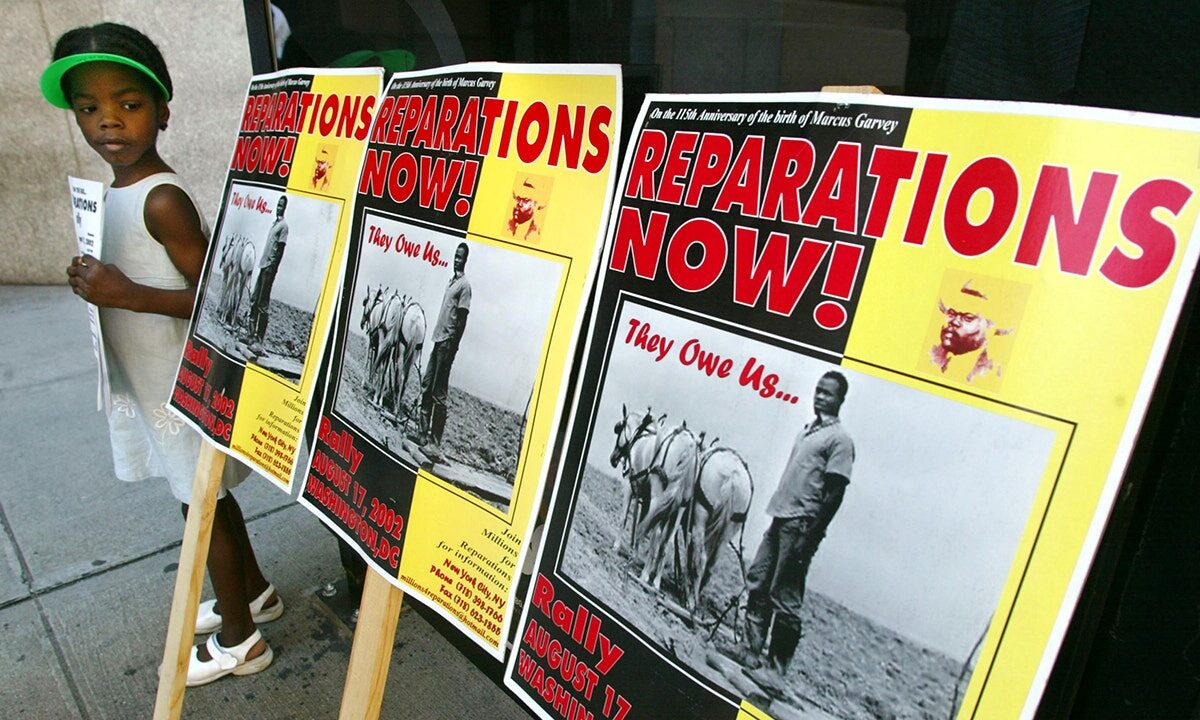
The New York reparations timeline shifted after the state budget added language that moves the Community Commission on Reparations Remedies’ final report deadline to 2029. The change, which also includes a provision intended to shield commissioners from personal legal exposure, prompted swift criticism from civil liberties groups and grassroots advocates who say the postponement delays justice for communities harmed by historical and ongoing discrimination.
Supporters of the budget change argue the extra time and legal protections are meant to help the commission craft recommendations that can survive anticipated legal challenges. Opponents say the delay risks eroding momentum and leaves affected New Yorkers waiting for remedies. The dispute centers on timing, the scope of eligibility for reparations and how the commission should weigh competing testimony.
What changed: New York reparations deadline moved to 2029
The state budget provision pushes the commission’s deadline for a final report back by roughly two years, setting a 2029 target for delivery. In addition to postponing the deadline, the language added protections intended to limit personal liability for commissioners as they deliberate on potentially contested remedies.
Commission members were tasked under state law to investigate New York’s historical connections to slavery and segregation-era policies, document contemporary disparities tied to those histories—such as redlining and labor-market exclusion—and propose policy, programmatic and monetary remedies. Proponents of the extension have framed it as extra time to better compile evidence and conduct careful legal review.
Who is criticizing the delay
The New York Civil Liberties Union (NYCLU) was among the most vocal critics. Chantelle Williams, assistant director of the NYCLU’s Racial Justice Center, said the state’s decision to add years before action raises serious questions about when Black New Yorkers will see reparations. “The state’s decision to spend an additional three years before it takes any action to address these harms raises a lot of questions about when Black New Yorkers will receive reparations,” Williams said. She added that the delay is more than administrative sluggishness, calling it “a disservice to those who have suffered the profound and lasting consequences of inequality.”
Grassroots reparations advocates also criticized organizations they view as unsympathetic to lineage-based claims, pressing during hearings that certain advocacy groups may not represent the specific legal and historical interests of descendants of enslaved people.
Why lawmakers requested more time
Assemblymember Michaelle C. Solages, who helped shepherd the commission into law, told supporters that lawmakers requested extra time in part because the national political and legal environment has shifted. Solages cited what she described as an “erosion of voting protections” and the emergence of conservative legal challenges to diversity, equity and inclusion efforts as complicating factors that counsel caution.
Advocates for the delay argue the legal-shielding language is prudent given the plausibility of litigation over equity-focused remedies. They say protecting commissioners from personal liability could enable fuller debate and prevent intimidation of experts and community members who serve on the panel. Critics counter that legal caution should not come at the cost of meaningful timetables for accountability and relief.
Hearings, evidence and who sits on the commission
The nine-member commission has conducted a series of statewide public hearings to gather testimony and historical documentation. The panel’s outreach included a session in Harlem titled “From Extraction to Repair: Closing the Racial Wealth Gap,” which drew community members, scholars and advocacy groups to deliver personal accounts and expert analysis documenting structural harms.
Witnesses offered a range of evidence: oral histories of discrimination, statistical analyses of housing and employment disparities, and archival research tying government policy to persistent wealth gaps. Some witnesses and organizations have urged a broad eligibility standard that would address harms caused by government policies regardless of lineage; lineage advocates and groups such as the U.S. Freedmen Project have pushed for eligibility narrowly focused on descendants of enslaved people. The commission has said it will weigh testimony alongside historical and empirical research as it finalizes recommendations.
What comes next and why it matters
With a 2029 deadline, the commission has additional time to collect evidence, refine proposals and attempt to anticipate legal challenges. That extended timetable raises practical questions about whether the legislature will take up the commission’s recommendations, how any proposals might be insulated from litigation, and whether New York policymakers will adopt targeted pilots or broader statewide programs.
Local experiments such as Evanston, Illinois — where municipal leaders pursued targeted housing grants as part of a reparations initiative — are often cited by proponents as models for limited, implementable remedies. Whether New York pursues pilot programs, recommends statewide policy changes, or proposes monetary awards tied to specific harms will depend on the commission’s final, evidence-based recommendations and on political decisions in Albany.
For residents, the delay means a longer wait for potential relief and an extended period of debate over who would qualify and what forms reparations might take. Supporters of the extension maintain that a careful, legally durable approach could produce recommendations more likely to withstand court challenges and succeed in the legislature; critics warn that prolonged processes can dissipate momentum and delay meaningful change for those most affected.
Ultimately, the path forward will hinge on the commission’s final report, the legislature’s willingness to act on those recommendations, and how courts respond to any ensuing disputes. The revised schedule makes clear that the road to any implemented reparations policy in New York is likely to be longer and more contested than some advocates had hoped.
Source: Fox News Digital