Lead: The Supreme Court’s pending birthright citizenship ruling is the top story as the justices close their term. This birthright citizenship ruling focuses on how the 14th Amendment’s Citizenship Clause applies to children born on U.S. soil to parents who are not U.S. citizens, and the court’s forthcoming opinion could reshape legal debate and policy responses.
What to know about the birthright citizenship ruling
The central legal question in this birthright citizenship ruling asks how to interpret the 14th Amendment phrase often summarized as granting citizenship to those born “in the United States.” The case tests whether longstanding judicial precedent that generally extends citizenship to most children born here should be narrowed or reaffirmed.
The case is on the Court’s calendar as part of the final slate of opinions for the term. Observers note that the Supreme Court typically releases a series of opinions in the closing weeks of its term, and that timing will shape how quickly lawmakers, agencies and affected families react. Until the opinion is published, the exact holding and legal reasoning remain unknown; commentators and legal advocates are preparing for multiple possible outcomes and contingency responses.
Immediate stakes are practical and political. A narrow ruling might address limited statutory or factual circumstances and leave broader precedent intact; a broader ruling could prompt litigation in lower courts and heighten pressure on Congress to consider statutory language or other legislative responses. Analysts emphasize uncertainty: much depends on the Court’s reasoning, the vote split, and whether the opinion signals further litigation over related enforcement or benefit-eligibility questions.
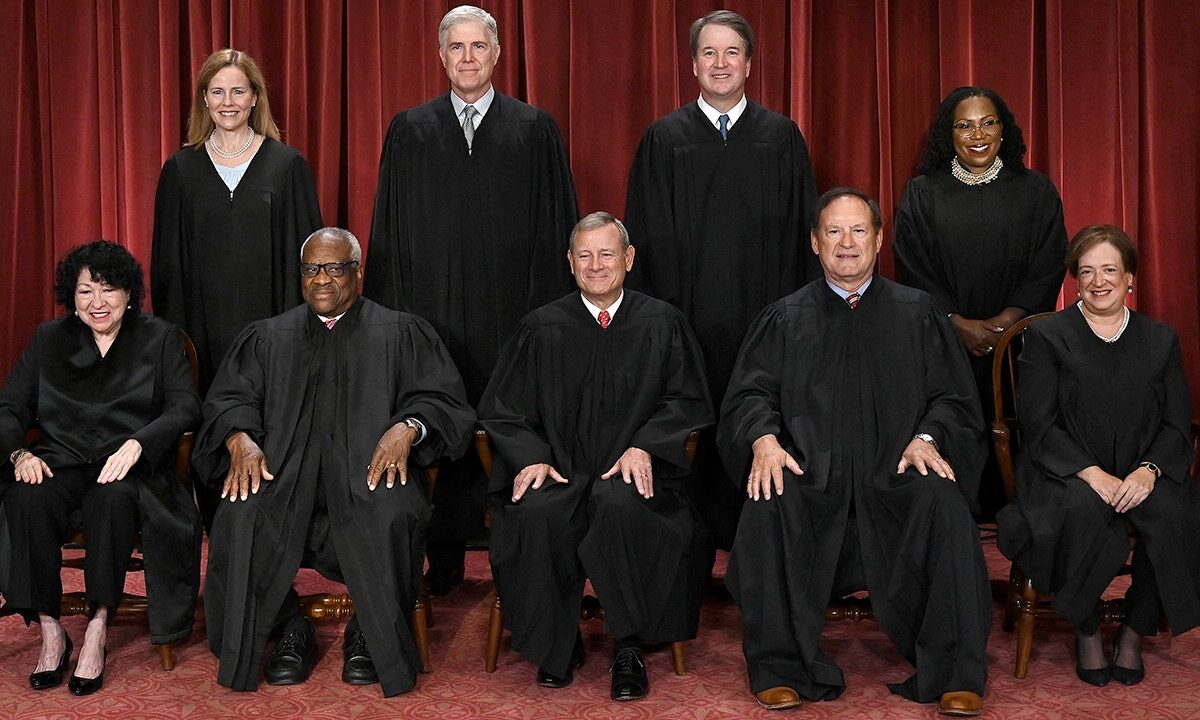
Photo context: A view of the Supreme Court justices on the bench is frequently used in coverage of the case.
Roundup: key political and foreign policy items
Socialists challenge Democratic establishment — Progressive and socialist‑aligned candidates are increasing primary challenges in several Western states, seeking to influence the party’s direction and push for bolder policy priorities. These intra‑party fights could shape fall general election strategies and local control of key offices.
US‑Iran talks in Qatar — U.S. and Iranian envoys have used Doha as a diplomatic hub for regional discussions. Reports indicate Qatar remains a principal venue for discreet engagement on security and de‑escalation questions, even as public denials and political sensitivities continue.
Gulf states bypass Iran — Some Gulf countries are investing in alternate shipping and infrastructure routes designed to reduce dependency on the Strait of Hormuz, a strategic chokepoint. These measures reflect broader efforts to diversify logistics and energy pathways amid regional tensions.
GOP faith bloc raises concerns — Conservative faith leaders and a coalition of religious groups within the GOP have expressed caution about certain diplomatic approaches, urging lawmakers to weigh national security and moral considerations in any agreement or engagement with Iran.
Public safety, health and community headlines
Tick‑borne virus cases rising — Public‑health reports show an uptick in rare tick‑borne viral infections this season. Health officials urge awareness of prevention steps such as protective clothing, prompt tick checks after outdoor activity, and seeking medical advice for unusual symptoms. While most tick exposures do not lead to severe illness, some viruses carried by ticks can progress quickly in rare cases, so clinicians recommend vigilance.
HOA flag disputes — Homeowner associations in some communities have moved to restrict certain outdoor displays, prompting debates and reports of threatened fines. Legal advocates note that disputes over flag displays often raise questions about association rules, local ordinances and residents’ free‑expression concerns.
Seattle Pride videos flagged as unverified — Viral clips circulating online purporting to show nude adults near children at a Seattle Pride event have drawn strong reactions. Multiple outlets and officials have commented, but independent verification of the most inflammatory claims is limited. Readers should treat these items cautiously: reporters have not confirmed all circulating footage or context, and the material remains unverified until corroborated by reliable sources.
Legal fallout and notable investigations
Congressional questioning tied to Epstein reporting — Reporting indicates that a Clinton confidant referenced in some testimony used a term of endearment for Ghislaine Maxwell and was questioned in congressional inquiries connected to Jeffrey Epstein. These characterizations arise in testimony and media reporting; they should be viewed as allegations until corroborated by public records or court findings.
Other investigations and oversight hearings continue to probe past associations and institutional responses. Journalists and legal analysts emphasize careful verification when testimony includes sensitive allegations; congressional questioning can highlight lines of inquiry but does not by itself establish criminal conduct.
What comes next
Timeline: The Supreme Court typically releases remaining opinions as the term concludes in late June, with occasional extensions into early July for certain filings. The release timing for the birthright citizenship ruling will determine how rapidly subsequent litigation and policy moves unfold.
- Short term (days to weeks): Opinion released; immediate legal analysis and political reaction follow. Watch for guidance on the scope of the holding and whether the Court limits its ruling to narrow facts.
- Medium term (weeks to months): Likely litigation in lower courts to apply the new standard, plus potential legislative proposals in Congress to clarify statutory citizenship rules if policymakers seek to act.
- Longer term: Administrative agencies, states and courts could interpret the decision in benefit, enforcement and family‑law contexts — effects will depend on how broadly the Court frames its reasoning.
What readers should watch: the exact wording of the opinion, any concurring or dissenting opinions that signal further challenges, and statements from federal agencies and congressional leaders about possible next steps.
FAQ
What happened with the birthright citizenship ruling? The Supreme Court is poised to issue an opinion resolving how the 14th Amendment’s Citizenship Clause applies in the case before it. The specific holding will be known only when the Court publishes its opinion.
Why does the birthright citizenship ruling matter? Depending on its scope, the ruling could affect the legal status of children born in the U.S. to noncitizen parents, influence immigration enforcement and prompt legislative or administrative responses.
What happens next? Expect immediate legal analysis after the opinion is released, possible litigation to test the new standard, and political debate about potential congressional fixes or administrative guidance.
Source attribution
This quick roundup is based on reporting compiled by Fox News. Original coverage: Supreme Court set to close term with landmark birthright citizenship ruling and more top headlines.
Readers should consult the original Fox News roundup for links to the individual stories summarized here and for additional context. Items flagged as unverified in this update remain subject to confirmation by primary sources.