President Rodrigo Paz declared a Bolivia state of emergency — a State of Exception — on June 20 to clear roadblocks and reopen supply lines after more than 50 days of nationwide blockades. A U.S. State Department spokesperson said Washington “strongly supports President Rodrigo Paz’s decision” to restore the free flow of food, medicine and other essential goods, and voiced relief that the blockades have ended.
The declaration marked a turning point in a crisis that disrupted daily life, strained public services and drew international attention to Bolivia’s strategic minerals and political stability.
Bolivia state of emergency: What happened on June 20
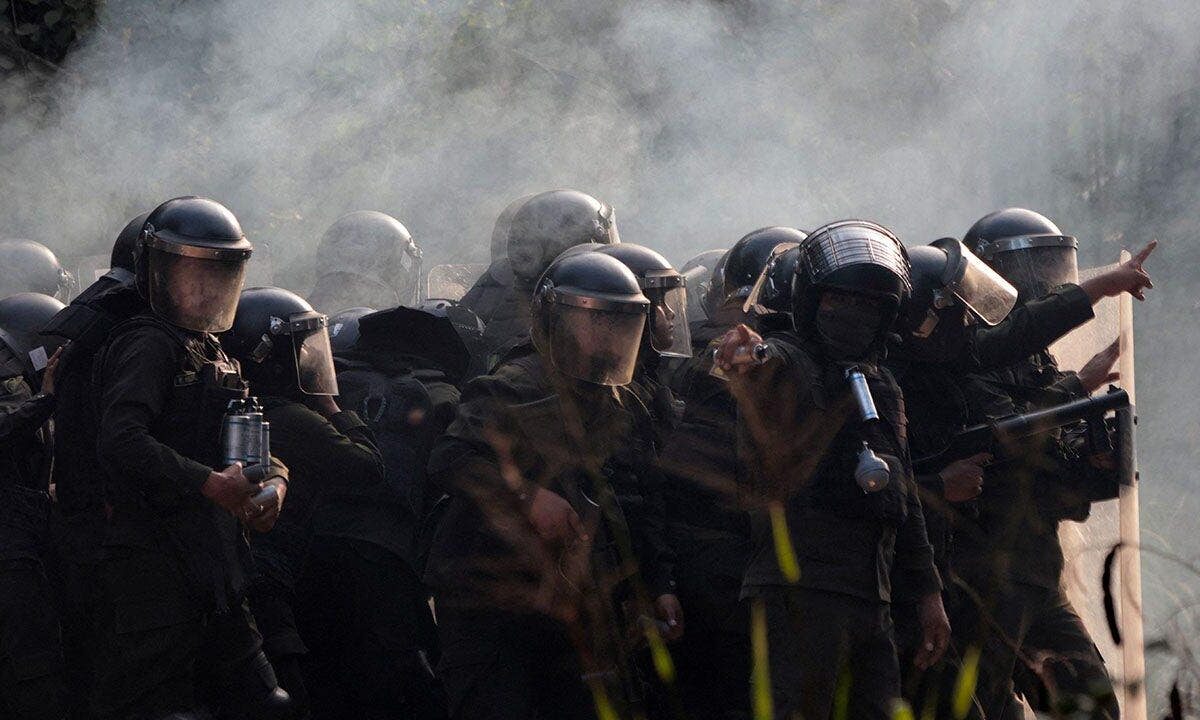
On June 20, the Paz administration invoked a State of Exception to grant security forces broader powers to clear roadblocks, reopen critical corridors and protect freedom of movement, according to government statements. Officials framed the measure as a constitutional step intended to restore access to essential goods while preserving public order.
The U.S. response was explicit. A State Department official told reporters the United States “strongly supports President Rodrigo Paz’s decision on June 20 to declare a State of Exception to restore order and ensure the free flow of food, medicine, and essential supplies to the Bolivian people.” Senator Marco Rubio also publicly condemned certain protest actions, saying the U.S. “will not allow criminals and drug traffickers to overthrow democratically elected leaders in our hemisphere,” language that observers say reflects contingent political judgment more than judicial findings.
How 50 days of blockades crippled supplies and business
More than 50 days of road blockades severely disrupted the transport of food, fuel and medicines, officials said. Trucks carrying groceries and medical supplies were stuck at barricades for days, leaving many urban markets and smaller towns with dwindling stocks and prompting emergency relief moves.
José Luis Lupo, Bolivia’s chief of staff and minister of the presidency, said the blockades paralyzed much of the country’s economic activity and framed the State of Exception as a way to reopen routes and enable social dialogue without undermining democratic rights.
Economic damage estimates have been cited by private analysts. According to Mauricio Ríos García of Crusoe Research, the 50-day stoppages produced losses of about $2.5 billion and contributed to the closure of roughly 13,000 companies; these figures are reported estimates and have not been independently verified. Government recovery plans focus first on restoring logistics chains, prioritizing fuel corridors and food distribution to reduce acute shortages.
U.S. backing, domestic politics and contested claims
U.S. officials presented their backing as support for humanitarian access and the rule of law. Washington said it increased emergency assistance to help address immediate food and medical needs while urging all parties to seek political solutions through negotiation.
Domestic politics remain sharply divided. The unrest traces to tensions after the era of former President Evo Morales and his Movement Toward Socialism (MAS), which continues to be influential in rural and indigenous communities. Many of the blockades were led by factions aligned with Morales, while the Paz government has pursued policy changes critics say threaten interests tied to the previous administration.
Some rhetoric from U.S. and domestic political figures has been strong. Calls that label protest leaders as “criminals and drug traffickers” were made publicly by Senator Marco Rubio; such characterizations should be read as political allegations unless supported by independent legal findings. Analysts caution that claims on both sides remain contested and require verification.
Lithium, global supply chains and geopolitical stakes
Bolivia holds some of the world’s largest known lithium deposits, a critical mineral for batteries used in electric vehicles and other advanced technologies. Disruptions in Bolivia can ripple through global supply chains because manufacturers and investors look for stable access to raw materials for battery production.
Observers note the crisis underscores broader geopolitical competition over strategic minerals. Washington, Beijing and other international actors are watching how Bolivia manages contracts, investment and extraction rules for lithium, since control of supply and processing can influence trade ties, technology manufacturing and regional alignments in the long term.
Outlook: IMF talks, economic risks and next steps
Officials and analysts say short-term priorities are reopening commerce, stabilizing prices and preventing humanitarian deterioration. Mauricio Ríos García told reporters the government was nearing talks with the International Monetary Fund that could involve exchange-rate unification and financing estimated between $3.3 billion and $5 billion; he described a devaluation as a likely policy move to secure financing. Those projections are Ríos’s reported estimates and have not been independently verified.
A possible devaluation would aim to shore up external financing but could also increase inflationary pressures and raise living costs in the near term, complicating social and political recovery. Government leaders have called for a broad political agreement to attract investment, strengthen legal certainty and pursue reforms in hydrocarbons, mining and lithium sectors while opposition groups demand guarantees for social programs and livelihoods.
What comes next will depend on how quickly authorities reopen supply lines, whether a stable negotiation framework emerges among political actors, and the outcome of any IMF discussions. International partners have signaled readiness to provide humanitarian and technical assistance, but longer-term stabilization will require both economic measures and political compromise.
Frequently asked questions
What is the Bolivia state of emergency and who declared it?
President Rodrigo Paz declared a State of Exception on June 20. The government said the measure temporarily expanded security powers to clear blockades and restore the delivery of essential goods, according to official statements.
How did the blockades affect food and medicine supplies?
Officials reported that the 50-day blockades severely disrupted deliveries of food, fuel and medicines, causing shortages in cities and rural areas. International and domestic emergency assistance was increased to address immediate needs, officials said.
What role does Bolivia’s lithium play in the crisis?
Bolivia’s large lithium reserves make it strategically important for battery and electric vehicle supply chains. Prolonged instability raises concerns about supply security and draws attention from international investors and governments monitoring access to critical minerals.
Source: Fox News Digital — Trump admin backs Bolivia state of emergency
Attributions: Statements and figures in this article are drawn from Bolivian government statements, a U.S. State Department spokesperson, Senator Marco Rubio, José Luis Lupo, and Mauricio Ríos García of Crusoe Research. Monetary and company-closure figures are reported estimates attributed to Ríos and have not been independently verified.
Final source-backed note: A U.S. State Department spokesperson said the United States “strongly supports President Rodrigo Paz’s decision” to restore the free flow of essential supplies; that statement guided reporting on Washington’s posture during the crisis.