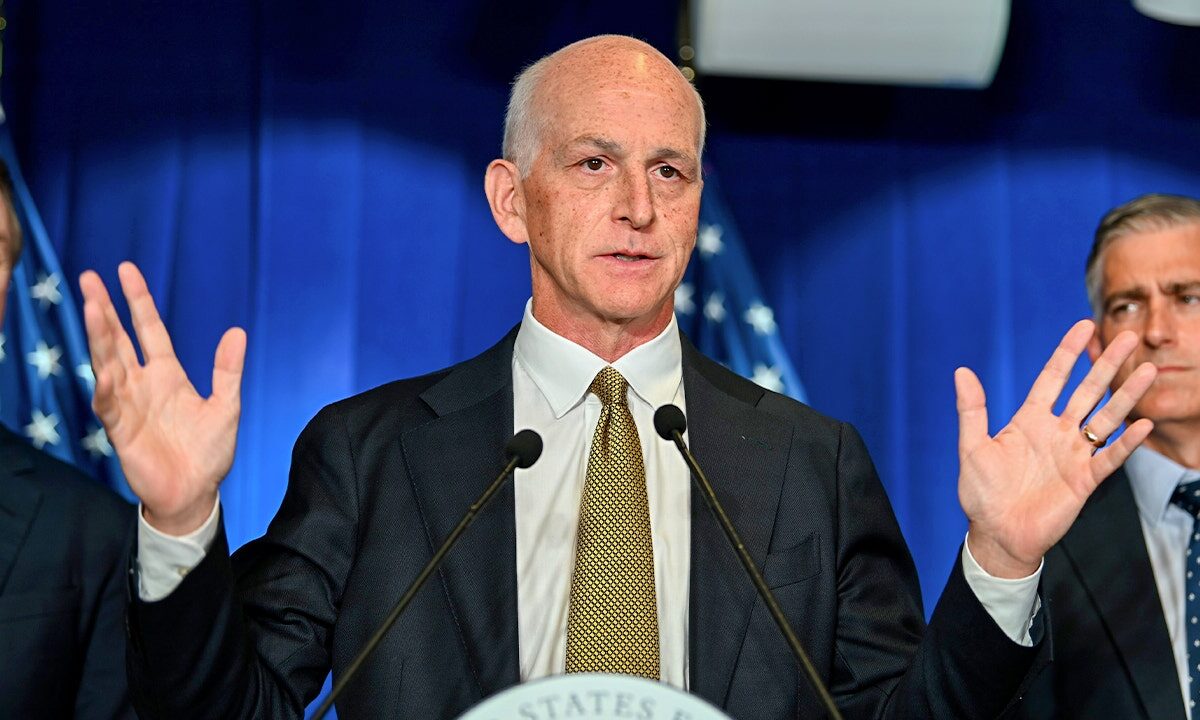
“When you look at some of these democratic socialists that are running, their ideology is vastly more radical than that,” Rep. Adam Smith told CNN News Central, citing primary wins by Darializa Avila Chevalier, Claire Valdez and Brad Lander as evidence. Smith used the New York results to warn that a growing “socialist agenda,” as he described it, could create practical problems for governance and electoral strategy if left unchecked.
Speaking on CNN’s News Central program, Smith framed his remarks as both a critique of specific policies and a caution about the broader political implications. He positioned his concerns as rooted in governance: how ideas translate into budgets, public safety plans and election strategy. Throughout this article, claims about these consequences are presented as Smith’s assessments and are attributed to his CNN interview.
Smith’s warning: socialist agenda and the New York wins
In the interview, Smith named the primary winners — Darializa Avila Chevalier, Claire Valdez and Brad Lander — and connected their momentum to what he called a rising socialist agenda in parts of the Democratic coalition. He said those victories, and endorsements tied to them, show an appetite for more radical positions in some districts. “It’s dangerous that people come in and say, ‘Hey, I’m going to fight Trump. I’m new. I’m going to get after income inequality,’” Smith said, adding that the policy mix accompanying that energy can be worrisome.
Smith emphasized that his comments reflect a judgment about policy feasibility and political consequences rather than a personal attack on voters. Repeatedly in the interview he stressed the difference between new energy in the party and policy prescriptions he deems impractical.
Who won the New York primaries
The candidates Smith referenced — Darializa Avila Chevalier and Claire Valdez, along with Brad Lander — were highlighted in his remarks as examples of primary winners whose platforms he described as aligned with the far left. Smith also noted they were associated with or received endorsements from local progressive leaders, including Zohran Mamdani, which he said helped amplify their campaigns.
Reporting has identified those winners as attracting support from progressive groups and activists; Smith used their victories to make a broader point about where parts of the party are moving and what he sees as risks stemming from that shift.
Claims about policy positions and examples cited by Smith
Smith attributed several policy positions to what he labels the socialist agenda. In his CNN interview he said candidates or factions he described as democratic socialists have, in some instances, expressed support for ideas Smith summarized as favoring communal approaches to economics, more open immigration policies and proposals to reduce police budgets. He repeatedly framed these as his characterizations of the policy mix and cited them as the basis for his concerns.
Smith offered direct criticism of how those positions might function in practice. “When you look at some of these democratic socialists that are running, their ideology is vastly more radical than that,” he said, and added that he does not think some of those proposals are sound public policy, especially on immigration enforcement and criminal justice. Those statements reflect Smith’s view and should be read as his analysis, not as independently verified universal outcomes.
Security, election and budget concerns Smith raised
On security and policing, Smith warned that sharp reductions in funding or authority for law enforcement could create gaps localities might struggle to fill. He framed this as a practical governance concern rather than a purely rhetorical point: changes to policing, he said, have direct effects on crime response, public safety planning and community trust.
Smith further raised election-related concerns, arguing that if voters broadly perceive the party as moving toward policies he described as extreme, it could affect turnout and competitiveness in swing districts. He stressed the linkage between perceived electability and the kinds of platforms that win primaries in heavily Democratic areas.
On budgets, Smith warned about the fiscal mechanics of large-scale promises. “If you take personal responsibility and accountability out of it, and just say, ‘We’re going to give free stuff to everybody,’ then you have a problem making that work from a funding standpoint,'” he said on CNN. That quotation, and the budgetary point, reflect his view that certain proposals demand clearer funding plans.
What to watch next
In the coming weeks, the dynamics to monitor include how city and state Democratic leaders respond to the primary outcomes, whether national Democratic figures engage with or push back on the newly elected candidates, and whether those winners moderate or double down on the positions Smith described. Smith urged party leaders to consider both the policy implications and the electoral consequences.
Analysts and voters should also watch messaging ahead of the general elections: Smith said he is watching for whether these primary winners can translate activist energy into broader electoral appeal without creating openings for opponents on issues of public safety, immigration or fiscal responsibility.
Source
This article summarizes and attributes statements made by Rep. Adam Smith during an interview on CNN News Central. See the CNN News Central program page for the show: CNN News Central. Additional reporting referenced the Fox News story that covered Smith’s comments: Fox News. All claims about policy effects and political strategy in this article are attributed to Rep. Adam Smith as presented in that CNN interview.