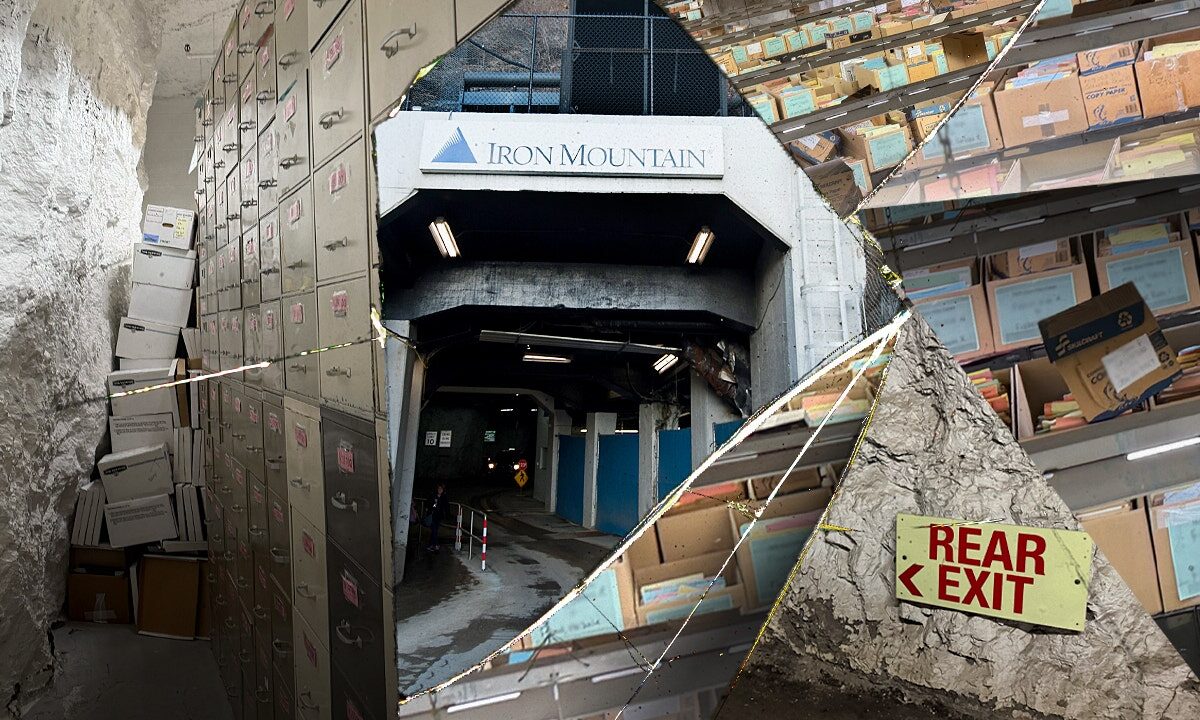
The Boyers limestone mine was at the center of a symbolic and operational shift for federal retirements when officials marked a “Last Day of Paper” event announcing the Office of Personnel Management would move away from long-term paper storage. The phrase “Boyers limestone mine” has come to describe both the underground archive where millions of retirement files were kept and the broader push to digitize decades of personnel records.
What happened at the Boyers limestone mine
Federal officials, including leaders from the Trump administration and the Office of Personnel Management (OPM), staged a public acknowledgment that the agency would end routine use of paper for retirements tied to records stored in the Boyers limestone mine. The Retirement Operations Center there had long been the repository for mailed retirement applications and supporting documents created since the 1980s. At the event, agency representatives described the announcement as the administrative end of physically delivering retirement paperwork into long-term underground storage and the start of a broader all-digital processing baseline for many retiree files.
How OPM processed retirements there
OPM’s Retirement Operations Center in Boyers historically handled a heavy manual workload. The agency processed roughly 10,000 retirements a month through workflows that often relied on paper records routed from employing agencies. Staff received, reviewed and archived paper files; locating or retrieving those files for processing could introduce weeks or months of delay. OPM functions as the federal government’s civilian human resources office, overseeing benefits and personnel systems that serve current employees and retirees.
Why OPM moved off paper
OPM officials said the federal retirement system had relied largely on paper since the 1980s. The agency pointed to its Online Retirement Application and related digitization efforts as the practical means to reduce processing time, shrink physical storage dependence and allow retirees to complete requirements without waiting for documents to be transported to or from an underground archive. Administrators framed the modernization as intended to improve service speed and operational efficiency, enabling many retirees to receive determinations sooner than under the predominantly paper-based system.
Records, shredding and security questions
OPM and administration officials stated that the Boyers facility houses more than 400 million paper records. As the agency migrates files to electronic formats, OPM announced plans to shred many of the documents remaining underground once appropriate digital copies and retention rules are in place. Agency officials said shredding would follow records-retention protocols and internal security processes.
Those statements raise distinct security and verification issues. OPM Director Scott Kupor and other officials described safeguards and staff oversight, but several aspects of transfer, retention and shredding are agency-managed actions that external reporters and the public cannot independently confirm from the available reporting. Privacy and records experts often note that digitization can reduce some physical risks—like theft or deterioration—while increasing the importance of cybersecurity, access controls and long-term preservation planning.
Voices and disputed claims
Scott Kupor offered several firsthand characterizations in interviews quoted by Fox News Digital. He said the underground archive was “unlike anything I’d ever seen before” and argued that modernization required giving staff authority and tools to resolve long-standing operational impediments. Kupor also attributed some of the modernization momentum to public scrutiny: he said that criticism from high-profile figures helped accelerate adoption of the online application and other changes.
Specifically, Kupor told reporters he believed Elon Musk and the DOGE team’s public criticism contributed to urgency around closing the paper-dependent process. That attribution is presented here as Kupor’s view and is not independently verified. Elon Musk is also quoted in the source coverage characterizing the underground operation as “like a time warp,” and saying digitization would allow people to retire sooner rather than waiting months for paper transfers.
Readers should note which claims come directly from OPM statements or Kupor quotes and which are interpretations or attributions. Where the article references characterizations attributed to Kupor or Musk, it reflects what those sources said to Fox News Digital; independent verification of the shredding timeline, the precise role of external critics in agency decision-making, or other internal OPM procedures was not available from the cited report.
What comes next for retirees and records
OPM officials say the digitization should reduce processing timelines: instead of waiting months for physical files to be located and transported, many applicants may have decisions completed in a shorter timeframe once electronic records and workflows are fully implemented. Kupor was quoted saying, “Now people can retire as soon as they want, instead of waiting 6 months for paper to be carried into a mine.” Agency leaders described ongoing work to ensure electronic records are accessible, secure and compliant with federal retention policies.
As files are converted, OPM has stated it will follow retention schedules, access controls and security protocols and that shredding of physical documents will occur when proper electronic replacements and records-management steps are complete. Reporters and outside observers note that the execution and oversight of those disposal plans remain subject to agency control and subsequent audit or review.
By the numbers
- Approximately 400 million paper records said to be stored at Boyers.
- Roughly 10,000 retirements processed monthly at the Boyers operations center (per OPM descriptions).
- Paper-dependent processing in place since the 1980s prior to the Online Retirement Application rollout.
Source attribution
This article is based on reporting and on-the-record statements published by Fox News Digital. Primary source: “EXCLUSIVE: Inside the secretive mine DOGE helped drag out of a decades-old bureaucratic black hole,” Fox News Digital. Full source: https://www.foxnews.com/politics/exclusive-inside-secretive-mine-doge-helped-drag-out-decades-old-bureaucratic-black-hole.
Notes on attribution and verification: quoted descriptions of the archive and attributions about the influence of Elon Musk and the DOGE team are explicitly credited to OPM Director Scott Kupor and to Musk as reported by Fox News Digital; claims regarding shredding timelines, security procedures and the direct causal effect of outside criticism on agency decisions are reported as statements by those sources and are not independently verified in this article.