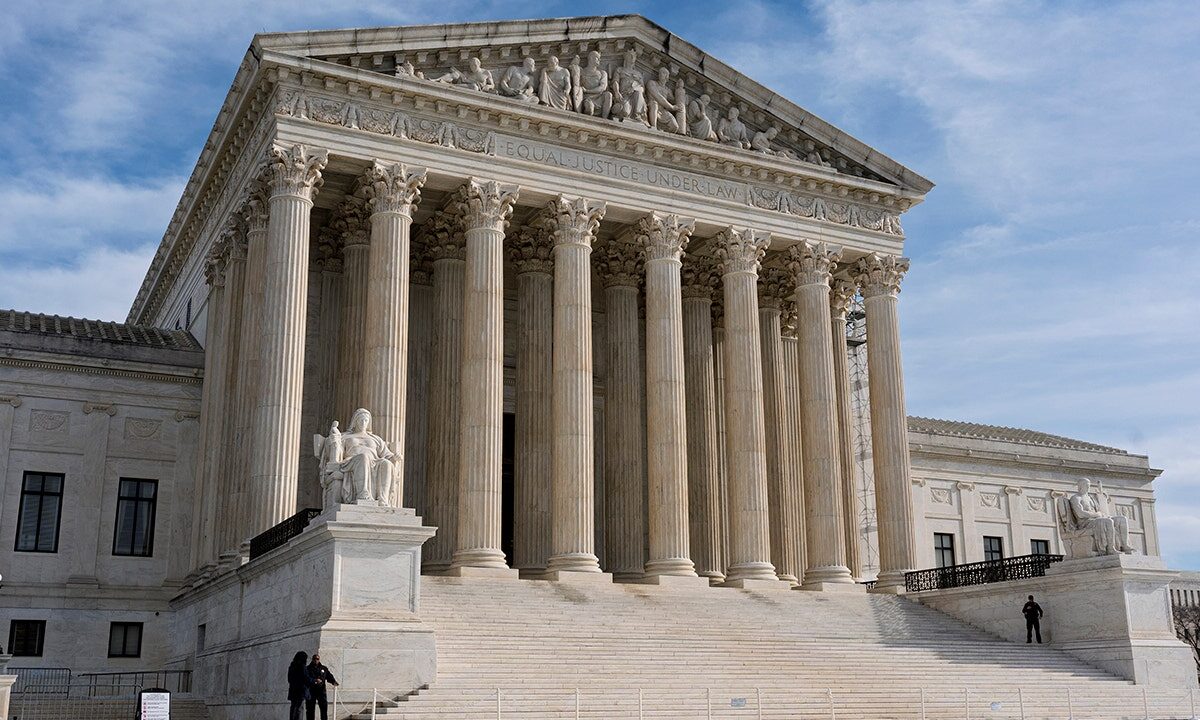
The Supreme Court ended its 2025–2027 term Tuesday. In an opinion column, Hugh Hewitt urges Americans to recognize the institution’s role even after a term that produced several high-profile and contested rulings.
What the Supreme Court decided this term
This term produced seven decisions that generated the most national debate. Below are the topics Hewitt highlights, with context on why each matter stirred public controversy and how the Court addressed them.
- Administrative appointees and agency power. The Court clarified when agency officials are properly appointed and how much deference courts should give to agency interpretations of statutes. The decision examined separation-of-powers principles and the limits of executive appointments to independent administrative roles, prompting debate about bureaucratic oversight.
- Federal Reserve governors’ tenure and authority. A ruling considered statutory terms, removal protections and the scope of authority for Federal Reserve governors. The opinion addressed whether structural protections affect how much the Court can review certain monetary-policy decisions and their legal underpinnings.
- Temporary Protected Status (TPS). The Court evaluated executive authority to designate TPS and the procedural requirements for extending or terminating protections for certain immigrant groups. The outcome shaped how vulnerable populations receive temporary humanitarian relief.
- Asylum availability and border procedures. The justices reviewed rules governing asylum eligibility and administrative bars at the border. The decision affected how procedural restrictions and international law principles interact when migrants seek refuge.
- First Amendment and political spending. The Court weighed limits on political spending by parties and associations, revisiting long-standing doctrines about money, speech and campaign regulation. The ruling prompted debate about disclosure, coordination and the balance between regulation and free expression.
- State laws on girls’ sports participation. The Court addressed state rules regarding eligibility to participate in girls’ sports, especially as they relate to transgender girls and other athletes. The opinions explored equality guarantees, competitive fairness, and the proper deference to state athletic-governing regimes.
- Birthright citizenship disputes. The justices considered statutory and constitutional arguments over the scope of birthright citizenship, including how the Fourteenth Amendment’s Citizenship Clause applies in contemporary contexts. The decision reinforced questions about interpretive method and historical practice.
Hewitt acknowledges that few impartial observers embraced every majority opinion. His institutionalist view emphasizes that the Court produces reasoned opinions—majorities, concurrences and dissents—that can be debated, tested in lower courts, and, if necessary, revisited by future majorities or through legislative responses.
History and reversed errors
Hewitt places the term’s controversies in a longer historical frame. He cites three decisions now widely condemned—Dred Scott, Plessy v. Ferguson and Korematsu v. United States—as examples of grievous errors the nation has repudiated. By recalling those cases, he underscores that the Court has the capacity, over time, to correct prior wrongs.
Those reversals, Hewitt argues, show two things: first, that the judiciary is fallible; and second, that the constitutional system contains mechanisms—other courts, scholarship, civic debate and, where appropriate, new statutes—to redress mistakes. That historical perspective informs his plea for measured respect rather than unrelenting delegitimation.
Why the Court and the Constitution matter
At the core of Hewitt’s column is an institutionalist defense of the Constitution and the rule of law. He frames the Constitution as the structure that preserves foundational commitments: the Declaration’s principles are the “apple or gold,” and the Constitution the “frame of silver” protecting them, a metaphor he uses to illustrate the relationship between ideals and legal structure.
From this vantage, the Court’s written opinions—no matter how contested—serve democratic life by transforming disputes into arguments that can be assessed by citizens, scholars and future courts. For Hewitt, the Court’s routines of explanation, record-making and precedent are civic goods that help stabilize public life.
Where the justices go next
With the term over, justices will temporarily leave Washington, D.C., teaching at law schools, delivering public lectures, running seminars and working on books. Those activities sustain the legal profession and public understanding: they transmit doctrine, clarify reasoning for students and readers, and keep the justices engaged in scholarly exchange centered on One First Street, NE.
Hewitt emphasizes that these postterm routines matter because they maintain institutional continuity. The same judges who render opinions also shape discourse through teaching and writing, which in turn informs future litigation and the evolution of law.
Key takeaways and source note
Hewitt’s central takeaways are straightforward. First, controversy around particular opinions is normal in a pluralistic republic. Second, the Court’s written opinions and the surrounding civic processes allow for public scrutiny and eventual correction. Third, institutional stability and respect for the rule of law matter for the health of American self-government.
This piece is an opinion column by Hugh Hewitt and summarizes his institutionalist perspective as published on Fox News. For the full original column, see the Fox News opinion page: Fox News: Morning Glory — Celebrate the Supreme Court, our Constitution and America at 250.
Hugh Hewitt is a Fox News contributor and host of The Hugh Hewitt Show. This article summarizes his views on the Court’s 2025–2027 term and the larger civic case for preserving respect for constitutional institutions.