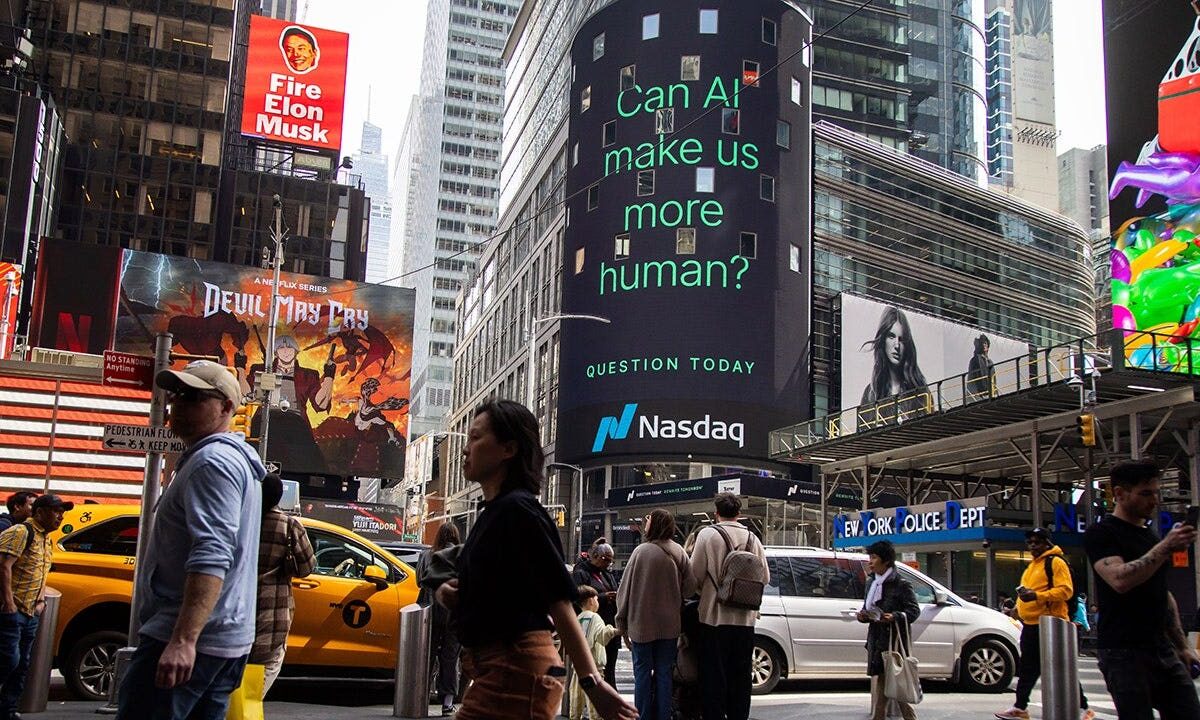
New York has enacted the AI-generated ads disclosure law — the state’s synthetic performer disclosure statute — signed by Gov. Kathy Hochul in December 2025. The AI-generated ads disclosure law requires conspicuous labels on advertisements that use AI-generated people and carries civil fines starting at $1,000 for first-time violations.
Quick facts
- Law name: New York synthetic performer disclosure law (signed December 2025).
- Main requirement: conspicuous notice that the person in the ad is an AI-generated person or synthetic performer.
- Signed by: Gov. Kathy Hochul (December 2025).
- Fines: civil fine up to $1,000 for a first violation; $5,000 for subsequent violations.
- Scope: applies to advertisements that feature an AI-generated person, synthetic performer, or substantially AI-altered likeness.
- Regulatory gap: statute requires the notice to be “conspicuous” but does not set exact wording, placement or format.
What the law requires
The statute’s core obligation is simple in form: if an advertisement includes a synthetic performer — a person created or substantially altered by artificial intelligence — the ad must carry a conspicuous disclosure informing consumers the person is not a real, natural person.
The law covers still imagery, video, and other digital representations where an AI-generated or materially AI-altered person appears or is represented. It also reaches creative assets produced by vendors and agencies when those assets are used in ads targeted at New York audiences.
Crucially, the statute does not prescribe statutory wording or a mandatory visual design for the notice. Instead, it requires that the disclosure be conspicuous to an ordinary consumer. That leaves decisions about exact wording, font, size, duration in video, and placement to advertisers for now, while opening space for regulators or courts to refine the standard later.
Fines and enforcement gaps
Noncompliance can trigger civil penalties: up to $1,000 for a first confirmed violation and up to $5,000 for subsequent violations. The fines are set in statute as civil monetary penalties, not criminal sanctions.
However, the law leaves important enforcement mechanics unspecified. It does not clearly identify the primary enforcement agency, timelines for administrative proceedings, notice-and-cure windows, or the evidentiary standards that will govern disputes. That enforcement ambiguity creates compliance risk: advertisers may be uncertain which formats or disclosures will satisfy a regulator or withstand litigation.
Regulators could issue guidance clarifying what constitutes a conspicuous notice, or enforcement outcomes could be shaped by early administrative actions and court rulings. Meanwhile, state attorneys general, consumer-protection offices, or private litigation could become vectors for enforcement depending on how the statute is interpreted.
“In New York, we are setting the rules of the road instead of letting AI run the show,” Gov. Kathy Hochul said, underscoring the state’s push for transparency. — Gov. Kathy Hochul (press release, cited by Fox News Digital)
“The measure protects artists and consumers by demanding transparency in how synthetic likenesses are used,” said Duncan Crabtree-Ireland of SAG-AFTRA, as reported by Fox News Digital.
Industry reaction and context
The law drew support from performers’ groups and consumer advocates who view disclosure as a guardrail against deception and misuse of likenesses. SAG-AFTRA backed the measure as a way to protect performers’ rights and prevent undisclosed commercial use of synthetic representations.
Lawmakers framed the statute in consumer-protection terms as well. Assemblymember Linda B. Rosenthal and other sponsors described the change as a response to rising synthetic media and concerns about deepfakes that can blur the line between real and fabricated imagery.
Industry context helps explain the urgency: the Interactive Advertising Bureau reported that roughly 83% of advertising executives say their companies are using AI in the creative process this year, a rapid increase that has accelerated the need for disclosure norms and regulatory responses.
What advertisers should do now
Advertisers and agencies operating in or targeting New York audiences should take immediate, practical steps to reduce risk and confusion:
- Audit creative pipelines to identify where synthetic performers are used and flag existing assets that may now require disclosure.
- Adopt conspicuous disclosure practices today: put clear notices in places consumers will see, such as on-screen text for video or prominent labeling in display ads; document placement and timing decisions.
- Update vendor and talent contracts to require disclosure about AI use, to secure necessary rights and consent, and to allocate responsibility for labeling and recordkeeping.
- Maintain internal records that track when, how and by whom synthetic elements were created and approved to create an evidentiary trail if enforcement arises.
- Consult legal counsel and compliance teams to balance transparency with creative needs, and watch for forthcoming regulatory guidance or court decisions that may clarify “conspicuous.”
Taking these steps now can reduce the risk of fines and reputational harm while companies and regulators work toward clearer operational standards.
Frequently asked questions
What counts as an AI generated person under the law?
The statute targets “synthetic performers”: persons created or substantially altered using AI so they no longer reflect a real, natural person. Companies should assume that materially AI-generated or AI-manipulated likenesses fall within the rule.
How much can fines be for violations and when do they apply?
First-time civil fines can reach $1,000. Subsequent violations may carry $5,000 penalties each. The statute does not yet specify the full enforcement process or which agency will oversee adjudication.
Does the law specify exact disclosure wording or format?
No. New York requires a conspicuous notice but does not set statutory wording, font, placement or duration. That lack of specificity is a central enforcement ambiguity that advertisers should monitor.
Sources
- Fox News Digital coverage: New York makes history with first-of-its-kind law regulating AI-powered commercials.
- SAG-AFTRA statements and coverage cited by Fox News Digital.
- Interactive Advertising Bureau (IAB) reporting on AI adoption in advertising (cited statistics reported by industry trade coverage).
- Press materials from the office of Gov. Kathy Hochul (as cited by Fox News Digital).