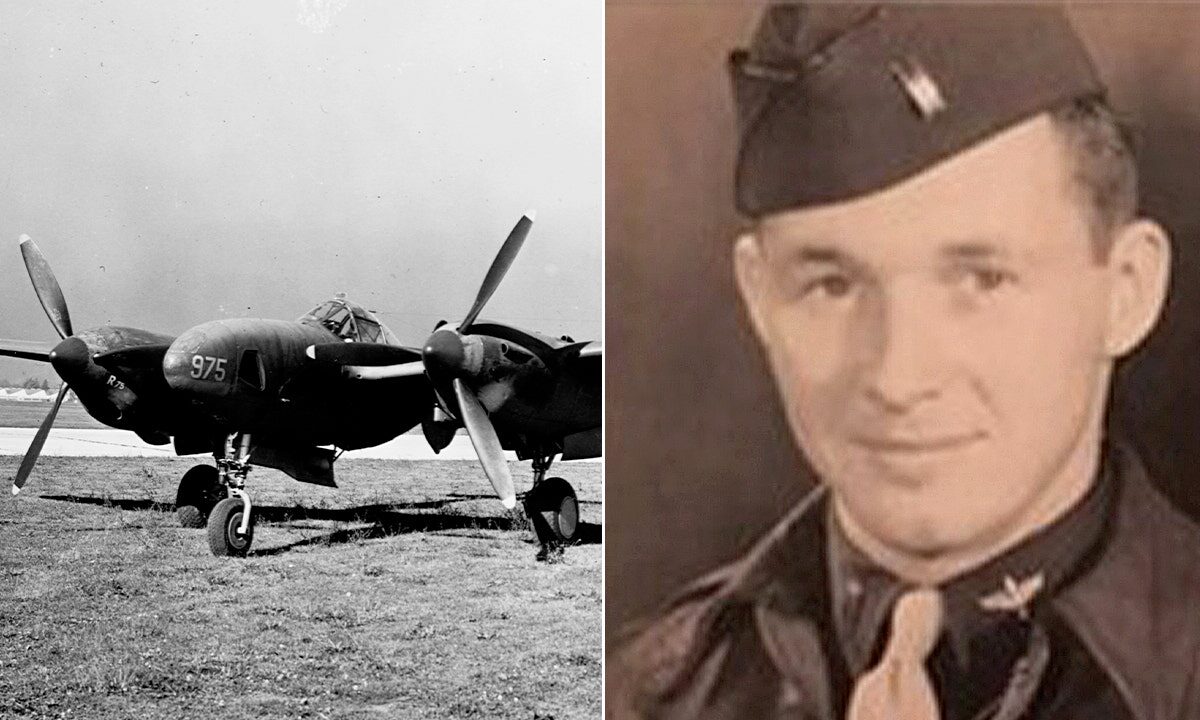
The Defense POW/MIA Accounting Agency announced that 1st Lt. Franklin H. McKinney was officially accounted for on May 15, 2026, after remains recovered from a Lampang province crash site were identified through forensic analysis. DPAA said the identification followed coordinated field recovery, archival research and laboratory testing. McKinney’s family will be briefed as the agency completes next steps.
DPAA announcement: Franklin H. McKinney accounted for
On May 15, 2026, DPAA announced that 1st Lt. Franklin H. McKinney had been accounted for following laboratory identification of remains associated with a crash site in Lampang Province, Thailand. The agency said the finding closes a case that began with McKinney’s loss in November 1944.
The agency’s release described a multi-year investigative timeline and credited combined fieldwork and laboratory analysis for reaching the identification. DPAA emphasized that family notification procedures are underway.
How the Lampang crash site was found
Third-party researchers first reported a wreck site in a Lampang province rice paddy in 2018 and suggested a possible link to McKinney’s missing F-5 Lightning. That discovery prompted DPAA to examine the site during subsequent field missions.
Wartime and local accounts recorded wreckage near Ban Mae Kua in Sop Prap District. A Royal Thai Air Force wartime report included an account that wreckage had appeared to explode before crashing. DPAA’s public statements note that such wartime or local reports can vary and the agency cautions that eyewitness and archival descriptions do not always establish cause of loss. DPAA’s identification relied on recoveries and laboratory analyses rather than solely on contemporaneous reports (dpaa.mil).
Forensic ID and recovery work
DPAA teams conducted site examinations in 2019 and 2021 and a recovery excavation in 2022 that recovered possible human remains and associated material evidence. Recovered items were sent to a DPAA laboratory for detailed analysis.
At the laboratory, scientists performed forensic anthropological examinations, dental comparisons and other laboratory methods identified by the agency to evaluate the remains and associated artifacts. DPAA described the process as integrating field context, artifact analysis and laboratory testing to reach a positive identification.
DPAA noted that when family reference samples and comparative records are available, the agency may also use DNA comparison alongside dental and anthropological evidence as part of its identification toolkit. The agency emphasized thorough documentation at every step to ensure conclusions are supported by the available evidence (DPAA statement).
Who Franklin H. McKinney was
Franklin H. McKinney was 21 and from Rhode Island when he served with the 35th Photo Reconnaissance Squadron, part of the 14th Air Force. He flew an F-5 Lightning, the reconnaissance version of the P-38, on long-range photographic missions across Japanese-occupied areas of China, Burma and Thailand.
McKinney departed from Yunnanyi (Yunnan), China, on Nov. 5, 1944, on a photo-reconnaissance mission. He did not return to base, and he was declared missing in action. Archival squadron records and subsequent researcher work helped focus later recovery efforts in Thailand.
What happens next for the family and memorials
DPAA stated that the next step is a formal briefing to next of kin, a standard part of the agency’s process following a positive identification. The briefing provides the family with details of the recovery and laboratory findings and explains options for disposition consistent with the family’s wishes and legal requirements.
Per DPAA procedure, McKinney’s name will be updated on the Tablets of the Missing at the Manila American Cemetery in the Philippines if applicable, and the agency will coordinate repatriation or interment options with the family. The Manila American Cemetery is the principal permanent American memorial in the Philippines for those lost in the Pacific region.
Background and investigatory context
Initial searches after Nov. 5, 1944, did not locate conclusive evidence of McKinney’s aircraft along its expected route. Decades later, third-party researchers locating wreckage in Lampang renewed investigative interest and led to DPAA fieldwork that recovered material consistent with an F-5 Lightning and possible human remains.
DPAA’s casework typically integrates archival records, witness accounts, historical documentation and modern scientific methods to resolve long-standing missing-persons cases from World War II and other conflicts. The agency frames archival reports as one piece of evidence among many and relies on laboratory-confirmed identifications to account for missing service members.
Frequently asked questions
How was Franklin H. McKinney identified?
The remains and associated artifacts recovered from the Lampang site were analyzed at a DPAA laboratory using forensic anthropology, dental comparison and other laboratory techniques described by the agency. When available, comparative records and family reference samples are used to strengthen identifications.
Where and when was the crash site located?
Third-party researchers located wreckage in a Lampang province rice paddy in 2018. DPAA conducted site examinations in 2019 and 2021 and a recovery excavation in 2022 that yielded material transported for laboratory analysis.
What will happen to McKinney’s remains and memorial listing?
DPAA will brief next of kin and discuss repatriation or interment preferences. The agency will also update memorial records, including the Tablets of the Missing at the Manila American Cemetery, consistent with family wishes and policy.
Source attribution
Primary source: Defense POW/MIA Accounting Agency announcement and case documentation. See DPAA for the official statement: https://www.dpaa.mil/.
Additional reporting: Fox News coverage of the identification and background reporting: Fox News.
Family briefing note: DPAA will brief next of kin directly under agency protocols and will work with the family on memorialization or repatriation decisions.