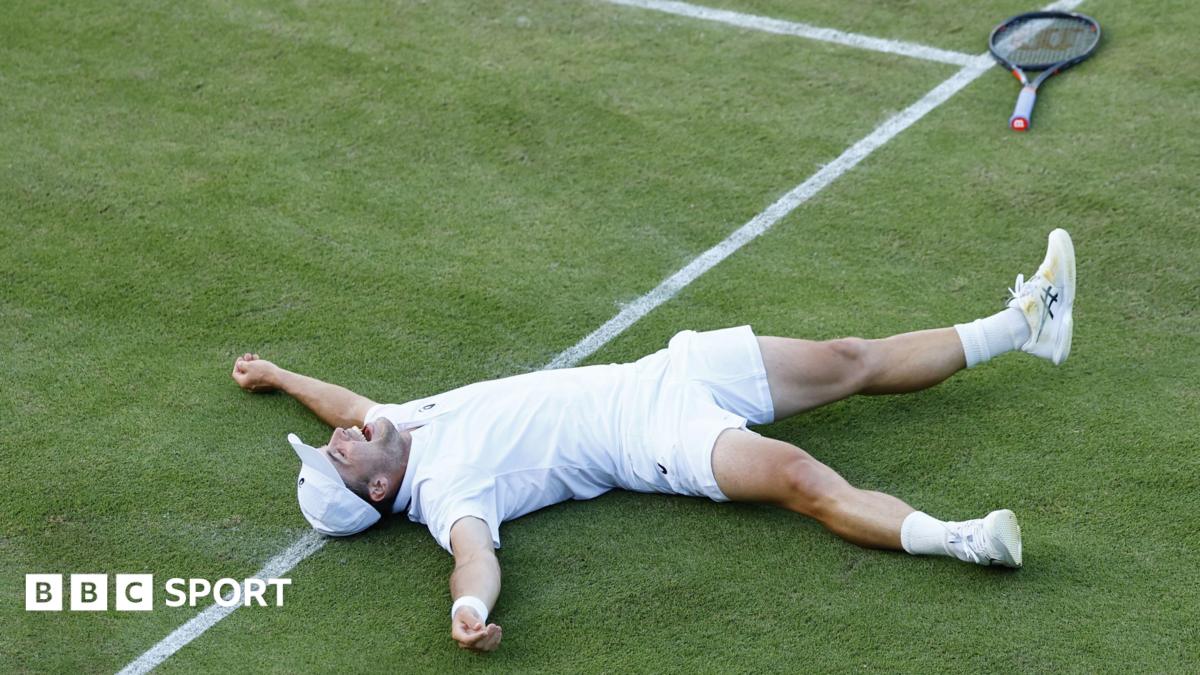
Arthur Fery beat Zizou Bergs to reach the Wimbledon fourth round, enduring three on-court nosebleeds during the match but still advancing at the grass-court Grand Slam. The victory prolongs a feelgood local story and keeps a British wildcard in the singles draw as the tournament moves into its second week.
Match snapshot — Arthur Fery
Winner: Arthur Fery (British wildcard)
Loser: Zizou Bergs
Stage: Wimbledon, Fery advances to the fourth round
What happened on court
The match unfolded as a close contest punctuated by unusual interruptions. On three separate occasions during play, Fery suffered nosebleeds that required medical attention and short stoppages. Each time, on-court medical staff attended to him before play resumed. The breaks tested momentum for both players but proved particularly taxing for the British wildcard, who had to repeatedly calm his breathing and refocus between games.
On court, momentum swung in waves. Fery used aggressive placement and quick movement on the grass to open angles, while Bergs looked to counter with heavy groundstrokes and changes of pace. The match contained several tight service games where a single break point or volley exchange dictated the next phase of play. After each medical stoppage, Fery returned to the baseline and steadily rebuilt rhythm rather than attempting rushed winners.
A combination of consistent serving at key moments and timely returns helped Fery convert crucial opportunities in later games. Bergs remained competitive and pressed pressure on serve throughout, but Fery’s ability to mix depth and touch on return games created the decisive openings. Tournament officials allowed play to continue after each medical check, and there were no prolonged suspensions beyond the treatment intervals.
Why this matters for home hopes
As a British wildcard, Arthur Fery’s run represents one of the tournament narratives that fans and broadcasters look for at Wimbledon: a home-grown player pushing into the second week. Wildcards are granted to players the tournament wants to give the chance to compete in the main draw; when one advances beyond the early rounds it captures local attention, fills seats and draws national broadcast interest.
Fery’s progress matters beyond a single match result. It gives supporters a domestic storyline to follow on centre and show courts, and adds depth to conversations about British singles prospects at a Grand Slam played on home soil. For the tournament atmosphere, a British player advancing at this stage tends to increase crowd engagement and amplify the sense of occasion—particularly as championship week approaches.
What comes next for Fery
Fery now prepares for his fourth-round assignment. With the draw narrowing, he is expected to face a higher-ranked opponent; the exact name and timing should be checked on the official schedule. Recovery and careful preparation will be key after the match’s medical interruptions: short turnaround times in the second week of a Grand Slam make every treatment and training session count.
The team around Fery, including coaches and tournament medical staff, will manage his recovery protocol over the following days to ensure he is able to compete. Conditioning, treatment for any lingering symptoms from the nosebleeds, and tactical preparation for the new opponent will all be priorities as he moves into a phase of the tournament where matches become more physically demanding and strategic margins tighten.
Fans seeking the confirmed opponent and session timing can check the official Wimbledon schedule here: wimbledon.com.
Resilience under pressure—repeated interruptions tested him, and he still found a way through.
Background
Wildcards at Wimbledon are often given to promising domestic talent or players returning from injury; when a wildcard progresses to the later rounds it becomes part of the tournament’s wider narrative about opportunity and surprise. For British tennis supporters, runs by local players help sustain interest across the many courts of SW19 and give younger players a platform on which to build experience against top-ranked opponents.
Source attribution
Source: BBC News, published 2026-07-04.