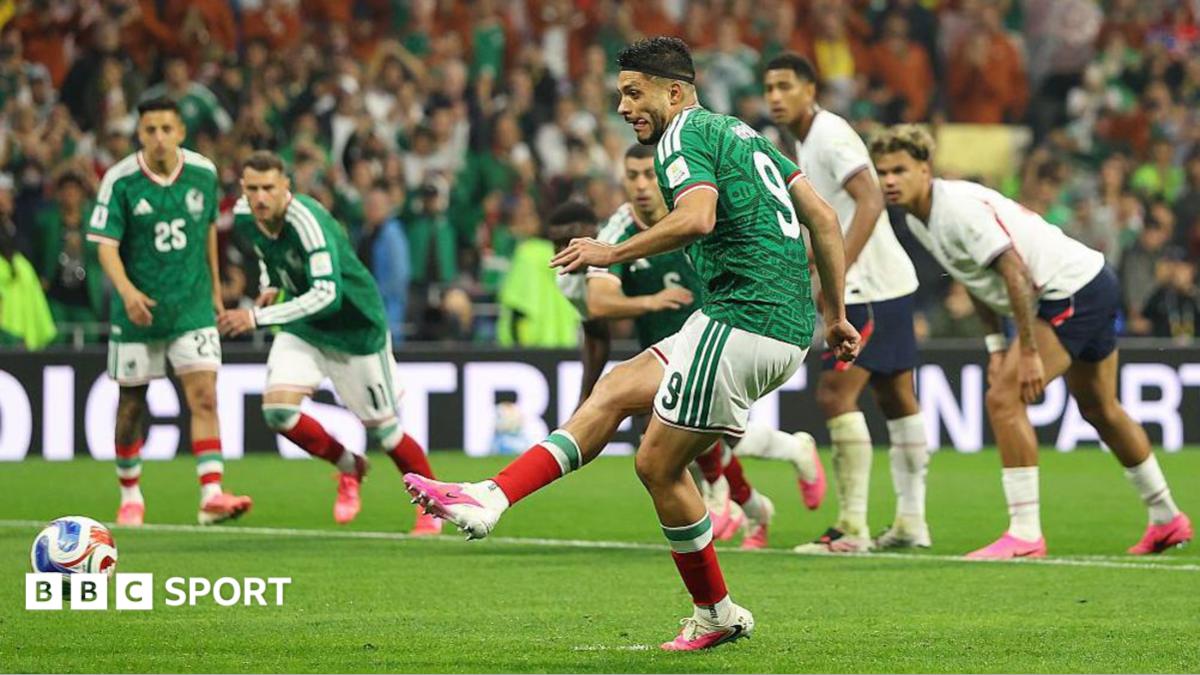
The Jarell Quansah red card saw him sent off and a penalty awarded to Mexico during England’s World Cup last-16 match. Officials used the on-field decision and VAR review to determine that a foul had occurred inside the penalty area and that the challenge met the standard for a sending-off.
This explainer sets out the sequence of events on the pitch, the Laws of the Game considerations referees apply, how VAR was used in the review, and what the decision meant for the match going forward. It focuses on the official rulings rather than speculating on player intent.
Quick answer
In short: match officials judged that Jarell Quansah committed an offence inside England’s penalty area that warranted a penalty for Mexico and met the criteria for a red card. The incident was reviewed under VAR protocols to check whether the on-field decision contained a clear and obvious error; the original decision stood following that process.

What happened on the pitch
In the World Cup last-16 tie between England and Mexico, play progressed into England’s penalty area where a defensive challenge by Jarell Quansah occurred involving an opposing attacker. The referee stopped play and indicated a foul had taken place in the area.
The referee went through the standard VAR steps: the VAR team checked the incident for clear and obvious errors, communicated with the on-field referee, and the referee reviewed footage at the pitch-side monitor before confirming a red card for Quansah and awarding a penalty kick to Mexico.
The match continued with England reduced to 10 players and Mexico preparing to take the spot-kick. Officials later confirmed the on-field decisions after the VAR check, consistent with tournament protocols that allow for review of potentially match-changing incidents.
Why the Jarell Quansah red card was given
Referees can send a player off for serious foul play or for denying an obvious goal-scoring opportunity (DOGSO). When such incidents happen inside the penalty area, the Laws of the Game require careful assessment of several objective factors.
Key factors referees consider include the point of contact, whether the defender made a genuine attempt to play the ball, the direction of the attacker and the proximity to goal. If an action is judged to be dangerous or to deny a clear goal-scoring opportunity without a legitimate attempt to play the ball, it can meet the threshold for a red card.
In Quansah’s case, match officials judged that the challenge met the threshold for a sending-off under those criteria. The VAR process was used to confirm whether the on-field referee’s interpretation of the challenge was a clear and obvious error; the review supported the red card decision.
Why a penalty was awarded
A penalty is awarded when a player commits a direct free-kick offence inside their own penalty area. The referee, assisted by VAR, must determine whether contact amounted to a foul under the Laws of the Game and whether that contact occurred inside the box.
During a VAR review the officials focus on a limited set of questions: did contact occur, where did it occur, did the defender make a genuine attempt to play the ball, and was the on-field decision clearly wrong? VAR intervenes only for clear and obvious errors or serious missed incidents; it is not intended to re-referee nuanced calls.
Officials concluded that contact and the circumstances of the challenge justified a penalty. Because the foul was assessed as occurring inside the area, a spot-kick was awarded to Mexico as the appropriate disciplinary consequence on the field.
Impact on the match and next steps
In a last-16 fixture, a red card and a penalty are pivotal. Playing with 10 men forces the dismissed player’s team to adjust its shape, often becoming more conservative to cover the numerical deficit. That typically affects substitution strategy, pressing patterns and the balance between attack and defence.
The penalty itself represents a high-probability scoring chance for the attacking team and usually shifts momentum. For England, the dismissal required an immediate tactical reshuffle and left less scope for offensive changes. For Mexico, the decision increased the chance to take a lead and manage the game from a stronger position.
After the match, tournament disciplinary bodies may review reports and footage. At World Cup level, any appeal or disciplinary action follows FIFA’s procedures; national associations can request clarification or lodge appeals within those established frameworks if they believe an error of law occurred.
Frequently asked questions
Can the red card be overturned on review?
Yes. A red card shown during a match can be subject to a post-match disciplinary review or appeal if the team’s governing body presents compelling new evidence or argues that the decision was a clear misapplication of the Laws of the Game. For World Cup matches, appeals and disciplinary matters are handled under FIFA’s tournament rules and timelines.
What was the penalty decision based on?
The penalty decision was based on the referee’s determination that a direct free-kick offence occurred inside England’s penalty area. VAR was used to assess the key objective facts—contact, location and whether the on-field call was clearly wrong—and the on-field decision to award a spot-kick was upheld.
How does this change England’s World Cup chances?
A red card and conceded penalty in a last-16 match are significant because they usually reduce tactical flexibility and increase the opponent’s scoring opportunities. The ultimate impact depends on remaining match time, game state and how effectively each side adapts. It can make progressing through knockout rounds harder but does not by itself determine overall tournament fate.
Source and official notes
This explainer is based on reporting from BBC Sport and on the Laws of the Game and VAR procedures that govern World Cup refereeing. For the original coverage and further detail, see the BBC Sport article: BBC Sport coverage of the match.
Source: BBC Sport – Top Stories