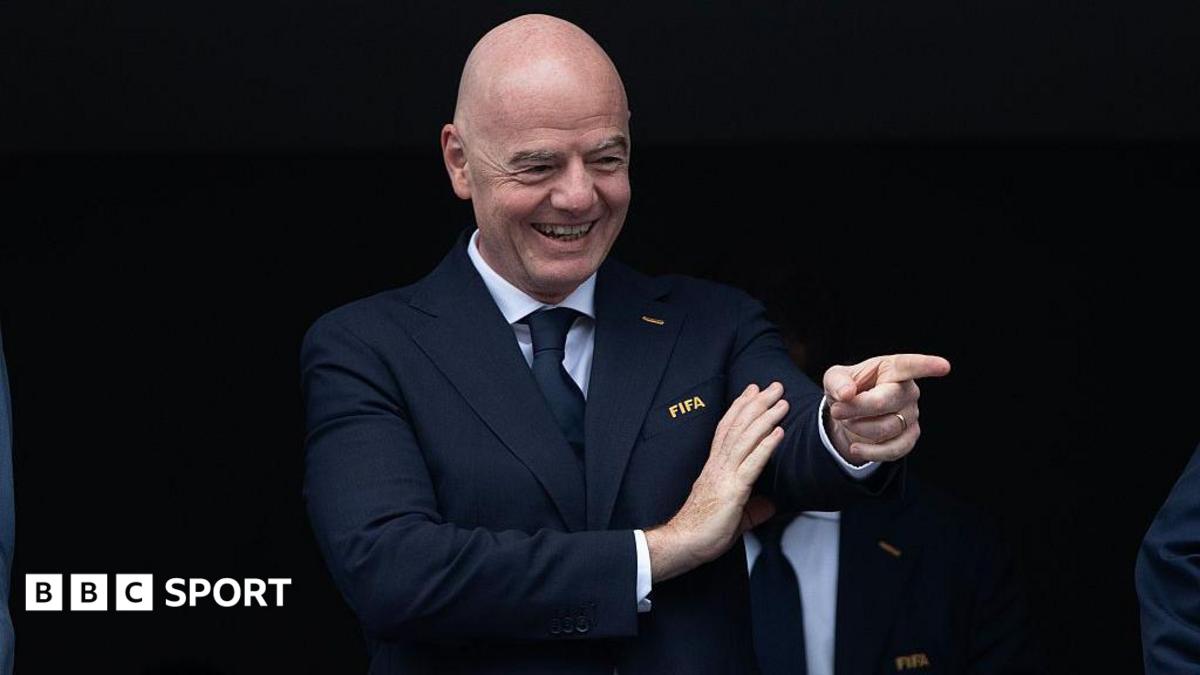
Gianni Infantino looks unlikely to be forced from office by the Folarin Balogun controversy or by reports of external political pressure. After a decade as FIFA president, Infantino benefits from institutional protections, broad ties across the organisation’s membership and structural hurdles that make a sudden leadership change difficult.
Gianni Infantino: why he is unlikely to be toppled
Quick recap of the Balogun controversy
The recent row involving Folarin Balogun has raised questions about influence and decision-making in football. Reporting has drawn connections between player‑level outcomes and wider governance concerns.
Some coverage has named political actors in relation to the story. Those links — including suggested interventions by Donald Trump — remain unverified and should be treated as allegations unless independently substantiated.
“Why European backlash over Trump intervention won’t worry Infantino” – BBC News
The BBC headline above captures the argument made by several observers: public criticism in Europe does not by itself translate into the internal shifts needed to dislodge a FIFA president.
FIFA power dynamics after 10 years
Infantino has led FIFA for 10 years. That tenure has allowed him to build relationships across confederations and national associations. Longstanding incumbency matters in an organisation where personal contacts and programme delivery count.
FIFA’s governing model centres on national association votes at congress and on influence from regional confederations. Many member associations prioritise continuity and the steady flow of development funding. Those practical considerations often blunt the effect of short‑term reputational shocks.
Governance rules, committee structures and the distribution of resources create high thresholds for change. Reputation alone rarely triggers formal removal; concrete evidence and organised internal opposition do.
Why European backlash and reports of political intervention may not stick
European media attention and political statements can amplify public pressure. But FIFA’s decision‑making remains a global, transactional process. Votes are cast by national associations from every region, many of which evaluate leaders on different criteria to those in European capitals.
Reports tying Donald Trump to interventions in football have circulated in some outlets. Those reports must be treated as unverified unless corroborated by independent documents or sources. Even if true, political naming and shaming does not automatically translate to votes in FIFA’s congress.
Practical loyalties — programme access, funding, and regional alliances — often outweigh reputational concerns in internal calculations. A backlash concentrated in one region can matter politically, but it typically needs to convert into a cross‑regional coalition to displace an incumbent.
What would realistically unseat a FIFA president
Formal removal mechanisms include votes of no confidence at a properly convened FIFA congress, decisive action by governance bodies based on substantiated findings, or legal and regulatory rulings that make continued leadership untenable.
Triggers that could change the calculus include: durable independent findings of misconduct; criminal or regulatory charges supported by evidence; or a coordinated and sustained campaign by multiple influential member associations and confederations.
Such outcomes usually require time, documentary evidence and organised internal mobilisation. Single controversies or short‑lived media storms seldom meet that bar on their own.
What to watch next
Key near‑term signals that could alter the picture include: independent investigative findings published by reputable bodies; formal legal or regulatory steps against individuals or the organisation; explicit withdrawal of support from major confederations; or a clear, coordinated motion at FIFA congress backed by regional blocs.
Absent those developments, the combination of institutional inertia, development dependencies and the dispersed global voting base means the Balogun row and disputed reports of external pressure are unlikely by themselves to oust Gianni Infantino.
FAQ
Could the Balogun controversy remove Gianni Infantino from office?
Unlikely on its own. The controversy raises reputational questions, but formal removal typically needs concrete governance findings, legal action, or an organised internal campaign among member associations.
Did Donald Trump’s intervention cause a European backlash against Infantino?
Some reports link Mr Trump to the story; those links are unverified and should be treated as allegations. European criticism may be genuine, but proving a direct causal chain between a political intervention and a leadership crisis requires clearer evidence.
What would it take for FIFA to replace its president?
A change would likely need sustained internal organising, demonstrable legal or governance grounds, or influential confederations withdrawing support. Structural protections and the voting system make sudden changes rare.
Source: BBC News – Why European backlash over Trump intervention won’t worry Infantino.