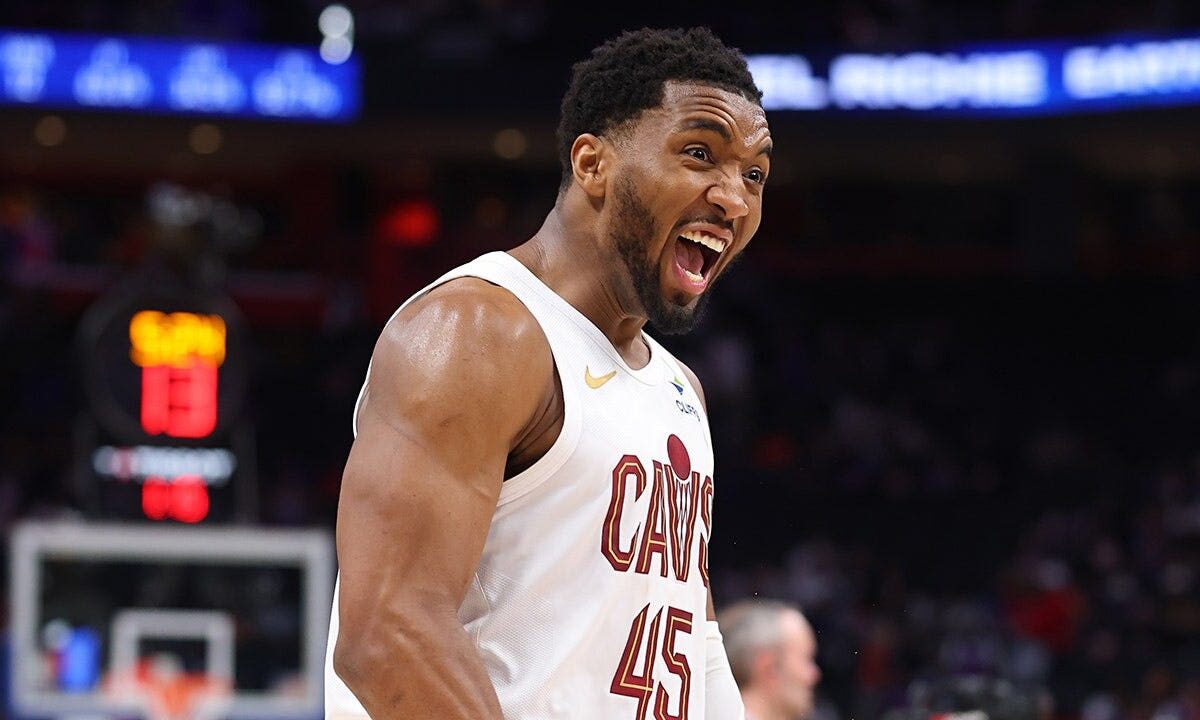
Donovan Mitchell extension news broke Tuesday: the Cleveland Cavaliers and the All-Star guard agreed to a four-year, $273 million maximum extension that includes a full trade kicker and a player option for the 2030-31 season. The deal was finalized on the first day Mitchell was eligible, signaling urgency from both sides to lock in the core.
Mitchell, 29, arrives at the start of this contract after seven straight All-Star seasons and multiple All-NBA nods. League reports say he could have waited a year to chase a five-year maximum worth roughly $353 million, but he chose the four-year security now. He framed the move in familiar terms: “I have unfinished business,” Mitchell told reporters, emphasizing a commitment to competing in Cleveland.
Donovan Mitchell extension details
The contract is a four-year, $273 million maximum extension with a full trade kicker, according to team and league reporting. The player option for 2030-31 gives Mitchell flexibility at the tail end of the deal and preserves potential leverage for a later decision.
Financially, the structure guarantees Mitchell a top-tier salary while allowing the team and player some room to shape long-term outcomes. Public reporting notes he could have taken the longer, five-year path by waiting—an option many elite scorers consider—but Mitchell and his camp opted for the certainty of a shorter, fully guaranteed deal.
The timing matters: signing on the first eligible day removes an element of offseason speculation and gives Cleveland a clearer picture as it plans roster moves and cap management for the coming summers.
What the deal means for the Cavaliers’ cap and roster
Locking Mitchell into a large, multi-year salary immediately consumes a meaningful share of Cleveland’s payroll, narrowing short-term cap flexibility. The extension reshapes the Cavs’ approach to keeping Evan Mobley, Jarrett Allen and other core pieces while still trying to add complementary shooters and defenders.
Reports suggest Cleveland will pursue team-friendly solutions elsewhere on the roster to preserve depth. That includes reported discussions around James Harden’s contract situation and potential renegotiation or sign-and-trade strategies that could free space without dismantling the core.
Practical moves the Cavs can consider: front-loading or back-loading new additions within allowable limits, using the midlevel exception for targeted role players, and leveraging draft capital to acquire ready-made bench contributors. All of those paths require careful sequencing and quick action this offseason.
How this changes LeBron James speculation
The Donovan Mitchell extension inevitably alters the calculus around renewed rumors that LeBron James could return to Cleveland. Reporting — including coverage that cites agent Rich Paul exploring suitors — has repeatedly listed Cleveland among teams in discussions. But industry sources emphasize that such talk remains speculative and dependent on multiple moving parts.
Crucially, the Mitchell deal does not make a LeBron reunion impossible; it simply defines one clear constraint. Teams can pursue creative cap work, short-term compromises, sign-and-trade mechanisms and veteran minimum arrangements to assemble a roster around a superstar. Those options, however, require buy-in from multiple players and front-office willingness to prioritize a narrow championship window.
Other destinations commonly mentioned in recent reports include the Philadelphia 76ers, Miami Heat and Golden State Warriors. Any real movement would depend on roster fit, the timeline both LeBron and his representatives prefer, and the Cavs’ willingness to adjust core finances.
Why this matters for Cleveland’s title window
Cleveland reached the Eastern Conference finals last season but fell short of a title. The Mitchell extension signals that the franchise intends to keep its competitive window open rather than embark on a long-term reset. Committing to Mitchell — alongside Mobley and Allen — keeps the team positioned to press for contention in the near term.
That strategy carries risk: keeping a high-paid core together can limit wiggle room for premium complementary pieces. The reward, if front-office planning is successful, is continuity and chemistry that a deep playoff run often favors.
What comes next for the Cavs and Mitchell
In the immediate weeks, expect focused cap modeling inside the Cavs’ front office. Practical timeline items include revisiting contract structures for non-guaranteed or renegotiable deals, exploring any viable sign-and-trade scenarios, and prioritizing free-agent targets who can be signed on team-friendly terms.
Over the next month, Cleveland will likely firm up plans for Harden (reported to be a negotiation topic), identify midlevel targets to shore up perimeter defense and shooting, and engage in discrete trade conversations that preserve the core. By training-camp time, the Cavs aim to have a roster outline that complements Mitchell’s scoring while preserving Evan Mobley’s development and Jarrett Allen’s rim protection.
Mitchell’s 2030-31 player option also creates a future decision point: if the team is a perennial contender when that season arrives, Mitchell could opt in or out depending on market dynamics and championship prospects.
For now, team sources say the priority is clarity. The extension removes uncertainty about the franchise centerpiece and forces quicker, more decisive roster planning.
By the numbers
Deal length: four years. Value: $273 million (maximum extension). Player option: 2030-31. Age: 29, coming off seven straight All-Star seasons.
“I have unfinished business,” Mitchell said after committing to the deal, underscoring the competitive motivation behind an agreement that keeps him in Cleveland through his early 30s.
Source attribution: This report is based on league and team reporting, with primary coverage by Fox News. For the original coverage, see: Fox News — Donovan Mitchell signs massive $273M Cavaliers extension as LeBron James return speculation grows.