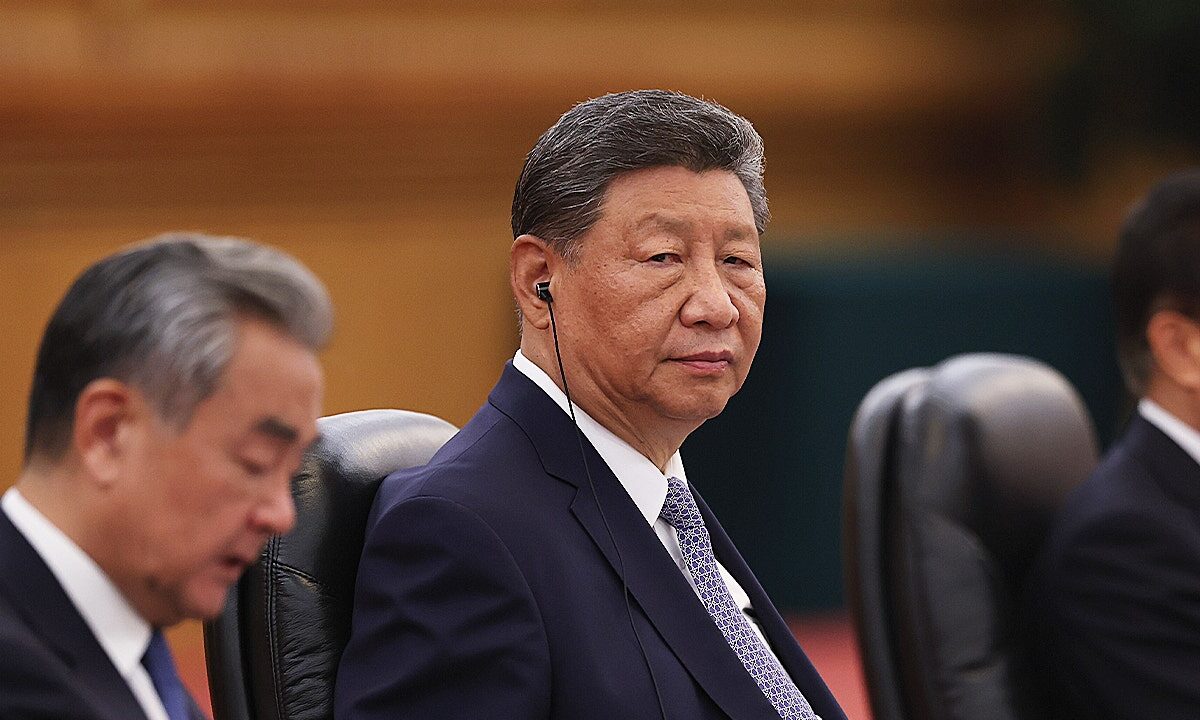
The Law on Promoting Ethnic Unity and Progress took effect on July 1, 2026, and has prompted urgent concern about whether Beijing can now reach beyond its borders to pressure or punish critics. Reporting and commentary about the statute argue that certain clauses could be interpreted to enable actions affecting organizations and individuals outside the P.R.C.
Law on Promoting Ethnic Unity and Progress
Explainer: Article 63 and claimed extraterritorial reach
Article 63 is the most-cited provision in recent reporting. It refers explicitly to “organizations and individuals outside the territory of the P.R.C.,” a formulation human rights advocates and legal analysts say is unusually broad for a domestic statute. Critics argue the language could be used to justify measures aimed at people and groups living or operating abroad.
That interpretation is contested: a domestic law cannot, on its own, change international law or another country’s jurisdiction. Reported concerns focus on how the law might be employed in practice — for example, to create public lists, to pressure foreign institutions, to condition cooperation with third-country officials, or to backchannel requests for detentions or travel restrictions. These are hypothetical uses framed by advocates and analysts; reporting emphasizes that the statute itself does not show a single uniform enforcement playbook.
How Article 63 could be applied in practice
Scholars of transnational repression caution that legal language matters because it gives administrative and diplomatic actors grounds for action. If Chinese authorities cite Article 63 when making representations to foreign governments or private entities, those representations could lead to visa complications, institutional pressure on universities or employers, or other non-judicial consequences for targeted individuals abroad.
Reporting and rights groups also point to a pattern of pressure tactics that fall short of formal extradition but are disruptive: travel detentions, administrative harassment, and attempts to silence critics through intimidation of relatives still in the P.R.C. Those patterns inform concern about Article 63’s potential reach.
Personal account and alleged abuses
The opinion and reporting that prompted this analysis frame the new law through personal accounts. The author recounts that their sister, Dr. Gulshan Abbas, was abducted in September 2018 and later sentenced following what the author describes as a secret trial. That domestic case is cited as context for why affected families view the new statute as dangerous.
The piece also describes an incident on March 30 in which the author’s husband, Abdulhakim Idris — identified as a U.S. citizen and academic director — says Malaysian authorities detained him for nearly 22 hours, seized his American passport and escorted him back to the United States. The reporting attributes the detention to pressure from Chinese officials; the causal link is presented as the author’s claim and as a reported allegation rather than an independently verified chain of command.
These accounts are presented in the source as examples that illustrate the kinds of coercive interactions critics fear could be justified or amplified by Article 63. They remain allegations in the published reporting and are framed as such by rights groups and commentators.
International response and legal risk
United Nations officials, human rights organizations and democratic governments have voiced concern about the law’s implications. United Nations human rights officials, including references to the office led by Volker Türk, and several independent experts have warned that broad extraterritorial language raises serious questions about state sovereignty and fundamental rights protections.
Experts on transnational repression have urged better documentation of incidents so that courts and governments can assess whether a foreign power is unlawfully targeting individuals abroad. They also note that practical countermeasures exist: consular assistance, legal remedies, and coordinated diplomatic responses can reduce risk and create consequences for abusive conduct.
Who is at risk and what comes next
Reporting highlights groups already vulnerable inside the P.R.C. who may face increased pressure abroad: Uyghurs, Tibetans, Hong Kongers, Southern Mongolians, religious minorities and political dissidents. Diaspora activists, visiting scholars, journalists and relatives of people inside China are described as likely near-term targets for intimidation or surveillance.
Short-term risks cited by analysts include interrogations at third-country borders, administrative detention, travel document complications and pressure on employers or academic institutions. Over time, rights groups warn, a pattern of such incidents could chill dissent and academic exchange.
Practical actions for governments and communities
Governments: strengthen consular assistance, train border and immigration officials to recognize coercive foreign influence, document interactions involving foreign officials, and work with allies to standardize responses to transnational repression. Consider targeted sanctions or visa restrictions where credible evidence links officials to coercive actions.
Communities and individuals: keep detailed records of threats or detentions, secure travel documents, register itineraries with embassies when available, and seek legal counsel promptly if contacted by foreign authorities. Civil society organizations should build rapid-response channels to assist people who report detentions, interrogations or other coercive acts while traveling.
FAQ
What does the Law on Promoting Ethnic Unity and Progress say? The law is presented as promoting ethnic unity and cultural policy. Reporting highlights Article 63 and its reference to “organizations and individuals outside the territory of the P.R.C.,” which critics say could be used to justify actions directed at people overseas.
Could the law be used to target people outside China? Advocates warn it could be interpreted that way, especially if paired with diplomatic or enforcement pressure on third countries. The reported cases in the source are described as allegations and illustrations of broader concerns rather than definitive proof that Article 63 has already produced a new, uniform practice.
What should governments do to protect citizens and residents? Strengthen consular support, issue targeted travel guidance, enhance legal protections against coercive foreign influence, and cooperate with international partners to document and deter transnational repression.
Source attribution: This analysis is based on reporting and an opinion piece published by Fox News: https://www.foxnews.com/opinion/ccp-new-unity-law-turns-china-repression-global-threat. The cases and claims described above are presented in that source and are framed there as reported allegations and expert interpretation.
Key takeaways
The Law on Promoting Ethnic Unity and Progress took effect on July 1, 2026, and contains language — notably Article 63 — that refers to “organizations and individuals outside the territory of the P.R.C.” Critics warn this could be used to justify pressure on people abroad.
Families, rights groups and analysts describe a range of coercive tactics that can operate outside formal extradition channels; those reports inform concern about the law’s real-world impact. Governments and diaspora communities are advised to document incidents and coordinate stronger protections.