“Italy turned us down and Germany turned us down and France turned us down.” Those words opened President Donald Trump’s joint press appearance in Ankara and, taken with his comments on Iran, Ukraine, NATO, Turkey, Greenland and China, make the case for a Trump Ankara remarks grand strategy: prioritize deterrence before diplomacy, demand alliance reciprocity, and orient resources toward industrial and geographic levers in great-power competition.
Analysis/Opinion — risk disclaimer: This is the author’s analytical reading of public remarks, not a classified assessment. Interpretations are based on publicly available statements and may be contested.
Quick snapshot of the Ankara press conference
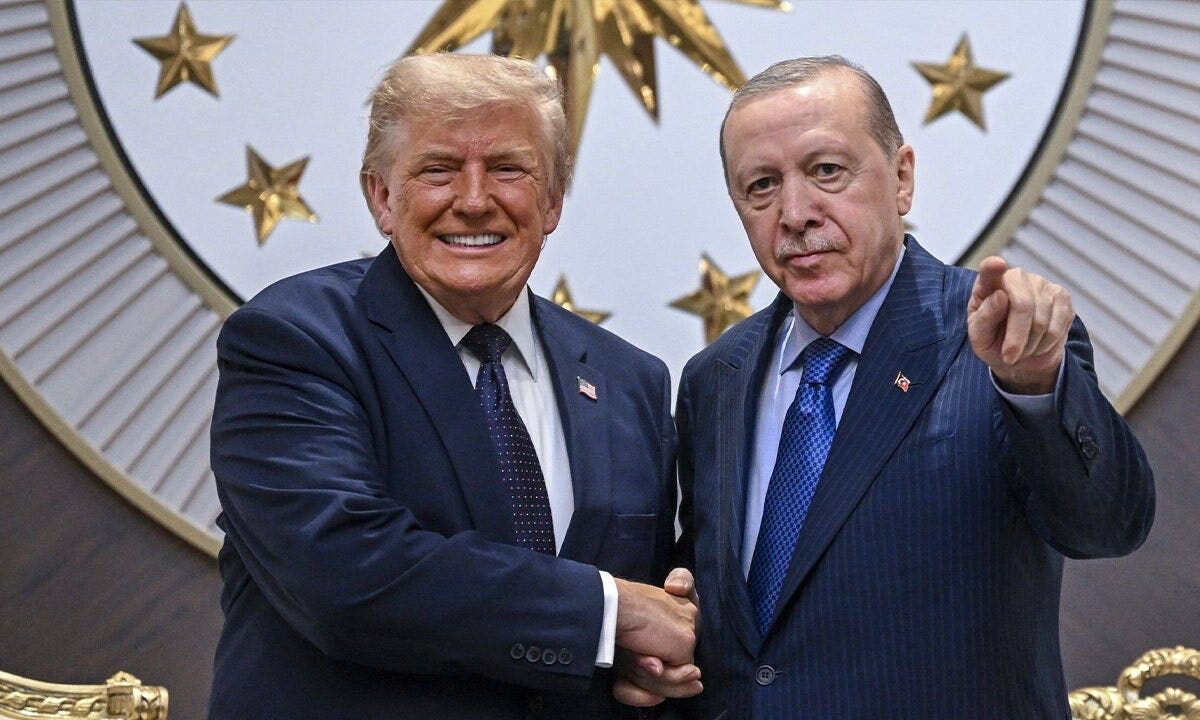
Seated beside Turkish President Recep Tayyip Erdoğan, Mr. Trump touched on a wide set of issues: Iran, Ukraine, NATO, Turkey, Greenland and China. He said he had spoken with both Vladimir Putin and Volodymyr Zelenskyy and added, “I think they both want to make a deal,” while expressing hope the war might be settled “hopefully soon.”
The most resonant soundbite — that allies had “turned us down” — framed his broader complaint about burden sharing. He also referenced Turkey’s S-400 purchase, stated the United States was “going to be taking the sanctions off,” and described selling F-35 jets to Turkey as “certainly something we will consider.” He repeated a provocative Arctic line: Greenland “should be controlled by the United States, not by Denmark.”
How those lines add up to a grand strategy — Trump Ankara remarks grand strategy
Grand strategies rarely arrive as white papers. They accumulate through repeated choices, public posture and the priorities leaders emphasize. Read together, the Ankara remarks point to three linked priorities: restore deterrence before bargaining; insist that alliances deliver tangible capability and reciprocity; and concentrate limited U.S. resources on industrial strength and geographic advantages relevant to China and Russia.
Two habits of action illustrate the pattern. First, the repeated critique of allies for not “showing up” is less a rhetorical complaint than an operational demand: the United States should expect more deployable contributions, not only statements of support. Second, Trump frames leverage as the precondition for settlement — stronger deterrence makes diplomatic outcomes more durable, in his view.
NATO, Turkey and defense reciprocity
Trump’s framing about who contributes directly engages long-running debates over burden sharing. His complaint that major European capitals “turned us down” speaks to whether NATO functions as a genuinely reciprocal security network or one reliant on a dominant guarantor.
That logic helps explain his openness to revisiting sanctions tied to Turkey’s S-400 purchase and his comment that F-35 sales are “certainly something we will consider.” Those options would be politically fraught in Congress and with partners, but they reflect a calculus that places Turkey’s strategic geography on NATO’s southern flank and near the Black Sea above doctrinal consistency.
For context, NATO members agreed at the 2014 Wales summit to aim for 2% of GDP on defense — a benchmark the United States frequently cites when urging allies to translate spending into deployable capabilities. In recent years allies have increased budgets and capability investment, a trend the Ankara remarks treat as necessary but insufficient without operational reciprocity.
Great power angle: China, Russia and Greenland
Beyond alliance housekeeping, the Ankara lines map onto a prioritization in great-power competition. Trump repeatedly linked Europe doing more for its own defense with freeing U.S. resources to confront China. The through-line is clear: industrial strength and technological edge underpin deterrence against Beijing, so reallocating capacity matters.
The Greenland comment — that it “should be controlled by the United States, not by Denmark” — is rhetorically striking but consistent with a posture that treats geography as a strategic asset. The Arctic’s rising importance for sea lanes, early-warning sites and basing changes how planners weigh sovereignty and access.
On Russia and Ukraine, Trump’s note that he spoke with both Putin and Zelenskyy and his line, “I think they both want to make a deal,” underscore a preference for negotiated outcomes that appear reachable from positions of strength. The risk, of course, is that settlements reached without durable deterrence can reward aggression.
What comes next
If the Ankara pattern holds, expect renewed public pressure on European partners to demonstrate deployable capacity and private diplomacy around defense trade, sanctions and basing. Concrete changes — lifting sanctions to restore U.S.-Turkish ties or advancing F-35 sales — would require formal decisions, interagency review and likely congressional action.
Frequently asked questions
Does this mean a formal policy shift on Turkey?
Not automatically. The remarks are an indicative signal of priorities; formal policy shifts would require legal steps, executive action and consultations with Congress and allies.
Will sanctions on Turkey be lifted now?
Mr. Trump said the United States was “going to be taking the sanctions off,” but that statement alone does not equal an immediate policy change. Lifting sanctions typically involves interagency review and statutory processes.
How will NATO allies respond to these remarks?
Allies may respond by emphasizing concrete defense production and capability steps. Some will welcome a push for greater reciprocity; others will object if it seems to reward problematic behavior without safeguards.
Source: This analysis draws on a Fox News opinion column reporting on President Trump’s remarks in Ankara. Read the original column here: ROBERT MAGINNIS: Trump’s Ankara remarks reveal a grand strategy hiding in plain sight.
Author’s note: This is an analytical interpretation of public remarks and should not be taken as a definitive national security assessment. The views expressed are the author’s and reflect reading patterns in public statements and allied announcements.