Manhattan high-rise evacuation: Officials said a 37-story Midtown tower that prompted mass evacuations was stabilized late Tuesday, allowing residents to return to several buildings after inspectors reported no additional movement.
“We’ve been monitoring the building for many hours and have not seen any movement,” New York City Department of Buildings Commissioner Ahmed Tigani said, offering cautious reassurance as contractors began shoring vulnerable areas. The evacuation response began early Tuesday after firefighters discovered visible structural distress in a former Pfizer headquarters being converted near Grand Central Terminal.
What happened in the Manhattan high-rise evacuation
The incident began shortly after 8 a.m. when firefighters responding to reports of structural problems inside the 37-story converted tower found a visibly bent column on the 21st floor, along with nearby floor cracks and sagging. The building, a former Pfizer campus being converted into more than 1,600 apartments, sits in a busy Midtown corridor adjacent to Grand Central Terminal.
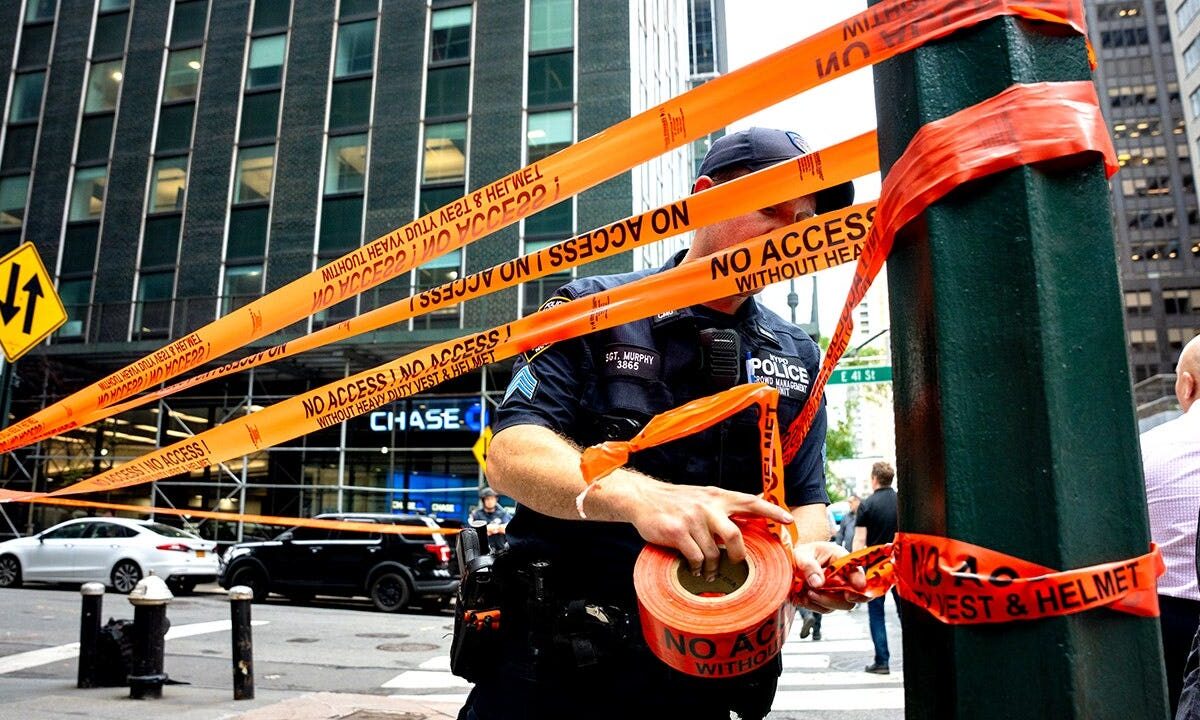
Fire crews and building inspectors evacuated occupants as a precaution and ordered nearby addresses cleared while engineers conducted floor-by-floor assessments of the steel-framed structure. That immediate, precautionary response extended to several neighboring properties until inspectors could determine whether the damage signaled ongoing instability.
Damage, inspection findings and safety assessment
On inspection, engineers identified buckling of at least two columns, cracked slab edges and localized sagging across some levels. Fire Chief John Esposito said authorities were treating the situation as a localized structural failure concern, not evidence of a progressive collapse of the entire building frame.
City inspectors monitored the affected columns continuously. After many hours of observation and measurement, the Department of Buildings reported no additional movement, a finding that allowed officials to ease some evacuation orders while temporary shoring and further analysis continued.
Who was affected and where evacuations reached
Precautionary evacuations covered occupants of seven nearby buildings and reached sensitive sites in the immediate Midtown area, including a school, diplomatic offices and several hotels. Officials said residents of several of the seven evacuated buildings were allowed to return once inspections confirmed the damaged column was not shifting further.
Decisions to reopen addresses were made building by building following targeted inspections; some sites remain restricted while crews install supports and engineers complete evaluations.
Stabilization and repair work under way
Contractors moved quickly to shore the weakened areas, installing temporary supports and braces around the buckled columns and reinforcing adjacent floors. The Department of Buildings indicated crews would keep monitoring the structure around the clock as shoring advanced.
Officials warned shoring and repair activity could disrupt the surrounding neighborhood for days or weeks, including lane closures, staging areas for equipment and restricted access near the site while engineers develop a permanent repair plan.
What comes next for residents and Midtown
Investigators continue to examine why columns buckled. Nathan Berman, founder of developer MetroLoft, told The Wall Street Journal that added weight associated with an upper-floor expansion project may have contributed. City engineers stress that allegation is preliminary and under review; it has not been confirmed as the cause.
Authorities said they will require detailed engineering reports and may issue construction stops, change orders or other mandates depending on findings. Officials also emphasized ongoing monitoring and periodic re-inspections as contractors make temporary repairs and design permanent fixes.
Return timelines for occupants will depend on inspection results and repair progress. City officials reiterated a cautious approach: while much of the building appears stable based on current monitoring, access around the immediate damage zone will remain controlled until permanent corrective work is approved.
Key takeaways for residents
- Some residents have been permitted to return after inspectors saw no additional movement; others remain displaced while shoring is installed.
- Repair and monitoring work will likely continue for days or weeks and could affect street access and nearby buildings.
- Any claims about causes, including possible extra loads from an expansion project, are preliminary and remain under investigation.
Frequently asked questions
Is the building safe to re-enter?
Inspectors allowed residents to return to several evacuated buildings after continuous monitoring detected no additional movement in the damaged area. Safety assessments are ongoing; access may remain restricted near the immediate damage zone until permanent repairs are completed and approved.
What caused the structural damage?
Investigators have not confirmed a definitive cause. Nathan Berman of MetroLoft suggested additional weight from an upper-floor expansion could be a factor, but city officials say the claim is preliminary and under review. Authorities are awaiting engineering analysis before drawing conclusions.
How long will repairs and neighborhood disruptions last?
Officials expect shoring and stabilization work to continue and warn that repairs could disrupt the surrounding area for days or longer. The timeline will depend on engineering findings, the scope of permanent repairs required and any regulatory actions imposed by the Department of Buildings.
Source: Fox News — Manhattan building stabilized, some evacuations lifted after collapse feared