
BBC News reports that Ruth Ellis, the last woman executed in the UK, has been granted a conditional posthumous pardon. The BBC article published on 2026-07-08 describes the pardon as conditional but does not include the full legal text or a detailed legal rationale; it is the primary public source for this announcement.
Ruth Ellis pardoned: the key fact
Ruth Ellis has been granted a conditional posthumous pardon, BBC News reports. That is the central, attributable fact from the BBC coverage of 2026-07-08. The BBC story presents the decision and background material but stops short of publishing the pardon document or a legal memorandum explaining the conditions.
Because the BBC is the public source for this update, readers should treat the coverage as the basis for what is currently known about the pardon.
What a conditional posthumous pardon means
A conditional posthumous pardon is an official administrative act that alters how a historical conviction is recorded or described, subject to particular terms. According to the BBC report, the pardon granted to Ruth Ellis carries conditions, but the article does not set out those conditions or the precise legal effects.
In practical terms, such pardons commonly change archival entries, official registers and the language used by public bodies when referring to a past conviction. They do not always amount to a court judgment that a conviction was unsafe or that the person is legally exonerated on all counts. The BBC coverage explicitly does not provide the underlying legal text needed to determine whether the pardon removes the conviction from formal records or simply modifies descriptive language.
Because the BBC piece does not include the legal wording, the full scope of this particular conditional pardon — and whether it affects any residual civil or administrative consequences tied to the conviction — remains unclear from available reporting.
Historical context: Ellis and the UK death penalty
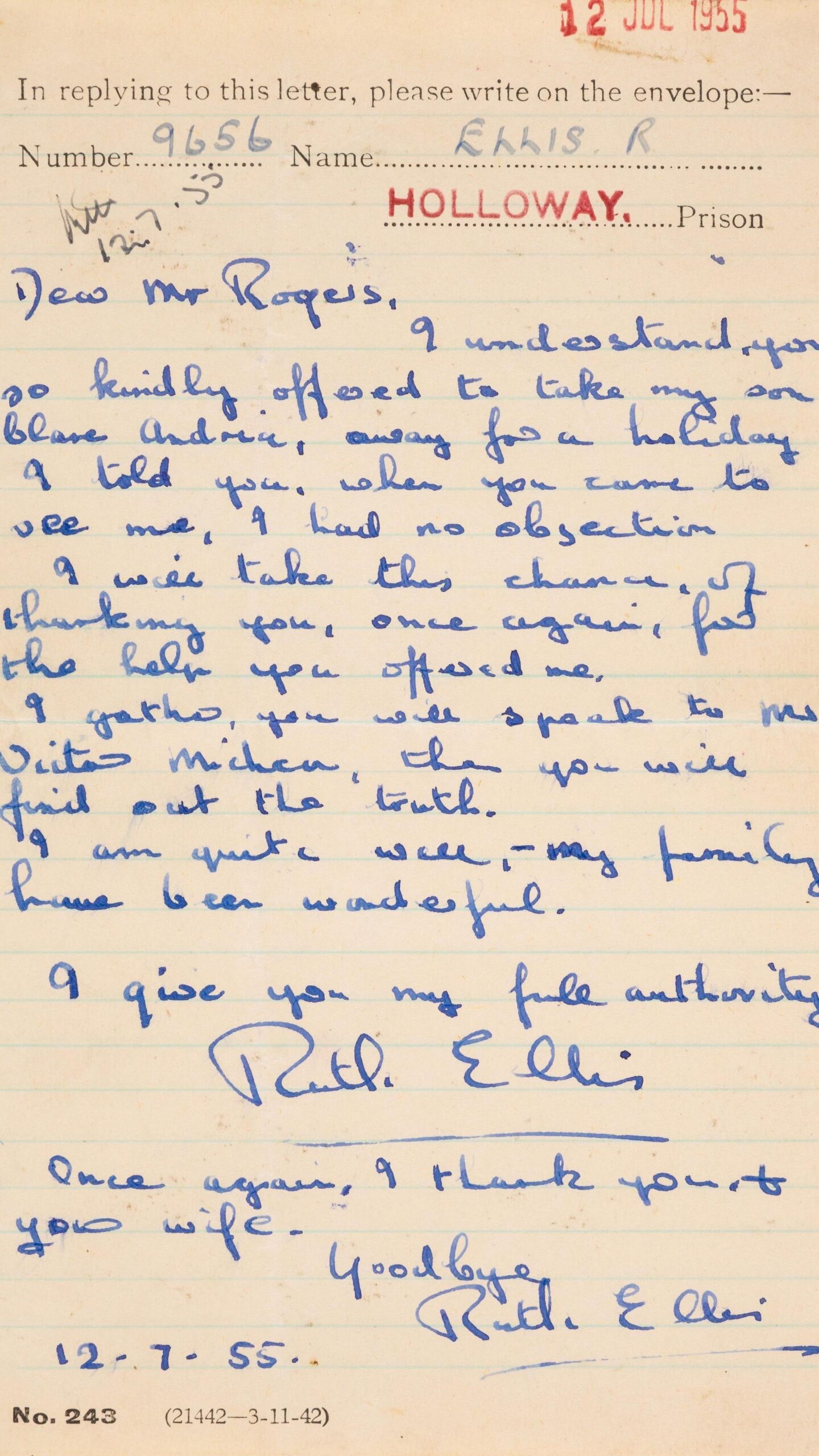
Ruth Ellis is widely known in the UK as the last woman to be executed. Her 1955 trial, conviction and execution have long attracted public and historical interest. The BBC profile included with its report summarises aspects of Ellis’s life, the trial and the wider debates that followed.
The decision to grant a conditional posthumous pardon arrives in a context of reassessment of historic criminal cases and changing public attitudes toward capital punishment. Ellis’s case has been referenced in discussions about how later generations judge sentences and convictions imposed in earlier eras.
Immediate implications and next steps
The immediate, visible effect of the pardon reported by the BBC will most likely be administrative: official descriptions of Ellis’s conviction in archives, registries and public statements may be updated to reflect the conditional pardon. Public-facing summaries and some historical databases could change how they label or contextualise her case.
Because the BBC article does not reproduce the legal document or explain the conditions attached, further steps to watch for include a formal publication of the pardon text, an explanatory statement from the issuing authority, or commentary from legal historians or officials clarifying the legal mechanics and limits of the remedy.
If the issuing body publishes the pardon wording, that text will be the authoritative source for determining whether the action merely amends record language or whether it has broader legal consequences for how the conviction is treated in law and archives.
Source attribution and further reading
This article summarises BBC News coverage published on 2026-07-08 reporting that Ruth Ellis has been granted a conditional posthumous pardon. The BBC piece is the primary public source for the announcement and for the biographical and historical material cited here. The BBC report does not include the full legal text or detailed legal reasoning for the pardon.
For the original reporting, see the BBC News article: From glamour model to nightclub manager – who was pardoned killer Ruth Ellis? (BBC News – Top Stories, 2026-07-08).
Note: This article does not introduce new facts beyond BBC reporting. It highlights what is known from the BBC story and what remains unclear pending publication of the pardon document or further official explanation.