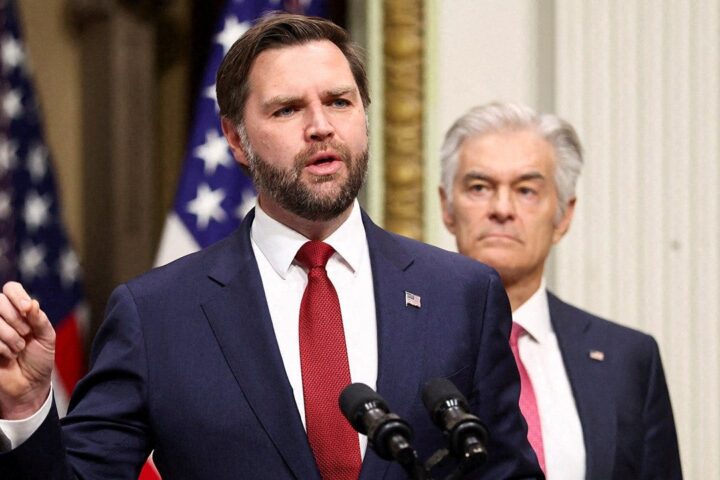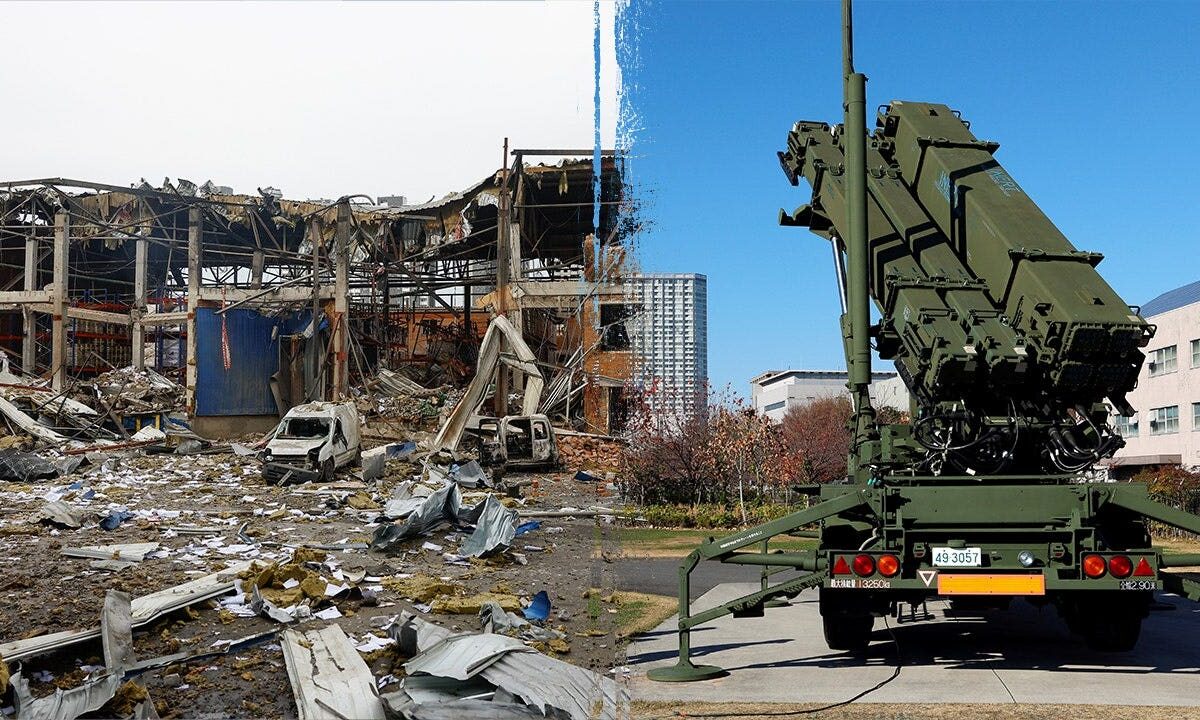
“We’re going to give a license to you to make patriots,” President Donald Trump said at the NATO summit, signaling a possible U.S. move to license Patriot air defense systems for Ukraine. The remark, made during a public meeting with Ukrainian President Volodymyr Zelenskyy, came as Kyiv presses allies for more interceptors amid continued missile and drone attacks.
What Trump said at the NATO summit about Patriot air defense systems
Speaking alongside Zelenskyy, Trump framed the step as empowering Ukraine to bolster its own defenses. “We’re going to give a license to you to make patriots,” he said. “That’s pretty cool. Right? This way you can’t complain that we’re not giving them enough. I’d say make them yourself.” He described the Patriot as “a defensive weapon, which I like better than an offensive weapon,” and acknowledged further discussions would be needed.
Trump also said the administration had not yet informed the company that builds the system, suggesting the comments reflected an administration-level intent rather than an industry-informed plan.
What remains unclear
The president’s comments left important details open. It is not yet clear whether the license would cover Patriot interceptor missiles specifically, the broader Patriot air defense system components (radars, launchers and command-and-control), or both. Nor did Trump specify where production or assembly might occur — in Ukraine, elsewhere in Europe, or under a distributed model.
He also said the prime contractor had not been notified, raising immediate questions about whether RTX, Lockheed Martin and dozens of other suppliers would participate, what intellectual property and export controls would apply, and what technical work would be required to transfer or replicate complex components.
Why it matters
Patriot air defense systems are among the most capable defenses for intercepting ballistic missiles and high-end threats; they have been central to protecting critical infrastructure. Ukrainian officials have warned that supplies of Patriot interceptors have fallen to what they described as “dangerously low levels,” increasing Kyiv’s urgency for more resupply or alternative solutions.
Allowing Ukraine to produce or assemble Patriot systems could, in principle, help replenish stocks faster and reduce reliance on deliveries from allies. But the Patriot’s missiles and seeker, radar and fire-control components are technologically sophisticated, requiring precision manufacturing, stringent testing and secure supply chains — factors that complicate rapid scaling.
Production and industry limits
Major contractors have distinct roles: RTX is the prime contractor for Patriot and provides radars, launchers and the PAC-2 GEM-T interceptor, while Lockheed Martin produces the PAC-3 Missile Segment Enhancement (MSE) interceptor, the more modern missile optimized against maneuvering and ballistic threats. Those company roles are well-established in defense procurement records and prior program descriptions.
Defense officials and industry observers have said building interceptors can take significant time because of specialized components, testing and quality-assurance steps; in some reporting, officials estimate production and full qualification can take more than two years depending on the scope and whether new production lines are established. Any effort to change that pace would face constraints from supply chains, parts lead times, testing capacity and export-control requirements.
Export controls and licensing — including U.S. International Traffic in Arms Regulations (ITAR) and interagency reviews — would be central to any transfer of Patriot technology. A manufacturing license would also need to address intellectual property protections, on-site oversight, and legal and contractual arrangements with prime contractors and suppliers.
What comes next
If the administration intends to move from the president’s remark to a formal process, the following steps are likely:
- A formal White House or Defense Department announcement outlining the scope of any licensing plan (for interceptors, subsystems or complete systems).
- Notifications and negotiations with prime contractors (RTX) and missile manufacturers (Lockheed Martin) and with key suppliers to assess technical feasibility and timelines.
- Interagency export-control reviews, potential congressional notifications under U.S. defense transfer procedures, and decisions on where production or final assembly would be sited.
Observers will be watching for official signals: public statements from RTX or Lockheed Martin, a Pentagon notice or Defense Department policy paper, and any clear timeline or conditions attached to a manufacturing license. Without those signals — or congressional or allied buy-in — the president’s remark remains an outline rather than an executable program.
Source attribution and company responses
The initial exchange was reported by Fox News Digital; that report noted officials had not yet formally informed defense contractors and that reporters reached out to RTX and Lockheed Martin for comment. Media outlets, including Fox News, say they contacted the companies and the administration for clarification.
Requests for comment to RTX and Lockheed Martin were made by reporters; as of this article’s publication, official detailed statements from the companies about a licensing plan had not been published. Readers can view company news pages for potential updates: RTX news (https://www.rtx.com/news) and Lockheed Martin news (https://news.lockheedmartin.com/). The Defense Department’s news site (https://www.defense.gov/News/) and NATO public communications are other places to watch for official policy details or clarifications.
Until formal notices, the key uncertainties — whether interceptors or whole systems are covered, where production would happen, how export controls would be handled, and how long scaling would take — remain open and will shape whether a licensing approach can materially accelerate Ukraine’s air-defense stocks.
Source: Fox News — Trump says US will let Ukraine make Patriot missiles in major policy shift