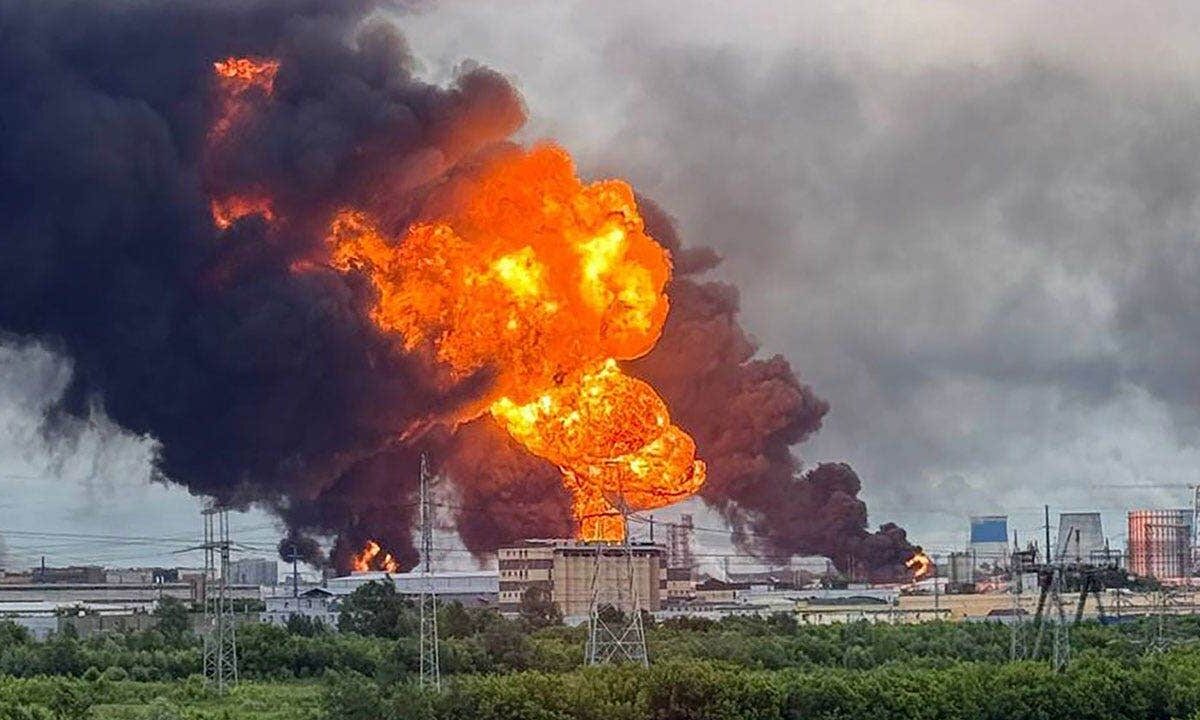
The Ukrainian drone campaign has rapidly reshaped how Kyiv projects power and how Moscow sustains forces in the south. Reporting and analysis tie coordinated aerial and naval drone strikes to persistent attacks on fuel convoys, ammunition trucks, rail hubs, bridges, and select industrial targets — producing localized shortages at forward lines and in occupied areas.
Those logistics effects have immediate battlefield impacts: rationing at pumps, longer transit times for resupply, and reduced sortie rates for land and air units reported in the source material. Where these interdictions cluster, analysts say territorial advances have slowed or been reversed.
How strikes hit fuel, refineries and logistics
The campaign has concentrated on the arteries that sustain an army: tanker convoys, refueling nodes, rail links and bridges. Repeated interdiction of those nodes forces commanders to reroute, slow movement, or hold units back pending resupply.
Reporting asserts that processing capacity at some refineries has been slashed by more than a third (reported claim; unverified and requires independent confirmation). If true, such losses would explain visible pump lines and localized shortages, but the exact scope and geographic distribution of any capacity loss remain to be verified with commercial satellite imagery or official data (Fox News, op-ed reporting).
Even absent a confirmed percentage, the tactical logic is clear: damage and delay to fuel and lubricants reverberate through maintenance cycles, convoy tempo and air operations, degrading sustained combat power over weeks to months.
Attacks on the shadow fleet and long-range naval strikes
The reporting links the Ukrainian campaign to strikes on tankers associated with a so-called shadow fleet used to evade sanctions, including incidents reported off Turkey and in the Mediterranean. Ukrainian forces are said to have used a mix of aerial drones and naval unmanned systems to prosecute maritime targets.
Disruption of these vessels can raise insurance and transit costs, limit tanker availability and reduce funds flowing from hydrocarbon exports — a strategic aim consistent with targeting sanction-evasion networks. Claims that strikes occurred “hundreds or thousands of miles” from Ukrainian shores or involved exceptionally large warheads are presented in the source material as reports and require further verification (reported points; unverified).
Operational strain on Russia’s southern grouping
Analysts cited in the reporting argue that half or more of Russia’s southern grouping now operates under severe strain (reported estimate; unverified). That assessment ties fuel and transport chokepoint interdictions to slower operational tempo and, in some sectors, a halt or reversal of recent gains.
The piece also notes industrial-target hits, including a reported June strike on a Voronezh electronics plant that allegedly produced components used in missile systems. Damage to production capacity can have downstream effects on munitions availability and quality, but the scale and duration of such industrial impacts are not independently corroborated in the reporting and should be treated cautiously.
Observed operational patterns do, however, show that persistent interdiction of fuel and transport nodes constrains reach and tempo over time even when front-line units remain combat-capable.
What this implies for U.S. forces and infrastructure
The Ukrainian drone campaign is a practical case study for U.S. force posture and base defense. Massed, low-cost aerial or naval drones launched in coordinated waves can threaten ports, ships at berth, air bases and exposed fuel and logistics nodes if defenses are incomplete.
U.S. planners should assume adversaries will seek to emulate elements of this approach: domestic, low-cost production of unmanned systems; decentralized launch and control; and stand-off employment. The defensive response should be layered: electronic warfare and deception to deny guidance and data links; sensors and radar tuned to detect small, low-signature targets; hard-kill interceptors and directed-energy systems where feasible; and passive hardening such as dispersal and redundancy for critical fuel and logistics nodes.
Operationally, layered defenses must be paired with resilient logistics: redundant fuel stocks, prepositioned repair capabilities, and distributed basing that reduces single points of failure. Rapid procurement authorities and incentives for fielded, decentralized innovation can help accelerate practical countermeasures into service.
Bottom line
The reported Ukrainian drone campaign highlights logistics interdiction as a cost-effective tool to constrain an opponent. Key numeric claims in the reporting (e.g., refinery capacity cuts of more than a third; half or more of a force under severe strain; long-range maritime strikes) are presented in the source as operational estimates and remain unverified. Independent confirmation via satellite imagery, commercial vessel-tracking datasets, or official statements is required before using those figures for decisive analysis.
Sources, claims to verify and final notes
This article synthesizes claims from a recent Fox News opinion and reporting piece that links Ukrainian drone and missile strikes to interdictions of fuel convoys, refinery damage, attacks on a shadow tanker fleet and industrial hits (including a reported Voronezh electronics plant strike). Specific estimates and extreme-range/warhead reports are flagged in the text as “reported” and “unverified.” Readers should treat those figures as contingent pending corroboration from open-source intelligence, commercial satellite imagery, maritime tracking databases or government confirmation.
Primary source cited (original reporting/opinion): https://www.foxnews.com/opinion/ukraine-drone-revolution-shows-russia-dangerously-unprepared-america
FAQ
How do Ukrainian drones affect Russian logistics and fuel supplies?
Reportedly, focused strikes on fuel convoys, rail nodes and refineries create local shortages and longer resupply times. Exact numerical impacts in the source are estimates and should be independently verified, but the operational principle — that targeting transport and fuel chokepoints degrades sustained combat power — is well established.
Are U.S. bases vulnerable to massed drone attacks?
Potentially. Ports, air bases and long, exposed fuel lines can be vulnerable to coordinated drone swarms if defenses are inadequate. Vulnerability depends on local hardening, sensor coverage, layered defenses and doctrine.
What defenses can blunt AI-enabled drone swarms?
Defense-in-depth: electronic warfare to disrupt links, sensors to detect small targets, kinetic and non-kinetic interceptors, hardened and dispersed infrastructure, and rapid procurement paths to scale fielded solutions. Integration of attribution, rapid repair and logistics redundancy is also essential.