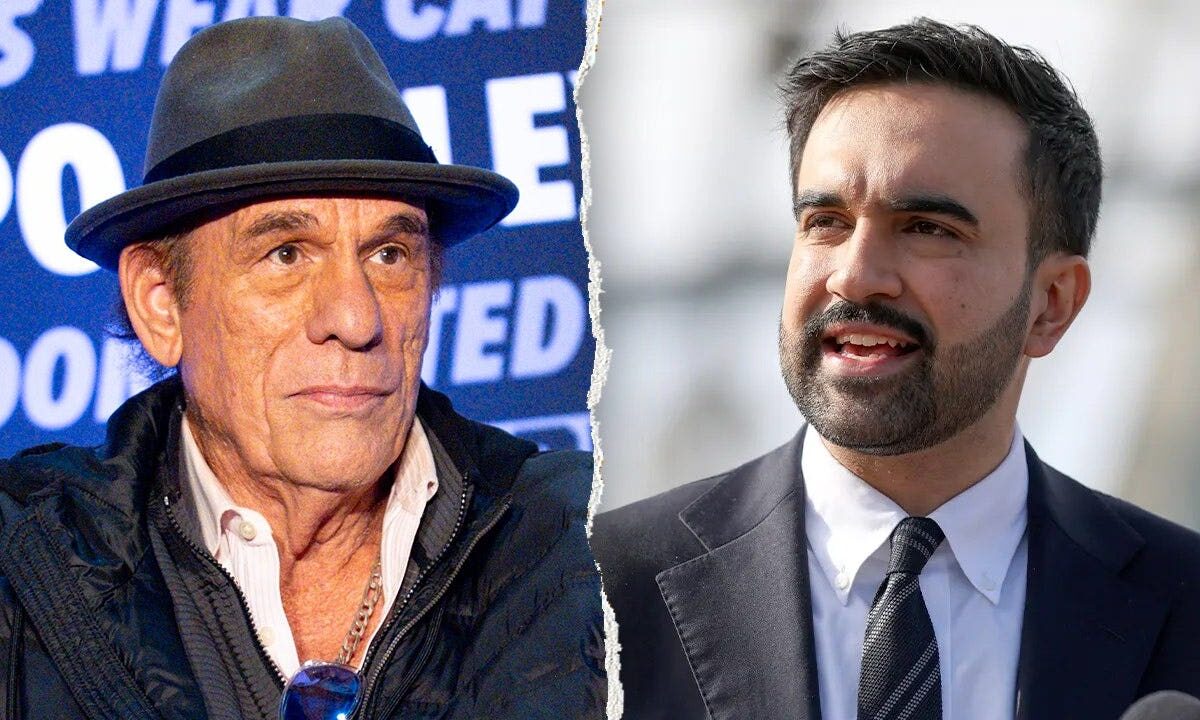
City officials confirmed they will update a New York City map of immigrant enclaves after Little Italy was omitted, drawing sharp criticism from actor Robert Davi and prompting debate about how the city recognizes historic neighborhoods.
Little Italy omitted from NYC map
The omission of Little Italy from the New York City Immigrant Enclaves map — a project that highlights roughly 30 immigrant communities across the five boroughs — put neighborhood representation at the center of a short-lived but intense controversy. Actor Robert Davi posted a video on X criticizing Mayor Zohran Mamdani and calling attention to the map’s gaps.
High-profile reaction and quotes
In a video posted online, Davi addressed Mamdani directly with forceful language. In the clip, Davi said, “I hope every New York Italian American and Irish American spits on you when they see you,” and added, “I would spit on you if I saw you. Shame on you, you garbage man.” Those remarks were reported by Fox News Digital and aired from Davi’s own posted video.
Davi also referenced his family roots, saying his grandparents came from Sicily and Naples and that his grandfather fought in World War I. He urged the mayor to “go back to where you were born” and criticized Mamdani’s politics, calling him a “leftist Marxist Communist.” The comments drew attention on social media and from Italian-American community members, as reported by Fox News Digital.
Italian-American groups expressed concern about cultural recognition after users noted the map left out Little Italy while spotlighting other immigrant enclaves. The online reaction underscored how symbolic omissions on official materials can become flashpoints for civic debate.
Mayor’s office response and next steps
Mamdani’s office told reporters the map was initially created under the prior administration in 2023 and that the current team added a few neighborhoods after inheriting it. In remarks cited by Fox News Digital, Mamdani said the map is “clearly not an exhaustive list of the more than 200 ethnic communities that call our city home, and we’re going to be making additional changes in the future to reflect that and that includes Little Italy.”
The mayor’s explanation frames the upcoming update as corrective rather than intentional exclusion. Fox News Digital reported that it reached out to Mamdani’s office for comment; the city has not provided a public timeline for when the map revisions will be published.
Historical context for Little Italy
Little Italy emerged as a distinct neighborhood during the massive waves of Italian immigration in the late 19th and early 20th centuries. According to the Library of Congress, more than 4 million Italians immigrated to the U.S. between the 1880s and the passage of restrictive federal immigration laws in 1924, and roughly one-third of those immigrants settled in New York City.
Over time, Little Italy became emblematic of Italian-American life in New York, known for family-run businesses, churches and annual cultural celebrations. Though the neighborhood’s geographic footprint and day-to-day character have shifted across generations, its history remains an important reference point for residents and cultural heritage groups.
Why the omission matters locally
Official maps can affect more than wayfinding: they confer recognition and can influence tourism, cultural programming and the public narrative about which groups the city publicly highlights. For smaller or historic enclaves, inclusion on an official city map can be a signal of civic visibility.
Critics argued that the omission suggested an oversight in honoring historic immigrant enclaves; supporters of the mapping project noted the difficulty of capturing New York’s full diversity in a single graphic, saying any condensed representation will omit some communities and that updates and community input are essential.
Short local reaction and perspectives
Local responses ranged from calls for a prompt correction to critiques of the tone used by some public commenters. Community advocates who spoke with reporters urged the city to consult neighborhood groups and historians when revising official materials so that updates reflect both historic legacies and present-day communities.
Observers pointed out that debate over the map reflects broader questions about how cities document and celebrate immigrant contributions — and how municipal projects balance brevity with inclusivity.
What comes next
The mayor’s office has said it will update the map to include Little Italy and make other changes to better reflect the city’s many ethnic communities, but it has not published a firm schedule. City officials typically revise public-facing materials after consulting agencies and, in some cases, community stakeholders; observers said more transparent outreach would ease concerns about omissions in future releases.
Source attribution
This report is based on coverage by Fox News. Fox News Digital reported Davi’s video and quoted Mamdani’s remarks, and Fox News Digital also reached out to the mayor’s office for comment: Fox News – Die Hard actor Robert Davi blasts Mamdani after NYC map omits Little Italy.
Fox News Digital’s reporting and statements from the mayor’s office informed this article.
FAQ
Will Little Italy be added to the map?
The mayor’s office said the map will be updated to include Little Italy as part of additional changes to better reflect the city’s many ethnic communities.
Why was Little Italy left off the map?
City officials said the map was created under the prior administration in 2023 and is not an exhaustive list of all immigrant communities; the current administration described the omission as an oversight and part of inherited work.
Who created the immigrant enclaves map and when?
Mamdani and his office said the map was initially created by the prior administration in 2023. The current administration said it added a few neighborhoods after inheriting the map.