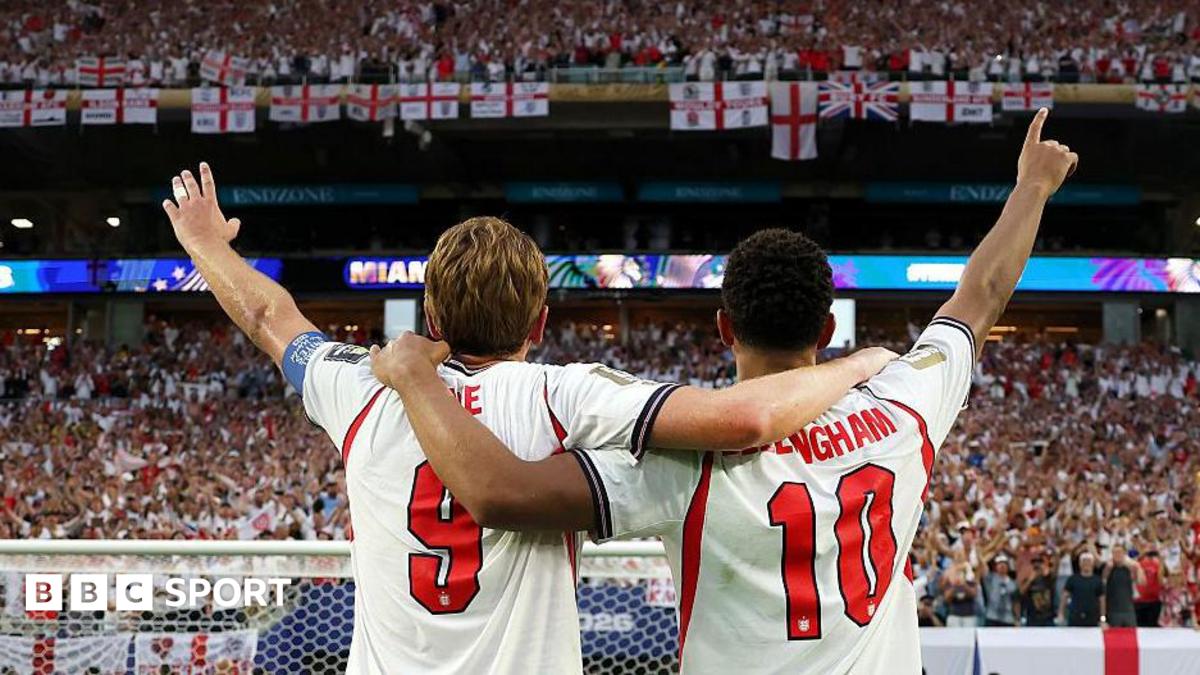
England have reached four semi-finals in the past five international tournaments, and it is time to accept that this is where the team belong. That line, taken from a recent BBC News commentary, sets the frame for this analysis: are deep runs now the baseline for England, and if so, what must change to turn near-misses into trophies?
England semi-finals
Repeated appearances in the last four of major competitions are not just good luck. They reflect structural shifts in how the national side is prepared and selected. But before drawing firm conclusions, the headline figure should be checked against official tournament records and the exact five competitions the BBC counted should be specified for clarity.
How England reached this level
There are three practical pillars behind consistent deep runs: coaching continuity, a broader player pool, and clearer tactical identity.

Coaching stability provides a consistent framework. When the same managerial philosophy endures across qualifying campaigns and tournament cycles, players learn roles and expectations more quickly. That daily familiarity matters in knockout football, where decisions under pressure define outcomes.
England’s player pool now spans top-level domestic and continental experience. With more players accustomed to high-pressure club nights, the national squad can rotate with less drop-off. That depth reduces over-reliance on a single star and makes the team harder to nullify.
On the tactical side, recent England teams have tended to combine organised defending with quick transitions and selective pressing. Those traits are suited to knockout ties: compact shape shrinks the space opponents can exploit, while fast counters and set-piece planning create the marginal moments that decide close games.
Why this run matters
Consistent semi-final appearances change the narrative. If a team reliably reaches the latter stages, treating anything short of a trophy as failure becomes unfair and unhelpful. That reframing affects fans, media and — crucially — the players themselves.
At the same time, normalising deep runs raises baseline expectations and psychological pressure. That pressure can be positive, forcing marginal gains and preparation improvements, or negative if it is framed only as an indictment of short-term results rather than an incentive to refine weaknesses.
Importantly, the statement that “it is time to accept that this is where England belong” is an opinion. It captures a plausible interpretation of consistent semi-final appearances but should be clearly presented as editorial analysis rather than uncontested fact. Editors should flag such interpretive lines accordingly.
Background: tournaments and records
The BBC commentary is the source of the four-in-five semi-final claim. The piece does not enumerate the five specific tournaments in every headline pull-quote, so reporters and editors should confirm exactly which competitions are being counted and check each match result against official records from FIFA and UEFA before final publication.
Why this matters: a four-in-five pattern across major tournaments (World Cups and European Championships, for example) signals a durable competitive level; the same claim stretched across a mix of senior, youth or minor competitions would mean something different. For accurate reporting, list the five tournaments and cite the official match outcomes used to reach the four-in-five figure.
What comes next
Turning consistent semi-final appearances into trophies requires targeted intervention. Areas with clear, measurable upside include set-piece defence and delivery, finishing in tight games, and psychological preparation for the unique pressures of finals and penalty shoot-outs.
Maintaining squad freshness is another priority. Integrating promising young players into competitive minutes while preserving the experience of established performers creates the balance needed to win one-off games against elite opponents.
Finally, tactical evolution matters. Opponents study consistent teams closely; staying ahead means developing alternative plans and match-specific tweaks rather than relying on a single predictable template.
Key takeaway: The BBC-reported four-in-five semi-final record signals a meaningful rise in England’s tournament consistency. It should prompt acceptance of a higher baseline and focused work on the marginal areas that turn deep runs into trophies. The interpretive line that “this is where England belong” is an opinion and has been flagged for editorial verification.
Editorial action required: verify the four-in-five semi-final statistic against official FIFA/UEFA records and specify the five tournaments being counted in any published claim.
Source: BBC News — These are unprecedented times for England – enjoy them