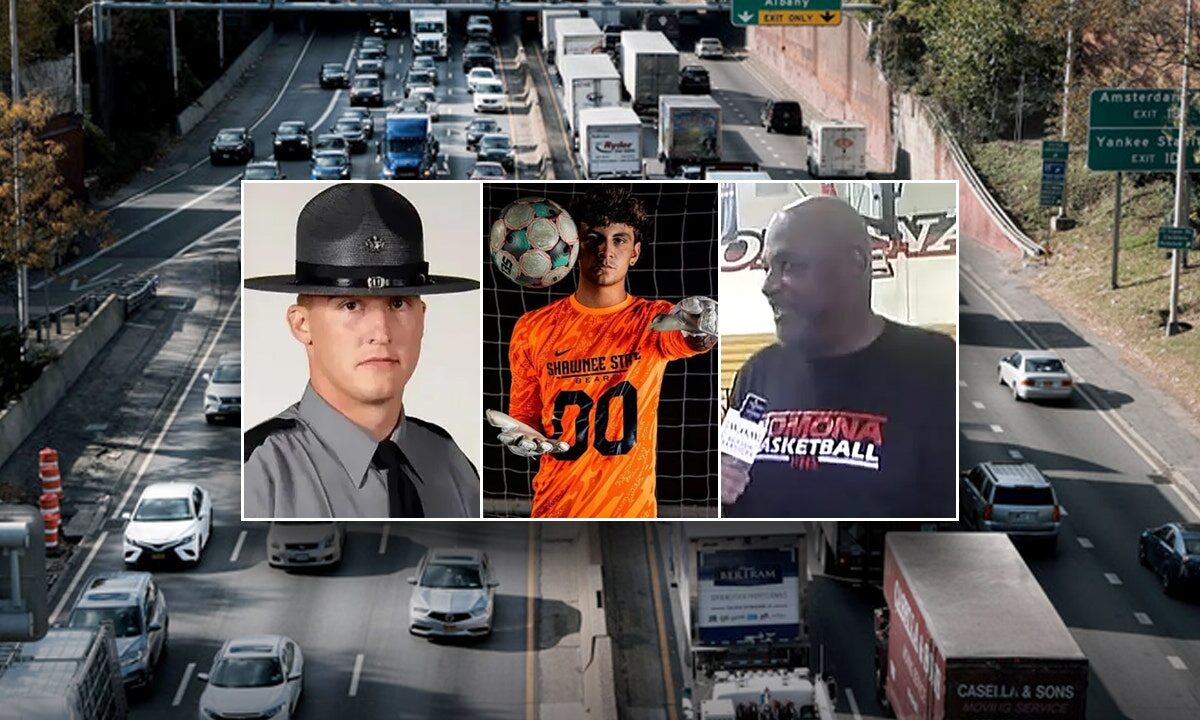
A Pennsylvania state trooper was killed after a semi allegedly struck his patrol vehicle during a roadside inspection, the latest deadly collision tied to illegal immigrant truck drivers that has prompted federal action and renewed scrutiny of commercial licensing.
The incident has heightened attention to how some commercial drivers obtain U.S. credentials. According to media reports and state investigators, the crash involved a tractor-trailer operator identified as Michael Bon, who prosecutors say struck a marked Pennsylvania State Police vehicle in Schuylkill County. Trooper Michael E. Pahira Jr. later died. Bon faces homicide and manslaughter-related charges while investigators review his licensing record and travel history.
Series of fatal crashes linked to illegal immigrant truck drivers
The trooper’s death is one of several high-profile crashes in recent years that authorities have said involved drivers later identified as noncitizens or whose licensing records raised questions. State and federal officials have linked separate wrecks in multiple states to drivers whose immigration status, residency documentation or credentialing pathways were under scrutiny during follow-up probes.
Victims in these cases have included a mix of drivers and passengers: prosecutors and local officials have named motorists killed in multi-vehicle collisions and people struck in roadwork zones. Investigations into those crashes have focused not only on individual conduct at the time of the collision but also on how those drivers obtained commercial driver’s licenses (CDLs) and whether testing and verification systems were properly followed.
How some drivers obtained CDLs
Federal reviewers and state investigators say several licensing pathways created gaps that were exploited or that failed to catch ineligible applicants. One recurring issue is the use of a domicile requirement: CDLs generally require proof of state residency, but variations in how states verify residency and how driving schools certify applicants have produced inconsistencies.
Investigators have reported cases where applicants failed written knowledge or endorsement tests multiple times yet later received a license after training-school certification or by applying in a different state. Records cited in public reporting show instances of repeated test failures, irregular documentation or discrepancies between enrollment and testing locations.
The investigations also flagged language-proficiency concerns: examiners and roadside inspectors sometimes reported communication problems that complicated safety checks. In at least one case cited in reporting, a driver repeatedly failed portions of the CDL exam before being licensed elsewhere. State motor-vehicle agencies have acknowledged varying practices for verifying applicants’ identity, residency and ability to demonstrate reading and comprehension during testing.
Federal action and rule changes
In response to these incidents and overlapping reviews, the U.S. Department of Transportation (USDOT) has announced steps to tighten eligibility and testing safeguards for commercial credentials. The department said reforms aim to ensure better verification of residency, strengthen testing integrity and restore enforcement of English-language proficiency requirements in CDL examinations and enforcement encounters.
According to reporting and statements from federal officials, USDOT’s actions include clearer limits on non-domiciled CDLs, guidance to states on consistent proficiency checks, and heightened roadside inspection protocols to spot mismatches between documentation and demonstrated skills. “The department’s reforms are intended to improve highway safety by ensuring truck drivers can communicate with law enforcement, emergency responders and highway officials,” USDOT said in a statement cited in reporting.
Lawmakers and industry response
Congressional lawmakers have introduced bills aimed at tightening English-language requirements and creating minimum standards for hands-on driver training. Representative David Rouzer has circulated legislation to establish a federal baseline for behind-the-wheel instruction hours, arguing that a uniform standard would prevent students from obtaining a CDL after minimal classroom-only training.
Industry and driver advocates have had mixed reactions. The Owner-Operator Independent Drivers Association (OOIDA) has called for tougher training standards and closer oversight of for-profit schools often labeled “CDL mills.” Lewie Pugh, OOIDA executive vice president, criticized what he described as declining training standards in parts of the industry. “We’ve lowered and lowered and lowered the standards in trucking over the last 40 years because of a false narrative about a driver shortage,” Pugh said in a statement quoted by local and national outlets. “We’ve dumbed down trucking to put profits over people and profits over highway safety.”
At the same time, trade groups warn that policies must avoid unintended consequences that could remove otherwise qualified drivers from the workforce or hamper supply chains; they urge careful rule design that targets bad actors without penalizing compliant carriers.
What this means for highway safety
Officials and safety experts say the recent policy shifts are focused on reducing communication barriers at crash scenes and inspections, ensuring uniform testing standards, and tightening state verification systems that establish who may hold a CDL. Restoring and clarifying English-language proficiency enforcement is intended to help first responders and law enforcement immediately assess safety risks and gather accurate crash-scene information.
Experts note, however, that licensing integrity is one element among many that affect commercial-vehicle safety. Vehicle maintenance, hours-of-service compliance, carrier hiring and dispatch practices, and in-cab supervision all factor into roadway risk. Demonstrable improvements will depend on coordinated federal guidance, state implementation, and follow-through from industry stakeholders.
What comes next
Federal rule changes are under way and some members of Congress want to codify tougher standards so they cannot be easily reversed by future administrations. Proposed measures include permanent limits on non-domiciled CDLs, nationally consistent English-proficiency guidance, and minimum hands-on training hours for behind-the-wheel instruction.
State motor-vehicle agencies will be expected to tighten application and testing oversight, and enforcement officials say continued roadside checks will be a frontline tool for identifying drivers whose demonstrated skills do not match their documentation. Law enforcement, safety advocates and industry groups agree measurable safety benefits will require sustained oversight and data-driven enforcement.
Sources and further reading: Fox News report on crash investigations; U.S. Department of Transportation briefing room; OOIDA news and statements