The UK press opened the day with a clear centrepiece: coverage of the investigation into the death of Ann Widdecombe. Front pages ran a mix of hard-edged headlines — including a repeated line about a “new twist in killer hunt” — and tributes describing her as “one of a kind Ann”. BBC reporting said the majority of the papers were dominated by the investigation.
This analysis summarises how the papers presented the story, identifies confirmed details from the BBC item, and examines the broader implications for public perception and the investigative process. The reporting below sticks to what is in the BBC item and flags what remains unconfirmed.
What the front pages said
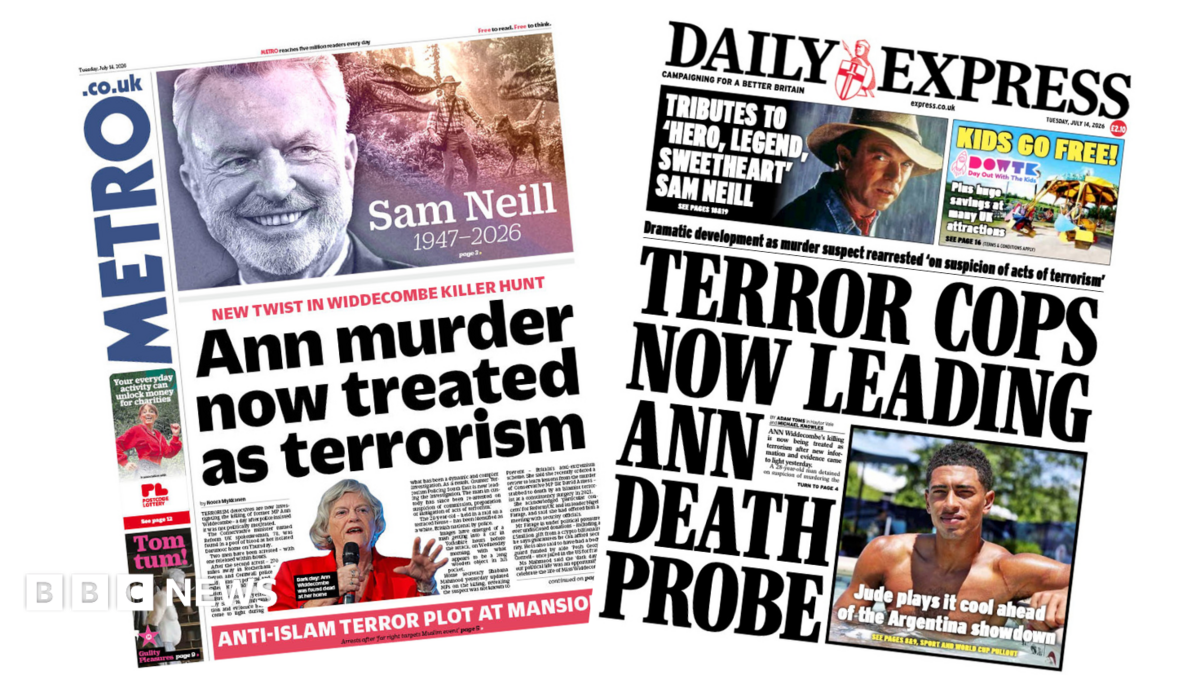
National and regional morning editions prioritised the story. Several titles used the phrase “new twist in killer hunt” as a lead line, presenting the unfolding police inquiry as the central narrative. Other covers paired that investigative emphasis with human-interest headlines such as “One of a kind Ann,” using emotive shorthand to mark Widdecombe’s public profile.
Photographs, large headline type and front-page placement made the investigation visually dominant. The BBC noted that the majority of the papers were dominated by coverage tied to the investigation, which is reflected in front-page layouts and headline choices.
Front page montage showing lead headlines.
How the papers framed the investigation into Ann Widdecombe
Coverage broadly split into two frames: an investigative police narrative and a tribute/legacy narrative. The investigative frame relied on urgency-focused language — “killer hunt”, “new twist”, “investigation” — that communicates unresolved questions and active police work.
The tribute frame emphasised Widdecombe’s public persona and past profile, using short, affective phrases rather than detailed examination. That approach foregrounded memory and reaction over procedural detail.
The mix of frames varied by title. Some editors prioritised the police story at the top of the paper, while others gave equal or greater prominence to remembrance. Visual elements — especially large portraits and montage layouts — reinforced the emotive angle on pages that combined both approaches.
Newspaper display with headline about a new twist in the killer hunt.
Verified facts and what remains unconfirmed
Confirmed: The BBC reported that the majority of national papers were dominated by the investigation into the death of Ann Widdecombe. The front pages sampled use the phrasing “new twist in killer hunt” alongside tribute language such as “One of a kind Ann.” These observations about headline wording and visual prominence are directly supported by the BBC item.
Unconfirmed: The BBC item summarised front-page coverage but did not provide detailed investigative facts in the excerpt. It does not, in that piece, establish cause of death, identify suspects, or set out police conclusions. Headlines referencing a “killer hunt” indicate active police inquiries or reporting lines, but they are not itself confirmation of charges or of the full facts around the death.
Because the matter is ongoing, readers and editors should treat inference from headline wording as indicative of media framing rather than as a substitute for official statements or confirmed investigative findings.
Background on Ann Widdecombe and recent coverage
Ann Widdecombe was a prominent public figure whose career and profile drew sustained media attention over many years. That status helps explain why national press outlets allocated front-page space to both the investigation and immediate tributes.
When police inquiries intersect with well-known names, editors often balance service journalism (reporting the investigation) with human-interest elements (reaction and obituary-style lines). The prominence of this story across front pages reflects that editorial tendency, not new information about the investigation itself.
Press reaction to the death of Ann Widdecombe.
Why this coverage matters
Front-page framing shapes initial public perception. A cover emphasising a “killer hunt” centres police activity, unresolved risk and the prospect of further revelations. That framing can increase public interest in procedural developments and encourage tip-offs or scrutiny of official lines.
Conversely, tribute-led covers shift attention toward legacy and personal memory, which can temper immediate calls for procedural accountability in the public mind. The balance between those framings matters for how readers prioritise facts over feeling in the days after a high-profile death.
For investigators and newsrooms, intense coverage brings both benefits and risks: it can surface new evidence through public engagement but also raises the potential for misinformation, naming errors or prejudicial narratives before facts are established.
Key takeaways
– The main national papers led with the investigation into Ann Widdecombe’s death, frequently using the phrase “new twist in killer hunt.”
– Coverage split between an investigative frame (police activity and unresolved questions) and tribute frames highlighting Widdecombe’s public persona and legacy.
– The BBC noted that the majority of the papers were dominated by the story; concrete investigative facts were not provided in the BBC excerpt and the situation remains ongoing.
Source attribution: BBC News – Top Stories. “The Papers: ‘New twist in killer hunt’ and ‘One of a kind Ann'” published 2026-07-13T23:57:29.000Z. Full item: https://www.bbc.co.uk/news/articles/c5yzy85px31o?at_medium=RSS&at_campaign=rss