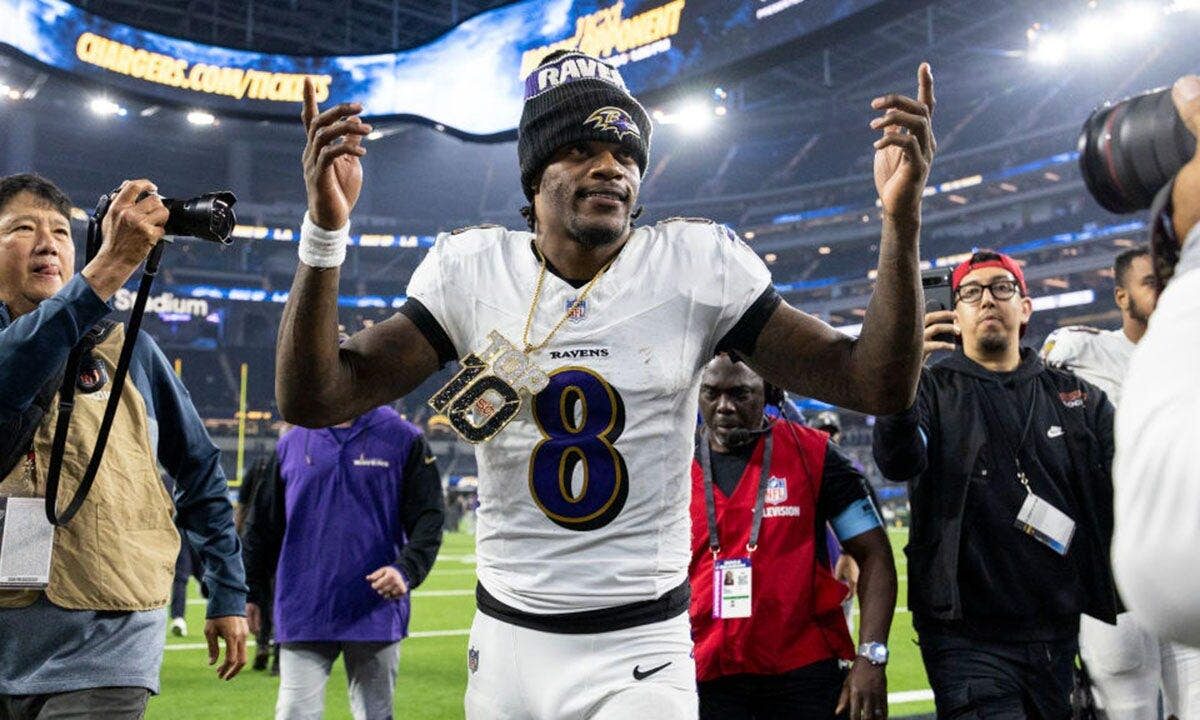
Lamar Jackson’s place among the NFL’s elite is again in dispute after a high-profile media critique removed him from a top-10 quarterback list and public polling showed at least some evaluators leaving him off their rosters. The debate is focused: did last season’s measurable drop in production and mixed playoff history justify treating Jackson as outside the league’s top tier? (Fox News/Outkick; ESPN survey).
Lamar Jackson: the latest update
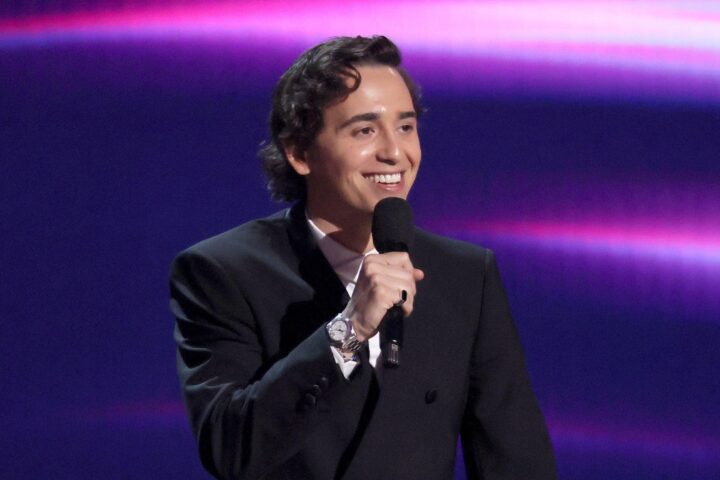
The immediate development is media and evaluator downgrades rather than a roster move or new medical disclosure. On-air commentator Colin Cowherd said he “would take Bo Nix today in a fourth-quarter, come-from-behind situation over Lamar” and removed Jackson from his top-10 rankings — a blunt statement that pushed the conversation back into mainstream coverage (quoted in Fox News/Outkick).
Separately, at least one round of ESPN’s annual quarterback survey (referred to in recent coverage) left Jackson off a top-10 list, signaling that some evaluators now view him as below the group of quarterbacks they expect to be most reliable this season (ESPN survey).
Those are the confirmed developments: a prominent commentator publicly downgraded Jackson and some survey respondents concurred. Neither development proves an irreversible decline, but both sharpen the questions teams, bettors and fans will watch this season.
Key details from the report
Reporters and analysts point to verifiable pieces of last season’s stat line as the foundation for criticism. The Fox News/Outkick story summarized Jackson’s 2025 regular-season pace and counting stats and used them to argue his passing production slipped from past MVP-caliber levels (Fox News/Outkick).
Per that coverage, Jackson averaged roughly 196.1 passing yards per game in his starts last season and, when prorated across a 17-game schedule, would project to about 21 passing touchdowns — a figure that sits closer to league average than to the elite passing totals he posted in MVP seasons (Fox News/Outkick). The same report cited a decline in his rushing output, recording 349 rushing yards and two rushing touchdowns for the campaign, a notable departure given that Jackson’s mobility has historically been a major part of his value on offense (Fox News/Outkick).
Playoff history is also frequently referenced. The Fox News piece summarized Jackson’s career postseason ledger as a 3–5 record with completion percentage and touchdown-to-interception ratios that critics describe as underwhelming in must-win games — observations used to question his late-game dependability (Fox News/Outkick). Those playoff metrics are public game logs summarized by the coverage and form much of the interpretive basis for commentators’ trust concerns.
It is important to emphasize these are report-based measurements and interpretations from media and survey respondents; they describe recent output, not a definitive forecast of what Jackson will do next. Health or scheme changes could alter the picture quickly, and public reporting has not confirmed any specific, lingering injury that would fully explain the stat declines (Fox News/Outkick).
Why critics say trust is eroding
Colin Cowherd’s comment — that he prefers another quarterback in a late comeback scenario — encapsulates the trust argument: some evaluators now see Jackson as less dependable in high-leverage, fourth-quarter spots. That view blends measurable concerns (recent passing and rushing rates) with judgment about situational performance (Fox News/Outkick).
Analysts point to three plausible, but not fully verified, explanations: minor or lingering injuries that reduce explosiveness, offensive-scheme adjustments that have constrained his strengths, or natural variance for an athletic quarterback who relies on mobility. Coverage to date has noted these possibilities while also acknowledging that none has been confirmed as the single cause (Fox News/Outkick; ESPN survey).
Because many of the health- and personnel-related explanations are not fully documented in public reporting, they should be treated as hypotheses rather than facts. That hedged framing is necessary when moving from measurable statistics to causal claims about why production changed.
What to watch next
Three concrete indicators will shape whether Jackson’s critics are validated or compelled to reverse course:
- Early-season passing efficiency: Watch completion percentage, yards per attempt and touchdown rate. If those metrics rebound toward Jackson’s historical norms, skepticism should ease.
- Rushing workload and explosiveness: A recovery in rushing attempts, yardage and big-play runs would suggest mobility — a central driver of his MVP seasons — has returned.
- Late-game performance: How Jackson performs in close fourth-quarter situations and playoff-style matchups will matter most to evaluators focused on trust. Game-level decisions and outcomes will carry outsized weight.
Additionally, staffing and schematic context matters. If the Ravens make offensive-coaching changes or explicitly tailor late-game scripts to reduce risk and maximize Jackson’s strengths, that could restore confidence even if raw numbers lag early on. Conversely, if passing and rushing declines persist alongside schematic uncertainty, more evaluators are likely to keep Jackson outside their top-10 lists (Fox News/Outkick; ESPN survey).
Bottom line
The current “no” about Jackson’s top-10 status reflects media and evaluator judgments anchored to last season’s statistical profile and playoff history rather than any single new revelation. Those judgments are defensible as short-term evaluations; they are not definitive career judgments. Jackson’s ceiling remains elite when he is at his best, but ongoing evidence — early-season metrics, rushing form and performance in close games — will determine whether he is truly back among the most reliable quarterbacks or on a downward slope.
Sources
- Fox News / Outkick: “No, Lamar Jackson doesn’t deserve to be ranked among the NFL’s top 10 quarterbacks” — source for Cowherd quote and reported season/playoff figures cited above.
- ESPN — referenced for context on the annual quarterback survey that left Jackson off at least one top-10 ballot (survey respondents summarized in recent coverage).
- Colin Cowherd (program page) — attribution for on-air remarks referenced in Fox News coverage.
- Featured image (approved for CMS use): Fox News image candidate.