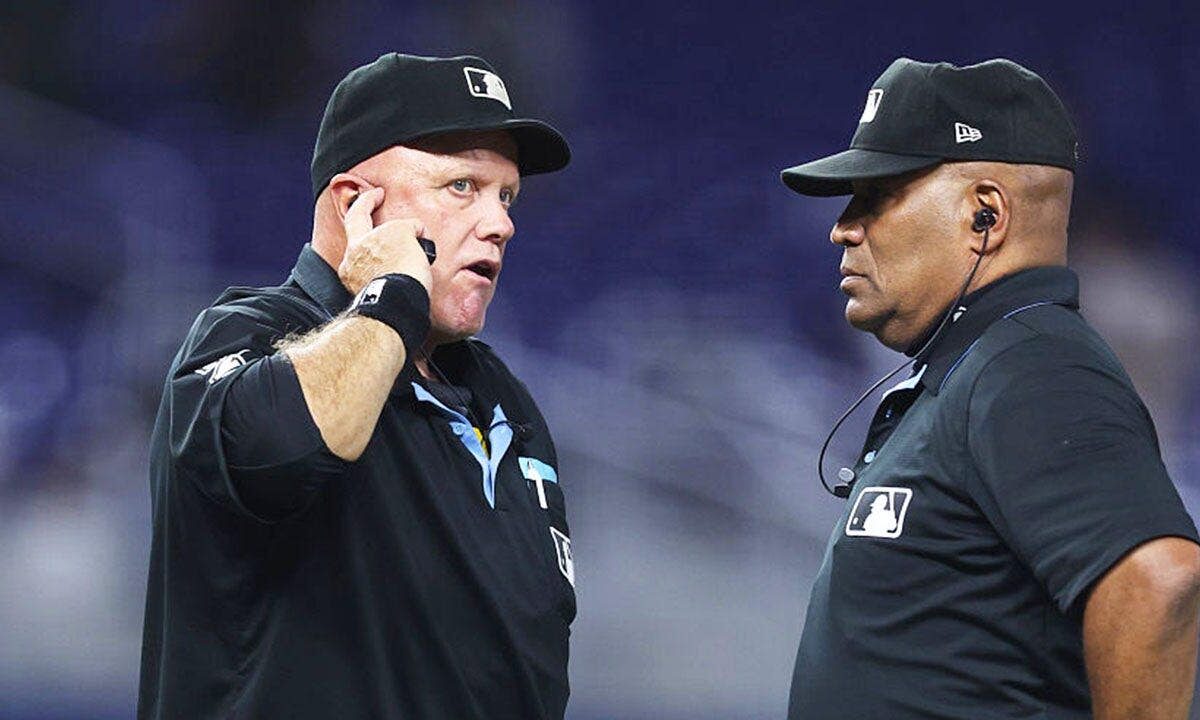
Data and reporting identify several veteran officials among the worst-rated umpires this season, and those officials have accepted buyouts and will retire at year end. CB Bucknor, Laz Diaz and Brian O’Nora are named by the reporting and ranked on umpscorecards.com as among the lowest-scoring officials for the season.
MLB leadership shown; retirements affect officiating depth.
What the data show: worst-rated umpires
Independent ratings compiled on umpscorecards.com place CB Bucknor, Laz Diaz and Brian O’Nora near the bottom of public accuracy rankings for the current season. The site publishes per-umpire accuracy percentages derived from audited calls; its dataset is widely cited by analysts and fans though it is not an official Major League Baseball metric.
According to the published leaderboard referenced in the reporting, Bucknor registered an accuracy rate of 91.33%, the lowest among the officials evaluated on the site. Brian O’Nora and Laz Diaz appear nearby on the leaderboard with accuracy figures cited as just over 92% in the public rankings. Those placements and percentages are drawn from umpscorecards.com and cited in the reporting.
UmpScorecards describes its approach as counting correct and incorrect calls across pitch and play events to generate an overall accuracy percentage for each umpire; that percentage is the basis for the site’s rankings and the public comparisons cited by media outlets.
Who accepted buyouts and is retiring
The reporting indicates seven umpires in total accepted buyouts and will retire at the end of the year. Among those seven are the three veteran officials named in the data as the lowest-rated on umpscorecards.com: CB Bucknor, Laz Diaz and Brian O’Nora.
Buyouts are described in reporting as voluntary, contractual agreements that provide an exit payment to an umpire in exchange for leaving the active roster. The group of seven departing umpires includes long-tenured veterans and other crew members who chose this option as the season concludes, reducing the league’s active pool of on-field officials.
By the numbers
Key accuracy figures referenced in public rankings and the reporting (source: umpscorecards.com):
- CB Bucknor — 91.33% accuracy (listed as the lowest on the site)
- Brian O’Nora — ~92% accuracy (just over 92% in the public rankings)
- Laz Diaz — ~92% accuracy (just over 92% in the public rankings)
- Jan Pawol — listed among lower-ranked officials in the season’s dataset
These percentages are the publicly available accuracy rates from umpscorecards.com as cited in the reporting. The site’s methodology aggregates audited calls and reports an overall accuracy percentage for each umpire; that percentage is the basis for comparative rankings used by analysts and commentators.
League images provided for context on officiating leadership and operations.
Why this matters for MLB and fans
The retirement of multiple umpires who rank low on public accuracy lists has practical implications for game officiating and competitive fairness. Losing several veteran officials at once reduces institutional experience available within crews, which can affect how close or contentious plays are managed on the field.
For teams and fans, publicly reported declines in individual accuracy feed discussion about consistency behind the plate and on the bases. While umpscorecards.com provides an external measure of call accuracy, Major League Baseball operates its own training, evaluation and assignment systems; public accuracy figures supplement but do not replace internal assessments.
Because the buyouts remove seasoned umpires from active rosters, MLB must rely on reserve umpires and less-experienced officials to fill slots. That transition period typically invites heightened scrutiny of calls in high-leverage games and close matchups, both from broadcasters and from team personnel who monitor officiating performance.
What comes next
Major League Baseball will need to staff the openings created by the buyouts for the remainder of this season and heading into the next. In practical terms, that commonly means promoting reserve umpires, reassigning crew responsibilities, and accelerating on-field evaluations of next-in-line officials already in the system.
MLB’s assignments and postseason selections continue to rely on internal performance reviews, classroom work and on-field oversight. The public rankings from umpscorecards.com may be referenced by commentators and team analysts, but league personnel decisions and any formal changes to oversight come through MLB’s established channels and, where applicable, collective bargaining discussions.
In the near term, expect more rotation among crew chiefs and increased attention to calls involving the departing officials. Teams, broadcasters and fans may cite the published accuracy figures in postgame coverage; league responses to officiating gaps will be administrative and operational rather than reactive to any single public dataset.
Frequently asked questions
What does worst-rated umpires mean?
Here, “worst-rated umpires” refers to officials whose on-field calls produced lower accuracy percentages on the publicly available umpscorecards.com dataset for the current season. The site analyzes audited calls and reports an overall accuracy percentage for each umpire; that percentage is used in the public rankings.
What is an umpire buyout?
An umpire buyout is a voluntary agreement in which an official accepts a lump-sum payment or settlement and leaves the active umpiring roster. Reporting describes these as contractual exits negotiated at season’s end.
Will MLB change umpire oversight after these retirements?
There is no reported indication of immediate structural changes to umpire oversight specifically tied to these buyouts. MLB maintains internal evaluation and training programs; any formal changes would be announced by the league or emerge from labor negotiations and internal policy reviews.
Source attribution
Reporting on the retirements: Fox News — Three of the worst-rated umpires in Major League Baseball have one thing in common. Ratings and accuracy figures referenced from umpscorecards.com.