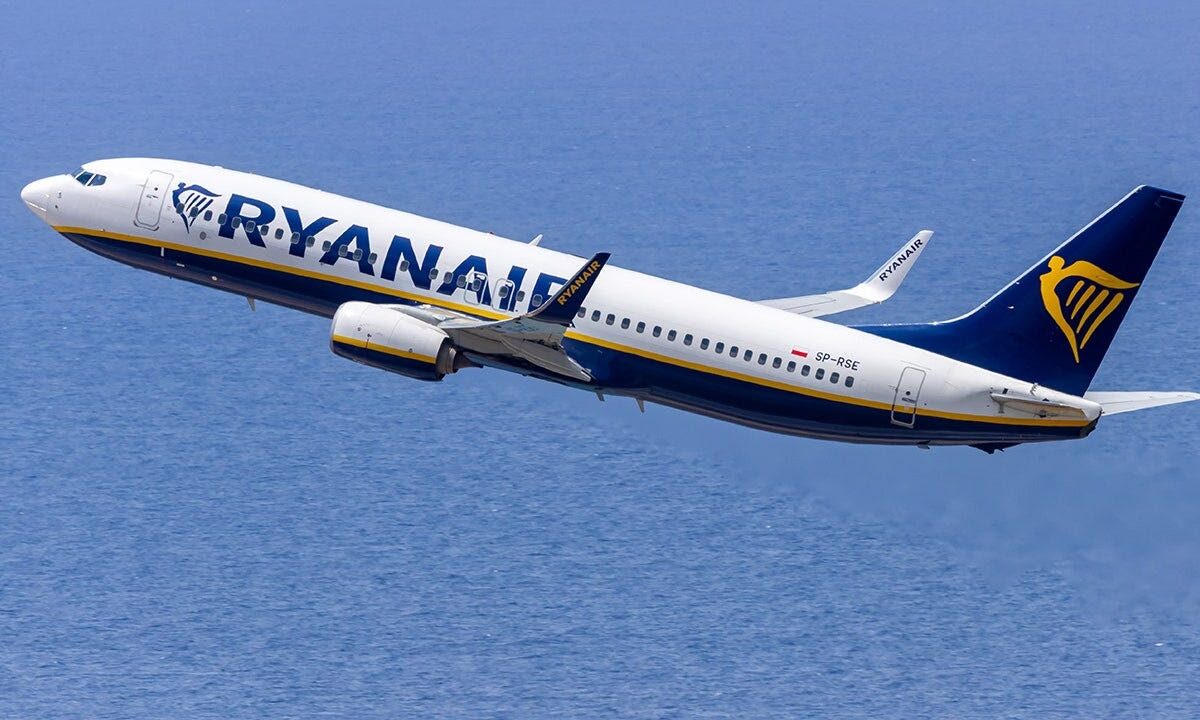
A passenger on a Ryanair flight from Thessaloniki, Greece, was nearly sucked out through a blown-out plane window shortly after takeoff, relatives and the airline said. Ryanair confirmed the window “dislodged in-flight,” the aircraft returned and landed safely, and one passenger received medical assistance on the ground.
Relatives and family members identified the passenger as 61-year-old Ljubisa Karović; his wife, Svetlana Grković, spoke to reporters and told Fox News Digital she “immediately reacted and grabbed his legs” as crew and other passengers tried to pull him back inside. A Greek hospital official told The Associated Press the 61-year-old was treated for neck and shoulder injuries and friction burns after landing.
What happened on the Ryanair flight
The flight had just departed Thessaloniki when the window next to Karović failed, Ryanair said in a statement. The carrier told reporters the window “dislodged in-flight,” and the crew returned the aircraft to Thessaloniki where it landed safely. Ryanair said one passenger requested and received medical assistance on the ground.
Passengers described oxygen masks deploying and frantic efforts to keep the man from being pulled out of the cabin. One traveler told Fox News Digital that “chaos broke out” as people tried to help, press items against the opening and hold the passenger inside. Eyewitness accounts to media outlets have provided graphic detail but are subject to verification by investigators.
How a blown-out plane window can pull a person outside
The primary risk in a blown-out plane window is rapid decompression. Modern airliners are pressurized to keep cabin air comfortable at altitude; if an opening suddenly forms, the higher pressure inside the cabin rushes outward toward the lower outside pressure. That flow can create a powerful suction effect toward the opening.
“With a cracked window and the pressure on the window from cabin pressurization, the window cracked, broke — and then the extreme difference in air pressure from the cabin to the outside creates a strong suction,” aviation consultant Richard J. Levy told Fox News Digital, describing how a failure could draw a person toward a breached opening. Retired captain Steve Arroyo urged routine precautions: “Follow crew directions. It seems redundant, but always have your seat belt fastened whenever you’re seated.”
Experts say the magnitude of force depends on the size of the opening, the pressure differential, the aircraft’s altitude at the time and how quickly the breach develops. Rapid decompression events are rare but can become dangerous in seconds when structural failures occur, which is why crews train for immediate containment and emergency descent procedures.
Passenger injuries, crew response and replacement flight
Passengers and crew acted quickly to secure the area, according to multiple eyewitness reports. Travelers who spoke with Fox News Digital described people using jackets and other items to block the gap while others physically held the passenger inside the cabin until the aircraft returned to the airport.
Ryanair arranged a replacement aircraft that departed Thessaloniki later for Memmingen, Germany, the carrier said. The airline confirmed the aircraft landed safely and that one passenger received medical attention in Thessaloniki. As noted above, a Greek hospital official told The Associated Press that the passenger treated on arrival suffered neck and shoulder injuries and friction burns; that medical detail is from AP reporting.
Practical safety tips for passengers
While officials investigate, aviation specialists reiterate simple safety steps passengers can take that may reduce risk in rare events like this one:
- Keep your seat belt fastened when seated, even if the seat belt sign is off.
- Follow crew instructions immediately; cabin crews train for decompression and evacuation procedures.
- Use oxygen masks as directed and assist others only if it is safe to do so.
- Report any visible damage or unusual noises to flight attendants before takeoff if observed while boarding.
What investigators and experts are focusing on
Investigators are examining maintenance records, damage patterns on the aircraft, crew reports and any available cockpit or cabin recordings. Authorities typically seek physical evidence from the aircraft, interview witnesses and review maintenance logs before reaching conclusions.
Some initial reporting and commentary raised the possibility that an engine fragment may have struck the window. That suggestion remains unverified; it was made by an aviation expert in early coverage and has not been confirmed by investigators. Official findings will depend on forensic examination of the aircraft and components.
William J. McGee, a senior fellow focused on aviation and travel, told reporters that “there is still much that we don’t know about what happened on that aircraft.” He added that the incident has renewed questions among some in the field about oversight and regulatory checks, noting those concerns are part of broader industry discussion rather than established facts about this specific flight.
What comes next
Authorities will continue to collect evidence and interview passengers and crew. If fragments or damage are found consistent with an external strike, investigators will trace components, review maintenance histories and consult manufacturers and regulators. If the cause proves to be other forms of structural failure or maintenance lapse, the probe will seek to determine any systemic issues.
Key takeaways
- This incident involved a blown-out plane window after takeoff from Thessaloniki; the aircraft returned and landed safely.
- Relatives identified the passenger as Ljubisa Karović; his wife, Svetlana Grković, spoke to Fox News Digital about the moments after the window failed.
- Medical details about the treated passenger were provided to the AP by a Greek hospital official.
- Claims that an engine fragment hit the window remain unverified and are under investigation.
Source attribution: Reporting and eyewitness quotes cited to Fox News Digital; medical detail attributed to The Associated Press. Original Fox News reporting: Why a blown-out plane window nearly sucked a passenger outside at 16K feet. Investigators continue collecting evidence and will update findings as the probe proceeds.